3 months ago
94
3 months ago
94
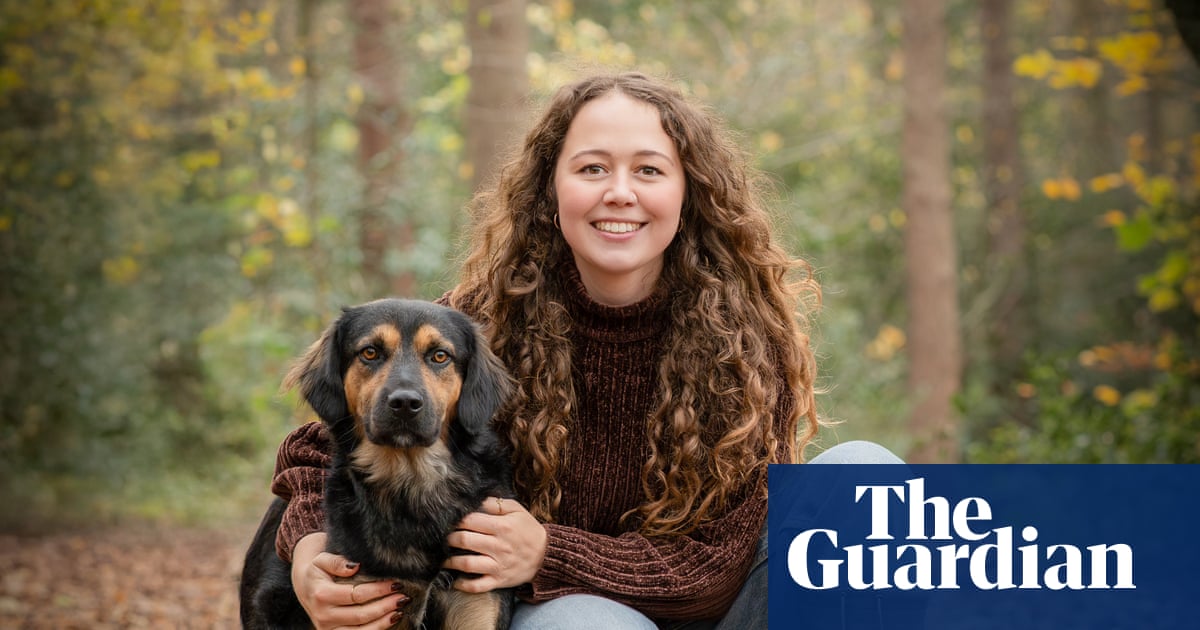
Darren Ridley is always on high alert, constantly checking his phone for rain warnings – even in the middle of the night.
“Our whole family is permanently on edge,” he says. “If we hear rain, day or night, we’re up and checking the house. I can’t sleep without replaying our flood plan in my head for weaknesses.”
Ridley’s house in Folkestone floods at least twice a year. His garden far more often. Most of the floods happen at night or in the early hours of the morning. “The floods come so quickly that it’s unbelievable. We often wake up to find our garden a metre deep,” he says.
And it is not clean water. “It’s raw sewage; a raging torrent that crashes in with more force than you could believe,” he says. “My elderly neighbour got knocked over by a heavy timber board swept along by the flood waters. He thought he was going to drown in sewage.”
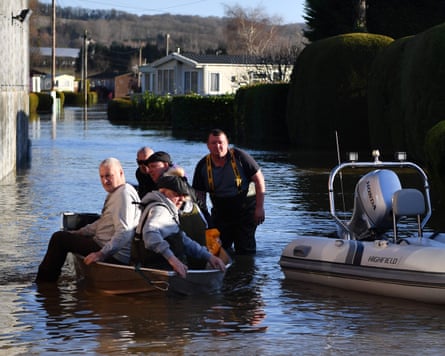
Flooding is one of the most pressing emergencies facing the UK today. More than 6m properties in England alone are already at risk from rivers, the sea, sewage or surface water. That number could rise to 8m – roughly one in four – by mid-century, as the climate breaks down.
Flooding throws lives into chaos. Ridley’s family lives with lasting trauma: he has PTSD and his family are, as he put it, “flood-scarred”.
“My children grew up in sewage,” he says. “I can’t exaggerate how disgusting and distressing it is. I’ve had condoms and sanitary towels hanging off my apple trees. The garden becomes infested with insects and slugs, feeding on the filth.”
After each flood, Kent county council sends a team to drain the liquid – and another team to remove the debris. “But the second team just takes one look at the condensed sewage, turns around and leaves, saying that’s not their job,” says Ridley. ”We have to put on our protective gear and clear it ourselves.”
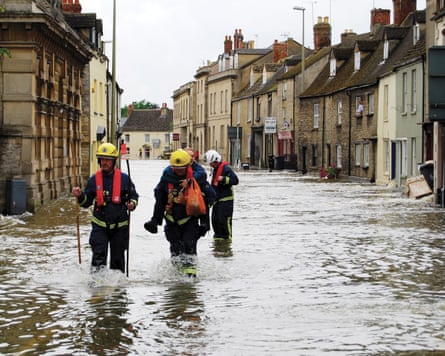
For 26 years, Ridley has been begging the council and Southern Water to replace the failing sewer infrastructure. But, as he said, his is a small voice. “There are only three to four properties up here,” he says. “We’re easy to ignore.”
It is stories like Ridley’s that led, at the start of this year, to the formation of the not-for-profit organisation Flooded People UK. Its raison d’etre is to enable flood victims to help each other – and to build a collective voice big enough to lobby for change.
By placing flooded people at the centre of flood‑policy discussion rather than leaving it to engineers or regulators, FPUK is challenging conventional power dynamics. Its presence, it hopes, will force policymakers, local authorities and the public to consider not only infrastructure but also the human, social and mental health impact of flooding. Its growing visibility also helps humanise otherwise dry statistics about “properties at risk”.
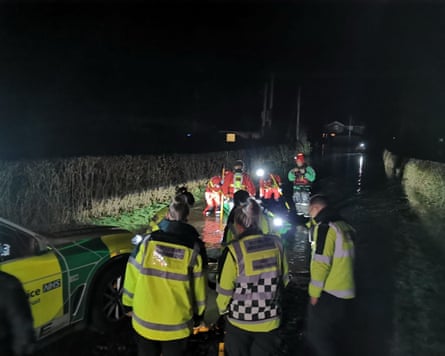
Heather Shepherd lives in north Shropshire on the English border with Wales. The co-founder of FPUK and architect of the UK’s flood action group infrastructure, she has been flooded six times in the past three years.
“Between October to March, we get a flood alert about once a month,” says Shepherd, who has spent more than £70,000 on flood-resistant adaptations. “That puts us on the alert for a two-hour warning that the waters are coming.
“And when it comes, it’s an onslaught,” she says. “The bottom of my drive floods up to neck-level. For up to a week, we live in the middle of a vast, unbroken lake – nothing but water as far as the eye can see.”
Shepherd has lost much of her most treasured belongings to floods. “I don’t do anything to stop the water coming in any more,” she says. “There’s no point; nothing works. Water is relentless.”
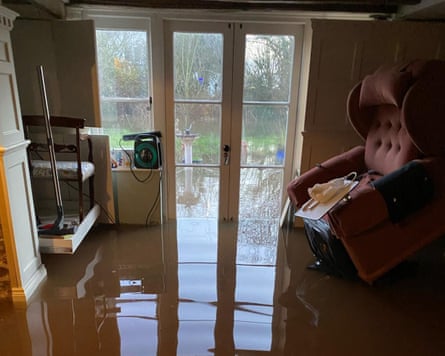
The trauma is intense. “For at least six months of the year, I’m trapped in this revolving, repeating nightmare,” she says.
New research from the National Emergencies Trust (NET) and Lancaster University shows how limited the financial and wellbeing support is for flood victims.
Almost half the survivors surveyed received no professional support at all. Many were pushed into debt or forced to drain their savings because of bureaucratic barriers preventing them accessing grants or insurance payouts.
Mhairi Sharp, the chief executive of NET, says: “Flood survivors describe sleepless nights, hypervigilance during rain and children struggling at school. The psychological scars persist long after the water recedes.”
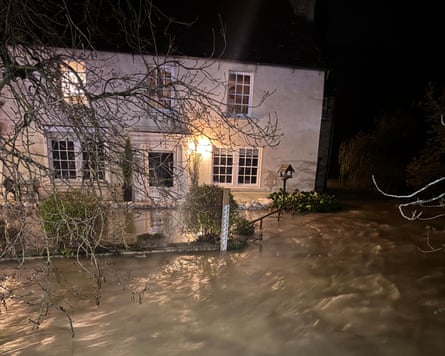
Like Ridley, William Wareing believes FPUK is the only way to get his plight heard by those who could make a difference.
The chair of the Witney flood group in West Oxfordshire, he has been flooded three times since 2007.
“We work relentlessly to get our voice heard, and we’ve been relatively successful locally: we’ve had river sensors installed, formed a flood warden group and engaged in public engagement,” he says. “But just like all the other local groups around the country, we’re just little pockets of protest who are generally ignored.
“Flooded People UK is bringing us all together, so that we can have one voice and change government policy.”
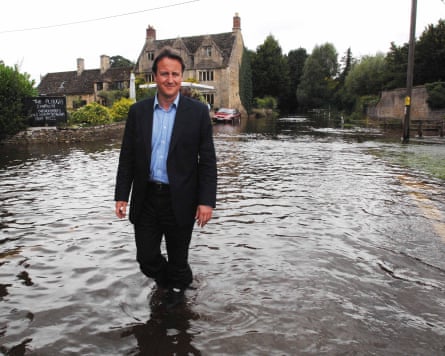
What needs to be recognised, Wareing says, is that flooding is a nationwide problem.
“Because it’s hard to do anything about climate change in the short term, we need to address the other three causes – development, lack of defences and poor maintenance – as a matter of urgency.”
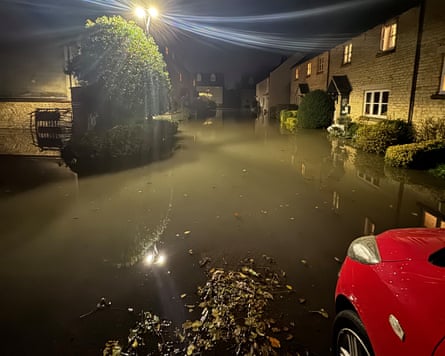
Official assessments show flood risk is changing fast. It is no longer something that only affects those living near rivers and coasts: about 4.6m homes and businesses in towns and suburbs across England are threatened by surface-water flooding, caused by heavy rain and overwhelmed drains.
That, says Shepherd, makes surface water the largest single contributor to flood risk, surpassing traditional river and coastal flooding.
“The urgency could not be greater,” she says. “Without stronger planning reforms, investment in infrastructure and a meaningful national strategy to deal with sewage and drainage failures, more families risk being left living in constant fear of the next deluge – and paying with their homes, their health and their peace of mind.”