2 months ago
75
2 months ago
75
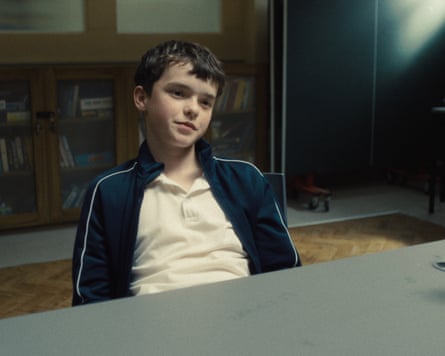
The prime minister said it was a “really hard watch”, while a British police force said it should be a “wake-up call for parents”. The Netflix drama Adolescence – which tells the story of a 13-year-old boy arrested for killing a female classmate – was hailed from the school gates to the Houses of Parliament for shedding a spotlight on the toxic influence of the manosphere.
But the national conversation did not end with the final episode of the much-discussed drama. A series of high-profile campaigns, conversations, policy shifts and research have resulted in a sense that 2025 has been the year of the boy.
At the start of the year the former England football manager Gareth Southgate warned about the dangers of “callous, manipulative and toxic influencers”, while Lost Boys, a study from the Centre for Social Justice, argued that “boys [were] being left behind” from educational attainment to mental health.
In June was the first ever “Dad strike”, when fathers gathered in London and Edinburgh to protest at pitifully poor paternity leave provision in the UK. By November, the government had produced the first ever Men’s Health Strategy for England, a month later its Violence Against Women and Girls strategy focused on preventing misogynistic behaviour in boys.
Warnings about toxic masculinity have been stark. But after a year in which debate about men and boys moved from the fringes of the internet to the mainstream, experts and policy-makers are urging progressive figures to focus less on toxicity and more on positive role models.
Among them is a collection of Labour MPs who in March started organising via a ballooning WhatsApp group and have now formed a formal parliamentary group – the Labour group for men and boys.
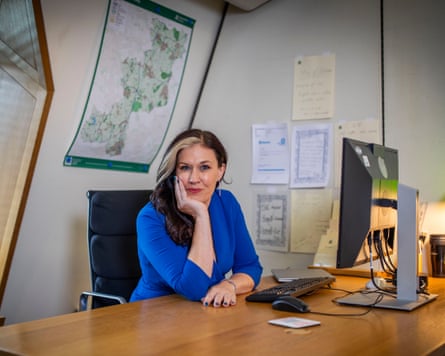
One member, Natalie Fleet, the MP for Bolsover, spent her allotted time at an International Men’s Day debate in parliament speaking about the amazing men in her community – including her husband, an “actual hero” whom she met aged 16, and helped raise her first child and is now reducing his hours to help look after their grandchildren.
She said: “These are men in our communities doing the right thing, who we need to find and amplify, and that’s what we can do through this group.”
In 2025, the influence of misogynistic figures such as Andrew Tate showed little sign of abating – despite facing charges, which he denies, in multiple jurisdictions. Tate travelled to the US and cemented his role as a leading figure in Trumpworld. A poll earlier this year found that a fifth of UK males aged 16 to 29 who had heard of Tate had a positive view of him.
But other organisations have parked their tanks on Tate’s lawn. Movember and Equimundo launched the Young Men and Media Collective in October, which funds influencers to deliver a different kind of masculine message.
“Policymakers have woken up to the fact that, particularly online, young men are being harmed and their health is suffering by the content they’re seeing,” said Amy O’Connor, policy lead at the charity. “It’s all very well criticising online content, but what are we doing to give our young men an alternative?”
The phrase “men’s rights” comes with “a whole bunch of really unpleasant connotations”, said Adam Thompson, MP for Erewash, but there’s also a recognition that from educational attainment to suicide rates, boys and men, as much as girls and women, need targeted policy. “I’m a strong believer that the patriarchy is harmful to both men and women,” he said. “It’s not a zero-sum game.”
It’s right that public discourse is focusing on boys, argues Joeli Brearley, the founder of the campaign group Pregnant Then Screwed. The lack of debate about the challenges boys face led her to launch this year a podcast, To Be a Boy,which she hosts with the fatherhood champion Elliott Rae.
Brearley urges caution, however. The rise of the far right, a surge in support for Reform UK and the prospect of baked-in sexism in increasingly pervasive AI tools have left her worried.
“We are having these really fruitful conversations about boys, but I’m also seeing a sea change in the way women talk about their experiences online,” she said. “It’s as if you can’t have both – we’re not allowed now to talk about the fact that women are still experiencing specific challenges because we’re now saying that men have it hard.”
The desire to combat a spike in more traditional – and regressive – masculine ideals is also rising exponentially, said George Gabriel, the co-founder of The Dad Shift. “The challenge is real. But I think we can acknowledge that while the situation is dire, we can also have some optimism that we are starting to find a path forward. That’s where we find ourselves at the end of the year.”