1 month ago
60
1 month ago
60
Samsung’s compact flagship phone hasn’t changed much in a year, but the S26 is still one of the best smaller handsets available as rivals grow larger and larger.
The S26 is the cheapest and smallest of this year’s top Samsungs, dwarfed by the top-of-the-line S26 Ultra in size and price. But like everything with a memory chip at the moment, the S26 has increased in price by £80 or the equivalent to £879 (€949/$899/A$1,349). At least it has double the starting storage.
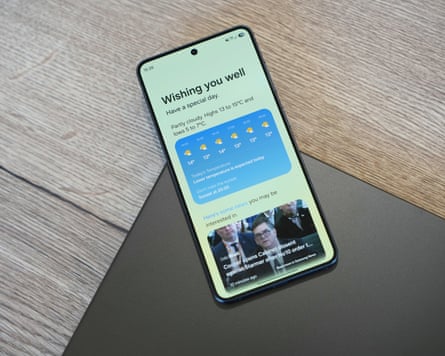
Samsung has made the S26’s bright, crisp and smooth screen a smidgen larger, stretched to 6.3in on the diagonal. But with skinny bezels it is only 2.7mm taller and 1.2mm wider than its predecessor, which isn’t noticeable in use.
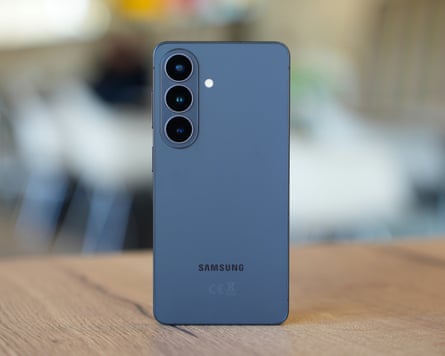
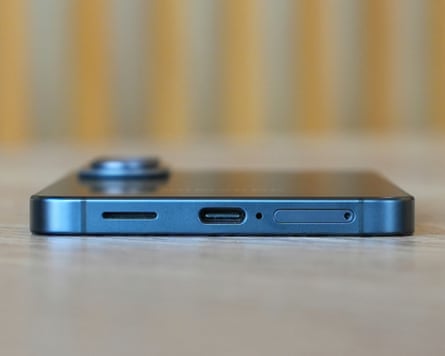
The design is simple and feels good in the hand, with flat aluminium sides and a frosted glass back. The phone’s 167g weight feels very light by modern standards making it easier to hold and pocket.
For this year’s model, Samsung has used its own Exynos 2600 chip in the regular S26 and S26+ outside North America rather than Qualcomm’s Snapdragon 8 Elite Gen 5, which is limited to the huge S26 Ultra. The good news is that unlike previous Samsung chips, the Exynos 2600 is only a smidgen behind the Qualcomm’s performance and efficiency. That makes the phone feel snappy and perform well across the board.
The S26 lasts about 40 hours between charges with average use, with the screen actively used for about five hours across wifi and 5G, meaning most will have to charge the battery nightly. The battery can last more than two days between charges with lighter use on wifi, but a couple of hours of gaming hit the battery quite hard, making it less suitable for hardcore gamers.
The S26 runs the same One UI 8.5 (Android 16) out of the box as the Ultra model, which includes numerous AI tools layered on top of good, customisable software.
Many of the tools are solid and keep up with the competition, including the text, transcription and image editing utilities, plus call assist that blocks spam calls by answering for you and asking the caller their reason for ringing.
Samsung’s version of Google’s proactive AI assistant called “Now Nudge” pulls data from apps on your phone to offer timely suggestions above the keyboard in messaging apps, such as calendar events, locations and other bits. It’s a bit limited, but like Google’s Magic Cue it shows real promise.
Samsung will provide software updates until 28 February 2033, so you can safely use the S26 for longer than some rivals.
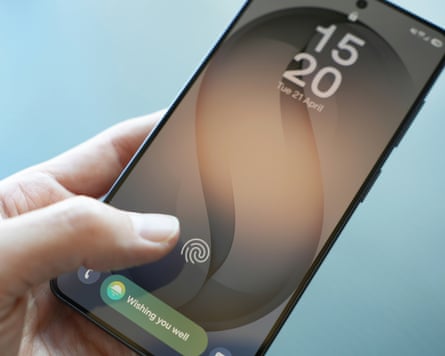
Specifications
-
Main screen: 6.3in FHD+ Dynamic Amoled 2X 120Hz
-
Processor: Samsung Exynos 2600 for Galaxy
-
RAM: 12GB
-
Storage: 256 or 512GB
-
Operating system: One UI 8.5 (Android 16)
-
Camera: 50MP + 12MP 0.6x + 10MP 3x; 12MP front-facing
-
Connectivity: 5G, USB-C, wifi 7, NFC, Bluetooth 5.4, UWB and GNSS
-
Water resistance: IP68 (1.5m for 30 mins)
-
Dimensions: 149.6 x 71.7 x 7.2mm
-
Weight: 167g
Camera
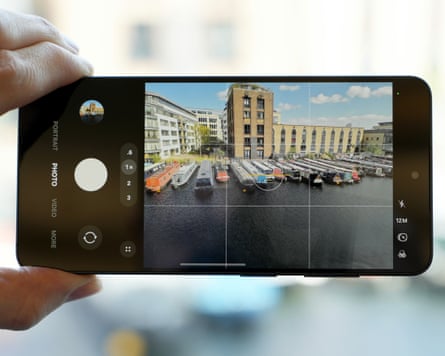
The S26 has the same rear camera setup as its predecessor with a 50-megapixel main, 12MP ultra wide and 10MP 3x telephoto camera, plus an improved 12MP selfie camera.
The rear cameras haven’t changed much since the S22 in 2022, and it is starting to show. The main camera shoots solid photos in good light with lots of detail and is the best of the three rear modules. Ultrawide is fairly decent for panoramic shots but can’t focus particularly near for more interesting photos. The 3x telephoto is fairly unremarkable but decent enough.
Things start to fall apart in lower light settings with images a bit soft and noisy, helped a little by the automatic night mode particularly on the telephoto camera.
In contrast, the S26 shoots very good video for its size and inherits the impressive new horizontal lock feature from the S26 Ultra. The selfie camera is also one of the best on a phone capturing good detail with solid dynamic range and low light performance.
Overall, the S26 doesn’t have a bad camera, but it has not moved on significantly in years and you can get much better results on similarly priced rivals.
Sustainability
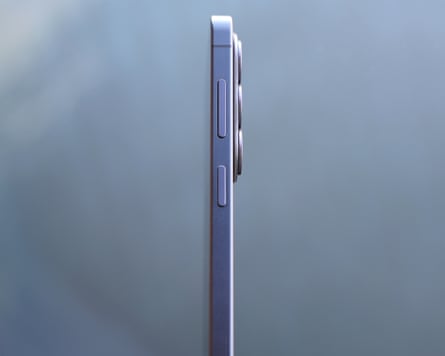
The battery should last for 1,200 full-charge cycles. Screen repairs cost £149 by authorised service centres and include a battery replacement. Samsung also offers a self-repair programme.
The phone contains 21.2% recycled content. Samsung company breaks down the phone’s environmental impact in its report and offers trade-in and recycling schemes for old devices.
Price
The Samsung Galaxy S26 costs from £879 (€949/$899/A$1,349).
For comparison, the Galaxy S26+ costs £1,099, the Galaxy S26 Ultra costs £1,279, the Google Pixel 10 costs £799 and the iPhone 17 costs £799.
Verdict
The Galaxy S26 is one of the smallest and lightest flagship smartphones available, making it easier to hold and pocket than most other options.
The 6.3in screen is great while still being big enough for most activities. The phone feels fast, and the battery life may be shorter than for much bigger phones, but it still lasts a good day and a bit of general use. The software is solid with long support and access to a full suite of AI tools, some of which are genuinely useful.
It is a nice phone to use day to day. But the model has changed very little in several years, particularly in the camera department, which is showing its age. It is not bad but you can get better photos from similarly priced or cheaper rivals. The lack of Qi2 magnets for accessory support is a miss, too.
Pros: compact and lightweight, good 6.3in screen, good software with seven years’ support, top performance, OK triple camera, access to the latest AI features, good battery life for the size, cheapest Samsung flagship model.
Cons: iterative design, cameras bettered by rivals, no 5x zoom, battery life short of bigger phones, most AI capabilities overhyped.