6 hours ago
9
6 hours ago
9
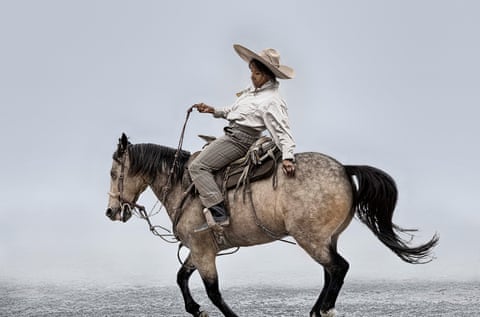
Using ‘equestrian embodiment’, photographer Ayana V Jackson celebrates Stage Coach Mary and other great riders who faced down prejudice
The best of Arles 2026 – in pictures
Tue 18 Aug 2026 08.00 CEST
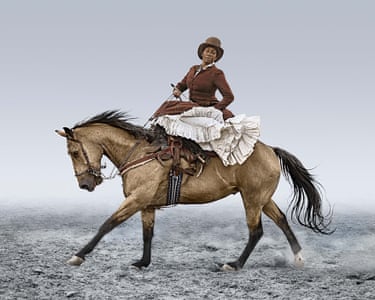
To Be Black and Female in the Spanish South-West (in the style of Selika Lazevski), 2023
In her You Forgot to See Me Coming series, Ayana V Jackson explores the lives of historic black and mestiza horsewomen such as Mary Fields and Selika Lazevski, who pushed against racial prejudice. This shot, showing Jackson riding sidesaddle with her eyes closed, is a tribute to Lazevski, a celebrated black equestrian from belle époque Paris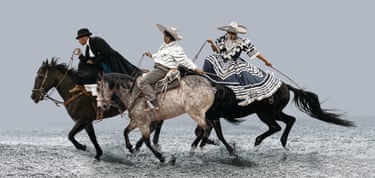
The Good News Is Not Delivered from Mountaintops But in Clearings, 2026
This image draws its title from Shatema Threadcraft’s book Labors of Resurrection: Black Women, Necromancy and Morrisonian Democracy. ‘The characters I inhabit,’ says Jackson, ‘both real and imagined, carry the defiance and determined perseverance that, given the realities of their time, left them little choice than to seek freedom in fugitivity and truancy. More often than not, their work is carried on in secrecy. Yet from time to time, we find them bathed in the clarifying moonlight of a clearing’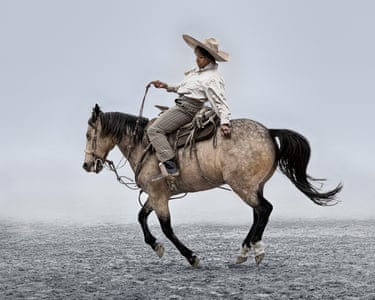
Amelio Robles: In the End He Was Buried in a Dress to Make Peace With God, 2025
Amelio Robles, born Carmen Robles, was an Afro-mestizo colonel who fought in the Zapatista army during the Mexican revolution and lived publicly as a man, challenging the racial and gender norms of the time. Once again through ‘equestrian embodiment’, Jackson confronts and subverts racist and sexist narratives embedded in dominant historical imagery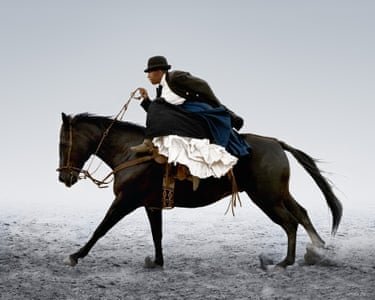
With a Jug of Whiskey By Her Foot, a Pistol Packed Under Her Apron, and a Shotgun By Her Side, 2023
Mary Fields, known as Stage Coach Mary, was the first African-American female mail carrier for what became the postal service. Bent forward and gazing toward the horizon, Jackson embodies Field, whose achievements were not formally recognised until the 2000s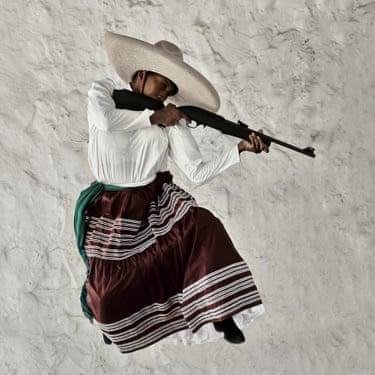
Adelita: She Was Not Only Brave She Was Beautiful, 2023
Adelitas were women, often indigenous or Afro-Mexican, whose clandestine participation in the Mexican revolution was crucial. Jackson embodies an adelita suspended, poised and resolute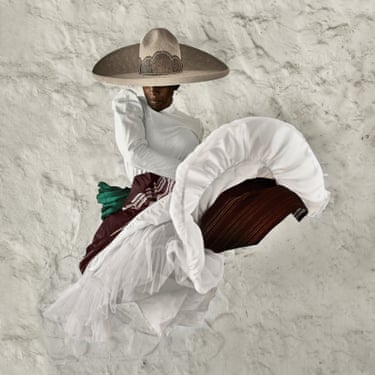
Adelita: I Would Follow Her By Ground and Sea, 2023
‘I work from archives,’ says Jackson, ‘to retrieve those narratives most often left out of the frame, retelling stories like those of black and mestiza women bearing weapons or in a battle.’ You Forgot to See Me Coming is a play on words referencing the impact of forgotten histories on contemporary ways of seeing one another. It’s a way of saying, ‘If you hadn’t reduced me to this phenotype, to this skin colour, or to this gender, you would have been able to see the power harboured in my blood and my legacy’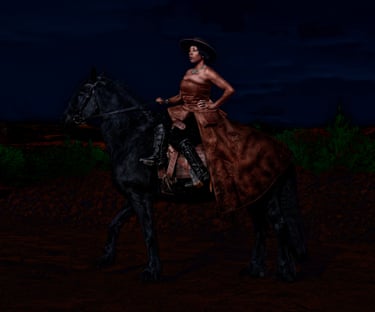
American Simulacrum, 2026
This work is from Jackson’s latest series, Hidden in Plain Sight, which examines the histories of real individuals – particularly extraordinary women and uses ‘critical fabulation’ to bring the past to life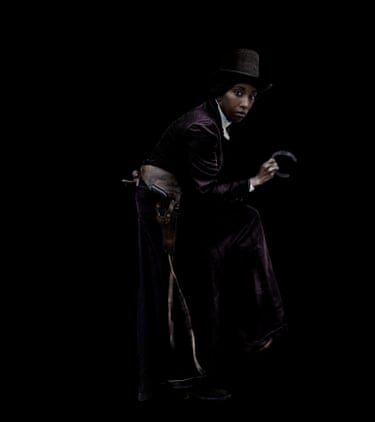
A Truant Practice in Fugitive Time I, 2026
In this work, the equestrian figure is both both historic and symbolic. In Al-Andalus, Muslim-owned territory on what is now modern-day Spain and Portugal, trade brought together north African and Iberian traditions of horsemanship. These customs were then taken by Spanish colonisation to the Americas, where they again were transformed by Indigenous and Afro-descendent influences. In Mexico, this gave rise to the tradition of charrería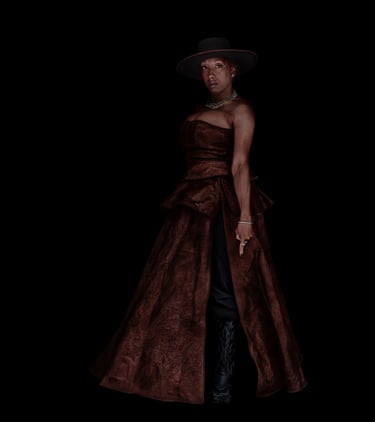
Hidden in Plain Sight I, 2026
In these works, the artist embodies a character wearing a leather garment intricately tooled by the charrería workshop, Artesanías Mexicanas Lalo, in Mexico City. Carefully designed by the artist, the garment brings together indigenous American symbolism with African iconographies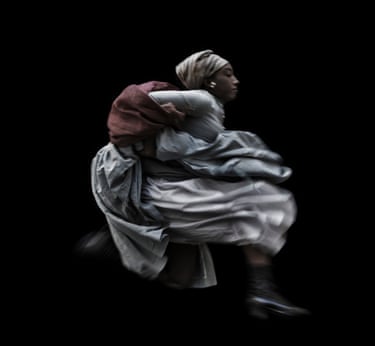
Wild Like the Wind, 2015
This work is from the series Intimate Justice, in which Jackson imagined scenes that were never recorded: black women in moments of rest, introspection and quiet presence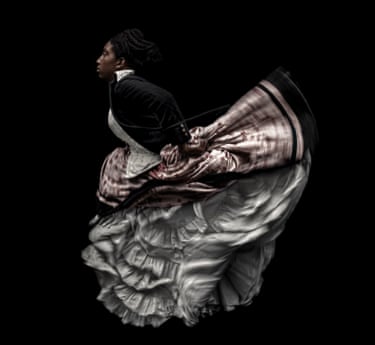
Labouring Under the Sign of the Future, 2017
Jackson concentrated on showing interiority and self-possession, as a riposte to the historical absence or erasure of such images. ‘Black women’s bodies,’ researcher Jumko Ogata-Aguilar writes, ‘have historically been burdened – both literally and discursively. The violence of slavery turned these women into pack animals, while simultaneously imposing violent ideas on every part of their bodies – size, colour, hair – leaving a notion of black femininity that is difficult to confront’Explore more on these topics