2 months ago
105
2 months ago
105
In 1978, shortly after publishing The Art of Alfred Hitchcock, biographer Donald Spoto met the director one last time. At one point, Hitchcock appeared to fall asleep mid-conversation, signalling the end of his involvement with the author. On another occasion, Spoto recalled being bitten by Hitchcock’s West Highland terrier, Sarah, leaving a bruise on his hand. When Hitchcock admonished the dog, Spoto noted it was the first time in four years the director had addressed him by name.
These accounts have surfaced in an unearthed transcript of a previously forgotten interview between Spoto and the actor Tippi Hedren in 1980, six months after Hitchcock’s death. But they also suggest something else: an uneasy relationship from the outset, shaped by misreading, distrust and a degree of personal grievance.
Spoto never enjoyed the easy camaraderie Hitchcock extended to his authorised biographer, the English critic John Russell Taylor, who wrote Hitch: The Life and Times of Alfred Hitchcock, published in 1978. In the course of researching Hitchcock’s darker reputation, Spoto leaned towards interpretations that extended or sharpened the available evidence. In some cases, this meant details becoming amplified over time. Tippi Hedren’s recovery after filming the attic attack sequence in The Birds, for instance, was described as lasting 10 days, though internal memos prove that it was only three days.
Similarly, Spoto’s oft-repeated story that Hitchcock maliciously dared a prop man to remain handcuffed in a warehouse overnight during the filming of The 39 Steps (1935) is contradicted by camera assistant Dudley Lovell, who recalled that Hitchcock at least allowed the man to return home still wearing the handcuffs. An uncomfortable episode, certainly, but not quite the ordeal it later became in Spoto’s retelling, and more in keeping with the rough and hearty humour of London’s East End. Even claims surrounding Hitchcock’s final days have been subject to revision. Spoto stated that a priest offering last rites was turned away; later testimony from Father Mark Henninger indicates that Hitchcock in fact welcomed him.
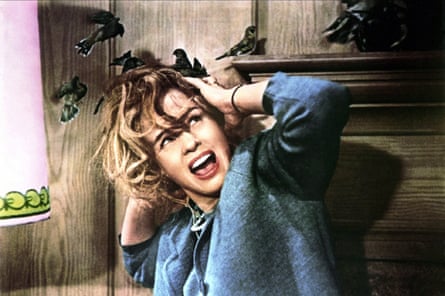
Spoto’s dark thesis later fed into Hedren’s own account. In a 1982 interview with Ronald L Davis, she drew on Spoto’s findings as further validation of Hitchcock’s behaviour. None of this is to dismiss the broader concerns she later raised about his alleged abuse, but it does point to a pattern in which anecdote, repetition and interpretation have, at times, edged the story further from its original footing.
This matters because Spoto’s later Hitchcock biographies, The Dark Side of Genius and Spellbound by Beauty: Alfred Hitchcock and His Leading Ladies, would do more than any other works to shape the dominant narrative around Hitchcock for decades. When you return to the primary material, rather than the later retellings, a different picture begins to emerge. Hitchcock’s modern reputation does not rest on a single body of evidence, but on a layering of voices, many of them partial, retrospective and, in some cases, shaped by personal grievances that have become public narrative.
That complexity becomes particularly clear in the off-screen tensions during the making of The Birds in 1962. The production was far from harmonious. Australian actor Rod Taylor brought a very different energy to the set than Hitchcock’s preferred working style. Witnesses recall friction between the two: Hitchcock irritated by what he saw as Taylor’s lack of discipline, Taylor resistant to Hitchcock’s authority. On one occasion, the director publicly castigated the actor for not offering his chair when ladies were present; Taylor reportedly came close to striking him.
While filming on location in Bodega Bay, the crew stayed in nearby Santa Rosa. One evening, Taylor was arrested for driving under the influence and spent a night in jail – an incident that could easily have derailed the production. Hitchcock later admitted to François Truffaut that he had had “trouble with the leading man”.
At the same time, Hitchcock was trying to maintain a tightly controlled environment around his new discovery, Tippi Hedren, limiting visits from boyfriends and attempting to minimise distractions. This inevitably created tension within the cast. Personal relationships were not separate from the work; they fed directly into the atmosphere on set – and, arguably, into the performances themselves.
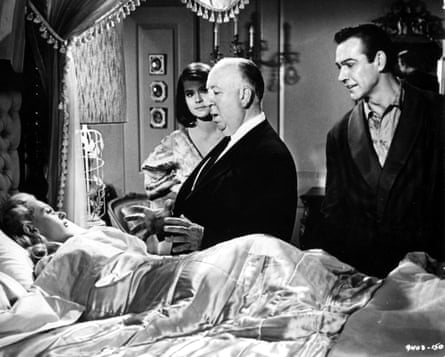
There were further complications behind the scenes. Screenwriter Evan Hunter later described his departure from Marnie (1964) as a creative disagreement, centred on his reluctance to write the film’s rape scene. But other evidence points to more personal tensions. Hunter’s son has since suggested that his father’s behaviour – shaped, he said, by a compulsive sexual addiction – may have influenced Hitchcock’s perception of him, particularly in relation to protecting Hedren. What emerges is a production shaped by overlapping pressures – professional, personal and emotional – in which motivations were not always transparent and recollections later became contested.
Hedren herself acknowledged in a 1974 American Film Institute seminar that Hitchcock could be deliberately provocative, using tension to draw out stronger performances. He had employed similar methods with Marnie co-star Diane Baker, who described how Hitchcock would stage small psychological provocations, appearing to speak about her within earshot, then refusing to look at her just before a take, to create a sense of unease. He used comparable tactics with actors such as Carole Lombard and Joan Fontaine. After Mr and Mrs Smith (1941), Lombard told the press that Hitchcock would “deliberately stir up the emotions of his players” to extract something extra for the camera, fostering discomfort, even hostility, if he felt it served the scene. During the filming of Rebecca (1940), Fontaine recalled being told that her co-star Laurence Olivier intensely disliked her and wanted her replaced by Vivien Leigh. The effect was to destabilise, to heighten emotion at the moment the camera rolled.
These techniques were not always comfortable, but they were part of a broader attempt to shape performance with precision. This is not to excuse Hitchcock’s working methods, but to recognise how these tensions fed into the work itself. His films are defined by psychological intensity, control and unease – qualities that did not exist in isolation from the conditions in which they were made.
Over time, however, these on-set dynamics have been retrospectively reshaped into a more unified narrative about Hitchcock as a controlling, even abusive individual. What were once complex, sometimes contradictory accounts have been streamlined into something more definitive, and in the process much of that complexity has been lost.
The centenary of Hitchcock’s first film, The Pleasure Garden, offers an opportunity to look again and return to the evidence to recognise contradictions, question assumptions and accept that the truth is often more complicated than the stories we prefer to tell. In that sense, Hitchcock’s legacy is not just about the films themselves but about how those films, and the man behind them, have been interpreted over time.