3 months ago
231
3 months ago
231
‘When I drove her in my Saab, she said she loved my soft top’
Duncan Preston
I can still remember waiting to be introduced to Victoria at the Granada offices for her TV film, Happy Since I Met You. She’d been at lunch with Julie Walters and they hadn’t seen each other for quite some time. They were a little bit refreshed, you know what I mean? I can still hear the crash of a door in a corridor as they arrived, and when they came in it was like being hit by a firing squad. I said to my agent afterwards: “I don’t think I’d want that job.” And he said: “Well, they just offered you the part.”
I had planned to be a serious actor – do the classics – but becoming part of Victoria’s company for her sketch shows was the end of that. I used to take her to work in my Saab every day, because we lived less than a mile apart. She would joke: “I love Duncan’s soft top.” We became good friends – and Julie and I had a thing at the time – but it wasn’t all sweetness and light. Vic was a genius and not the easiest person to work with because she insisted that you do everything exactly as it was written. She would make you do it again and again and again, until you said the right words.
I always felt like the token male in that world. We had loads of disagreements on dinnerladies. Early on in filming, I said: “You might as well write me out of this because I’ve got nothing to do.” She was not happy. She wrote me a letter overnight, which she came down and put through my letterbox. She was seething. And the next week, wow, you’ve never seen as much bloody stuff as I had to learn: tongue-twisters and all sorts.
‘Suburban and witty with no swearing, she was a revelation’
Nigel Planer
The first time I met Victoria was at Cardiff’s Chapter arts centre when she was top of the bill with the poet, comedian and genius John Dowie. That was a strange combination: his wild sarcastic monologues, with her on the piano singing her songs about dressing gowns and cocoa. I was lower on the bill, with Peter Richardson in our double act The Outer Limits. In a climate of very male comedy and rock music and later punk, Victoria stuck out: confidently suburban and witty, with no swearing or violence, which were our mainstays. She was a bit of a revelation. I don’t think she was even drinking in the bar after the show.
‘She’d take me home at night in her chauffeur-driven car’
Sally Ann Triplett
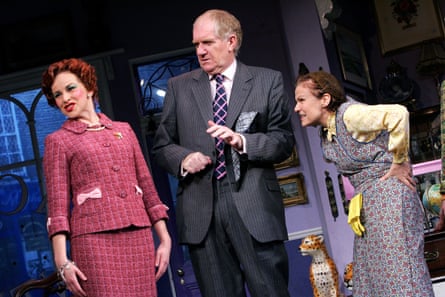
Working on Acorn Antiques: The Musical! was a long and intense process. The whole thing lasted eight months. Vic cast me as Miss Berta, which was the role she played in the original sketch. She was very generous and very, very thoughtful: during rehearsals, we realised we lived near each other in London and she used to take me home at night in her chauffeur-driven car. And, because we both had daughters called Grace, she’d give me little things like pillows or stickers with Grace written on them, from when her daughter was a baby.
You don’t meet many actual geniuses and, as most people would tell you, Vic could be tricky. But it’s because she just knew what was needed. If there was something just slightly out, she had to say. And Acorn Antiques was a massive deal for her. She’d never done a musical before and it was a new adventure.
Trevor Nunn was the official director, but Vic was there every second of the day. He’d say: “We’re going to go from the top of the scene” – and everyone would get ready. Then Vic would come up and whisper in your ear and give you a note just before you started. The most memorable one she gave me was: “You’re doing the whole of act one wrong.” And you can’t help but think: “Well, I probably am.”
She shared the role of Mrs Overall with Julie Walters. The craziest thing about that was Vic’s curtain call on the nights she performed. We were at the Haymarket, which is a chocolate box London theatre, a beautiful but small space where the audience is right in front of you. But Vic would always bow to the right, bow to the left, then bow straight on. She’d sold out the Royal Albert Hall in 1997 and I think she thought she was still there.
Sally Ann Triplett stars in the new Victoria Wood musical, Fourteen Again, at the Victoria Wood theatre, Bowness-on-Windermere, from 1 May
‘Our first conversations were impressions of other people’
Jim Moir (AKA Vic Reeves)
Victoria and I played Eric Morecambe’s parents in Eric and Ernie, a BBC drama she’d had the idea for. When we arrived at the shoot, I didn’t really know her at all. But we were staying in this art deco hotel in Morecambe, so we went out and had dinner. She was really, really quiet, didn’t say anything, very unresponsive. So I started doing impressions of people sitting at the other tables. And she slowly started joining in. I’d be saying: “Oh, do you come here often?” And she’d say: “Yes, I do, but my husband doesn’t know.” So our first conversations with each other were impressions of other people having conversations. We worked well together after that!
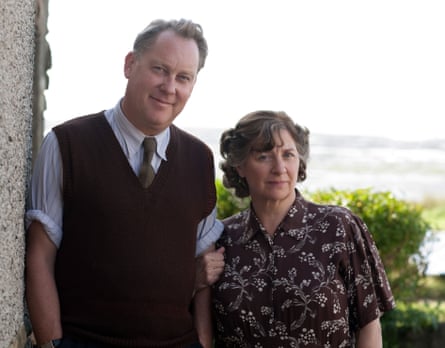
We filmed the final scene first. The script said: “The clouds open on to a big sunset.” Well, it was absolutely hammering down, which didn’t fit with the script at all. I said: “We’re going to have to rewrite this.” But then the moment we sat down, the rain stopped, the clouds parted and the sunset came out. The film gods were shining on us that day.
Jim Moir: Neo Fauna runs at the Cartwright Hall Art Gallery, Bradford, until 31 August
‘She was delivering a version of womanhood I’d never seen’
Joanna Scanlan
As a teenager I’d watched Vic in everything from New Faces to That’s Life. She wasn’t just funny and musically brilliant, she was also delivering a version of womanhood I’d never seen before, that was utterly modern. It was vulnerable but deeply realised femininity. So she’d been my heroine for decades.
She came into my orbit because she was a big fan of Getting On, the hospital comedy I’d made with Vicki Pepperdine and Jo Brand. Even though it won lots of awards, it never made it further than BBC Four. And Victoria was feeling quite resentful at the time about the way the BBC were treating her. She wasn’t being given the opportunities and the commissions she wanted – and deserved. She thought Getting On wasn’t getting enough attention either, probably because it was about and by women.
So we became pals. Then I had the chance to work with her directly on Fungus the Bogeyman, for Sky. It was a joy and so good for me because we’d do the rehearsal and she would whisper to me some cunning little note like: “Why don’t you put the emphasis on that word?” It was always brilliant, exactly what I needed.
Some people wouldn’t have liked that, but I loved it. She really understood language and how to make a joke without losing the drama or the story. It was like I had my own personal coach. I felt her belief in me – I really could have used it earlier in my career – and I’ve carried that with me ever since, close to my heart.
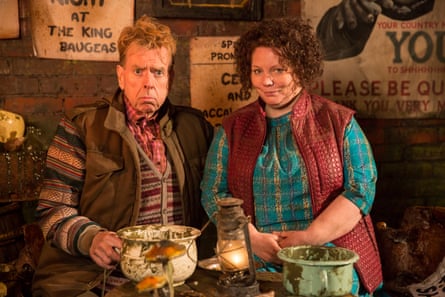
She was shy. She wasn’t an outgoing personality. Often at lunchtime, she’d sit a little bit away from other people. For whatever reason, she just trusted me though, and when she was diagnosed with cancer, we kept in touch throughout all her hospital experiences. She told me not to tell anybody about it, but she was extraordinarily present throughout her illness – aware of her situation, emotionally truthful. I felt like I could be there to listen.
When you went to her house, you felt that the music always came first. Her piano had pride of place. The whole repertoire of classical music was a big part of her life. There was a huge tradition of music at working-class level throughout Lancashire where she was from – the colliery bands, the opera house. Music was part of the furniture, the raspberry ripple in your existence. I know that she would retreat to the piano whenever she needed to work things out.
It’s so important that her work is respected, and I just wish she’d been able to know how important she was to the public, and to any industry person who’d ever worked with her. I was a very, very small part of her life, but she was a very important part of mine. And I suspect a lot of people can say that.
Joanna Scanlan stars in Missed Call, available to watch and stream on 5
‘A stunning interviewee – but always half a step back’
Melvyn Bragg
Victoria had a gift. It was a gift for taking things unseriously, being humorous about them, yet speaking a lot of sense. I bet she had it even when she was six. From her early childhood, I suspect she realised she could secure people’s attention by making them laugh. She saw the world in a different way from everybody else and developed that into a quite brilliant solo act on stage.
She was stunning to interview, witty and pleasing – but always half a step back, because her own mind was working. When she walked on stage, it was as if we were all in her sitting room. And when she started to talk, she’d capture us in no time without any apparent effort.
‘Before recording started, she did five minutes of standup’
Andrew Dunn
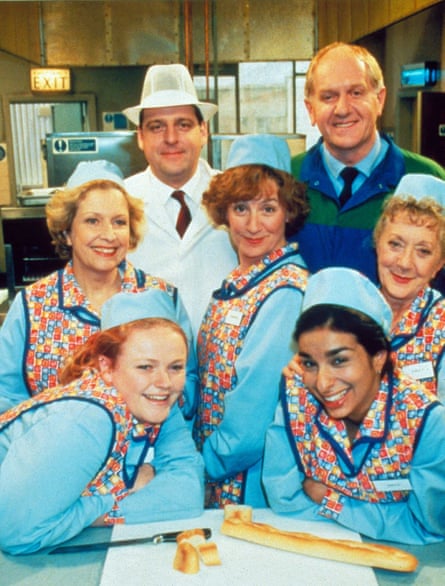
When I auditioned for dinnerladies, I thought: “Well, Victoria tends to speak really fast, so I’ll say my lines fast.” There was one very long paragraph that had no punctuation and I just went for it. “You’re the first person who’s done that right,” she said.
I was thrilled to be part of that show, alongside so many well-known actors. I remember being astounded by how hard Victoria worked, continually rewriting the scripts, playing the central role of Brenda, being part of the production team. It was just so full-on. She’d even warm up the audience by doing five minutes of standup before recording. It was a herculean effort. That was the first time she’d written a sitcom. She put so much into it that I do believe she’d had enough after the first series. She had to be coaxed to keep going by her husband, Geoffrey Durham.
At one point, my character had to kiss Bren under the mistletoe. It was the first time she’d done a kissing scene of any sort. When we went in for it, the audience were going: “Ooooh!” Cast members were peeping from the wings too, which didn’t help. And Vic was a very shy person. But she laughed it off. “I don’t know what they’re making all the fuss about,” she said. The audience made so much noise, we had to do it three times.
Andrew Dunn plays Sam Allardyce in the upcoming BBC drama, Dear England
‘When she went off on one you’d be hanging on every word’
Ria Jones
Vic directed me as Mrs Overall in the national tour of Acorn Antiques. For the first few weeks of rehearsals, I was terrified because she was such a stickler. But she taught me a lot about comedy and it was a wonderful time. I would watch her work, watch how she sang and spoke. Her brain was so quick. There were moments when she got off on one and you’d listen, hanging on every word. Other times, she was very quiet and introverted, a deep thinker, constantly focusing on the next funny line.
We spent some wonderful moments talking about the old days of variety. She and I came up the same way, performing in working men’s clubs. She loved old musicals, which she knew so much about. I used to say to her: “Please write another musical!” She had so many more brilliant ideas in her. It’s such a shame we lost her so young – but what a legacy.
Ria Jones stars with Sally Ann Triplett in Fourteen Again. Their new recording of the title song is released today
‘She looked at my CV and said: “You’re clever. I’d like to make you stupid”’
Shobna Gulati
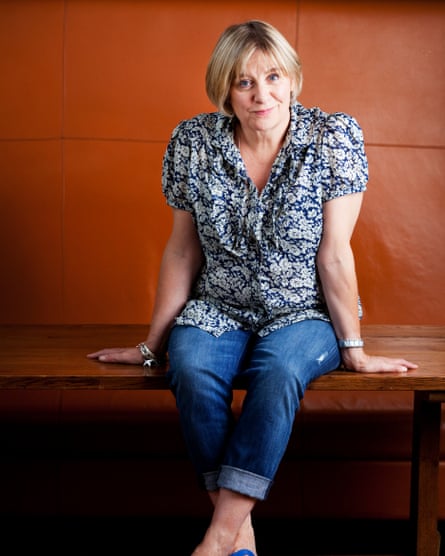
I auditioned for dinnerladies in between pipes in the basement of the old Granada office. Vic looked at my CV and said: “You’re very clever, aren’t you?” I had a degree in Arabic and Middle Eastern studies from Manchester University and had done a postgraduate in dance. Then, looking at me again, she said: “I’d really like to make you stupid.” It tickled her: you could see mischief in her eyes.
She seemed to recognise something in me. She saw this awkward girl of South Asian heritage on the outskirts of the group, because I was often the only person of colour. She had unbelievable observation skills and would pick at uncomfortable truths that were extremely funny and desperately sad. I had just had my son and was a single parent – and in dinnerladies, my character Anita has a baby by herself. I think that came from our conversations about bringing him up. My son Akshay was marginally younger than her children Grace and Henry and we all used to meet at a house up north for Easter. She’d put on egg hunts for the kids.
She wrote clever jokes about how other people viewed Anita’s ethnicity. “Who do you worship in your family then, Anita?” asked Philippa, played by Celia Imrie. And Anita replied: “Well, we all really like Céline Dion.” It was keenly observed, that very northern way of looking at different cultures.
There was one casting director who just thought I was Anita. Vic rang him up and said: “Why aren’t you seeing Shobna? Have you seen her? She doesn’t wear a tabard, you know.” It’s funny, the unconscious bias in this industry. In some ways, it’s a testament to what you created – people would stop me in the street and start talking to me slowly.
Vic understood the struggle and was so keen that I’d get jobs. After dinnerladies, she would invite me to stay at her London house whenever I had an audition. That was lovely of her although it was always slightly funny, staying with somebody who used to be your boss. We were both painfully shy and would do this awkward dance around each other by the kettle. I miss all that, but I always have her on my shoulder. If there’s a laugh to be had on stage, I make sure I have it.