2 hours ago
11
2 hours ago
11
All it took to turn the murky, heavily polluted waters of South Africa’s Stiebeuel River into a resource clean enough for irrigating a community’s vegetable plots was a collection of stones, heat-treated wood and sand.
Without chemicals and using renewable energy, researchers from the University of Cape Town are cleaning 36,000 litres of water, polluted by sewage, chemicals, and traces of drugs and medication, every day to make it usable for growing food in a fast-expanding informal settlement along the course of the river.
Scientists behind the project think it could be a model for ensuring food security in the climate crisis.
“What we’re doing is taking that water, treating it every day, and some of that water is now being used for growing vegetables, for feeding hungry children and people living in the informal settlement,” says Kevin Winter, one of the researchers behind the Water Hub project in Langrug, near Stellenbosch in South Africa’s Western Cape region.
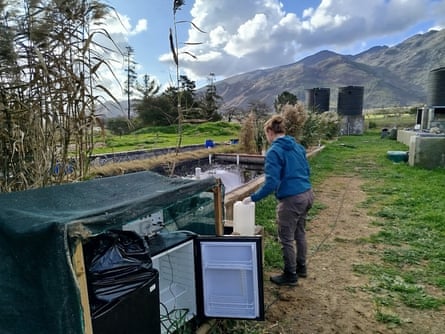
Winter says of the treated water: “You’d be very hard pressed to know the difference between it and your municipal treated water, which has been through a treatment plant and been chlorinated.”
Established in 2018, the project has only this year succeeded in reducing bacteria and pathogens to a level that allows the water to be used for irrigation, though not for drinking.
Winter says the system now removes about 99% of the toxins before most of the water is released back into the river, where it feeds surrounding ecosystems. About 3,000 litres is held back to irrigate food-producing gardens at the Water Hub.
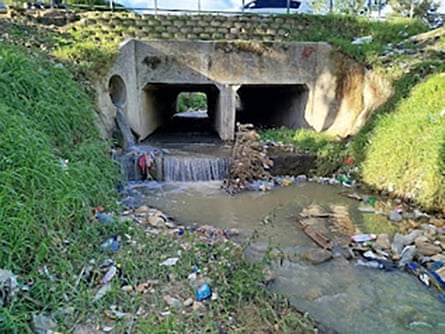
Working in the area since 2006, Winter has seen the population of Langrug grow from 3,000 people to more than 26,000, mostly driven by seasonal work on farms and in the wealthy nearby town of Franschhoek.
Langrug’s unplanned growth left residents without access to clean water or sewage facilities. Local water plants were stretched beyond their capacity and so Winter’s team took on the task.
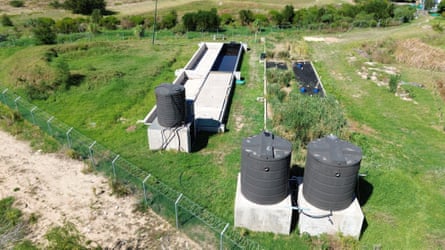
They built their nature-based system in an abandoned wastewater site, turning old drying beds into a network of filtration cells. The system is off-grid, using solar power to pump water from the river into the cells, where it slowly filters through over five days.
Large stones are used to trap particles and chemicals; then a layer of biochar – wood burned at 800C (1,470F) – filters out traces of drugs, pharmaceutical waste and ammonia; and the final layers of smaller stones and sand absorb the remaining toxins and pollutants.
after newsletter promotion
Winter says the filtration system is not designed to replace conventional plants cleaning industrial-levels of water for towns and cities, but that it does provide clean water for rural communities.
The Western Cape faced an almost catastrophic water crisis in 2018, when reservoirs came close to running dry after a period of extended drought. For months, households in the region were forced to ration water and about 31,000 farm workers lost their jobs.
“It’s absolutely crucial that we start looking at how we do this. Climate in the next 30 years, particularly in our region here, is going to look very, very different,” says Winter. “Yes, it’ll have all the wildfires, it will have all the flooding, but it will have prolonged periods of drought when food and access to water is scarce.
“Making water available for food, and for food security, as a climate-change strategy is absolutely crucial worldwide and we’ve got to learn to be able to do that more and more,” he says.