3 months ago
154
3 months ago
154
As a mental health chaplain in New York, I help people leave homelessness. But mental illness, bureaucracy and a fragile system often pull them back
The apartment came up on the city’s alert system: a studio on a leafy street, one block from Prospect Park in Brooklyn.
The location is extremely desirable – it would be a score for any single person hunting for their first New York rental, let alone someone who had spent years in the shelter system.
But Diane, my client, rejects it outright.
“As I’ve told you,” she says, “the prophecy apartment is on 40th and Amsterdam.”
I remind her again that the intersection of 40th Street and Amsterdam Avenue does not exist in New York City. I suggest, gently, that this might still be worth seeing.
“Maybe just give it a look?” I say.
We’re seated close together in my tiny airless office in the basement of a church, a space so small it once served as a clothing closet. Diane starts doing the thing where her eyes shift an inch above my head to address the voices and spirits that follow her throughout her days. This morning it’s Céline Dion, who reliably serves as the harbinger of any news that will jeopardize Diane’s fulfillment of “the prophecy”, which she has chased across seven states and seven shelter systems.
She begins to shout so forcefully the veins pop in her neck. She rebukes demons and even Billy Joel, who sometimes conspires against Dion.
I sit there calmly, waiting for her to finish, then she drops her eyes and re-enters my world.
“I’m sorry, but we cannot accept the apartment,” she says.
It’s the fourth one she’s turned down.
Diane is one of many people I try to help each day who are caught between homelessness and serious mental illness.
After a career in journalism covering war and poverty, I entered seminary and trained as a chaplain at New York’s Bellevue Hospital. I now serve as a mental health chaplain
and clinical director clinical director at Broadway Community in Manhattan.
We’re a small interfaith non-profit that runs a 19-bed shelter and a bustling soup kitchen in the basement of Broadway Presbyterian church, where I was ordained. We place no requirements on belief or affiliation; some people come for communion or spirituality groups, others simply for a meal and a place to sit.
New York City has the largest unhoused population in the country, and one of the tightest housing markets in the world. The vacancy rate for affordable apartments is under 1%. Outreach teams try to funnel people into roughly 40,000 supportive housing units across the city.
Once people are housed, they tend to stay housed – and the cost is far lower than alternatives such as hospitalization or jail. But for neighbors living with delusions, paranoia and trauma, the path can be wildly complicated and mostly hidden from public view. Often it’s interrupted by the very symptoms that already isolate them and keep them on the streets.
Our job is to guide clients through a maze of bureaucracy that can overwhelm even an organized mind. We help replace lost IDs, apply for benefits, submit dense housing paperwork and connect people with doctors, medication and caseworkers while they wait months for interviews.
In the meantime, we buy them a cell phone so they can reconnect with family and keep their appointments. Our free shower and laundry program helps them maintain dignity and social acceptance. We encourage them to join us for meals in the soup kitchen and to make new friends.
Eventually, if we’re lucky, we escort them to apartment viewings.
One day, Jerry walked into my office covered head to toe in pink glitter.
Jerry’s stories were always grandiose. He said he was investing in a cattle ranch in Montana where he would employ everyone in the soup kitchen. A European prince, he told me, owed him $5bn.
I had first met Jerry at our soup kitchen. He was middle-aged and well educated, and before landing on the streets had worked in the music industry, traveling all over the world. By the time he came to us he was living with bipolar disorder and prone to using drugs during manic swings.
Jerry’s history of mental illness and years on the streets should have made him a clear candidate for supportive housing – buildings where staff help residents manage medications, benefits and medical care. But in the rush to get people housed, a caseworker at a Bronx shelter instead secured Jerry a city voucher typically reserved for clients without serious mental illness or substance use histories. His long record of psychosis and hospitalizations went largely unheeded.
Jerry moved into a studio apartment in a brand-new building, and the problems began right away. He was too ill to work, but the Social Security Administration had denied him Supplemental Security Income (SSI), which assists folks with proven mental illnesses. As part of his voucher, the city had agreed to cover Jerry’s “share” of the monthly rent, which amounted to about $220 of the overall sum.
But a year into his lease, the city still hadn’t paid his share and arrears began to pile up.
Around this time Jerry entered one of his manic phases, typically punctuated by a signature flamboyance. One rainy afternoon he stood on the church steps and told Isaac Adlerstein, our executive director: “Send everyone in the kitchen home, I’ve cooked enough for everyone.” In his hands was an empty soup pot.
Another day, he showed up in an orange jumpsuit from a correctional facility in a neighboring state. Had he just escaped? We didn’t ask, just gave him a change of clothes and quickly pointed him to the restroom.
Around this time, Jerry also became convinced that people in his apartment building were trying to kill him. He began looking haggard and said he was sleeping outside. We accompanied him to Bellevue hospital, where he was admitted to the psych unit for several weeks.
Upon discharge, Isaac took him home only to be greeted at the door by a woman wielding a screwdriver. She was a known crack user who lived on the streets and somehow found her way in Jerry’s apartment. She wouldn’t unlatch the chain so the super called the police to kick in the door. Once inside, Jerry discovered the woman had sold nearly all of his belongings to buy drugs: his mattress and furniture, clothing, even his can opener.
Later, we learned that during his time outside, a police officer had picked him up and taken him to the city’s main men’s shelter on 30th Street. Jerry had filled out the intake papers and walked right out, never even spending the night. Nonetheless, the intake was recorded in the city records and flagged by the agency that paid his rent. As a rule, you can’t live in city housing and a shelter at the same time, so they cut his voucher.
I discovered this months later, when Jerry brought me a letter his landlord had slipped under his door saying he owed more than $15,000 in both rent and his individual share and was now facing eviction. He was quite fragile at the time: his hands trembled and he was having trouble walking.
I accompanied him to New York City’s main housing office on 16th Street, where the clerk confirmed that he had lost his voucher. She pointed us to another agency that could reinstate it, saying it shouldn’t take long.
The next week, we trudged up to the Bronx and waited for an appointment with a case manager who said their caseload was so backlogged they couldn’t even look at his file. They gave him an appointment for October – three months away. When the appointment finally came, another worker assured us it was just a matter of getting his address re-entered into the city’s computers. Not to worry.
Meanwhile, Jerry went back into the hospital, this time for chronic insomnia that caused him to go weeks without sleeping. The sleeplessness was a symptom of his bipolar disorder, or perhaps a side-effect of the meds he was taking or the cocaine he sometimes snorted. Whatever the case, not sleeping seemed to awaken his mania and bring it on faster. The hospital stays grew longer, some up to six weeks.
There were other fallouts. In addition to losing his voucher, he had also been arrested several times for petty theft (hence the jumpsuit). During one incident at a deli, a security guard beat him with a golf club and left him with a concussion.
Court notices began arriving in the mail. Our team scrambled to keep up – contacting legal aid lawyers, coordinating with an intensive mobile treatment team, and trying to stabilize Jerry’s medication.
At one point, I counted a dozen different mental health professionals who were tasked at keeping him housed and out of jails and hospitals.
The eviction letters kept coming.
Elsewhere, the ground was giving way.
While Jerry was surrounded by doctors who managed his care, getting my other clients treatment was a constant challenge. In particular, we were worried about Diane, who had begun to decompensate. That is when someone can no longer cope with their symptoms, leading to the deterioration of their mental or physical health.
Our staff is careful to distinguish between what might be a momentary mental episode and full-on decompensation, which requires professional intervention and perhaps hospitalization.
Calling 911 is always our last resort as these incidents can constitute additional trauma for our clients, but Diane was leaving us with no choice. She had verbally assaulted several other shelter guests, convinced they were possessed by demons. Then security called one night: Diane was standing on a table, yelling and refusing to get down.
Once I arrived, I was more alarmed to learn she hadn’t eaten in over a week (“I will not eat the canine food you serve in this establishment!”) and was barely drinking water. She looked thin and smelled of urine due to incontinence we suspected was caused by a urinary tract infection, which also needed treatment.
The decision was easy. Isaac called 911 and four female officers arrived – despite him specifically asking for EMS – who despite her refusal and slight resistance carried Diane into a waiting ambulance and took her to a nearby hospital.
But when the attending psychiatrist called me an hour later, she said Diane seemed “fine” and wondered what had prompted us to hospitalize her. I’d already played this game many times and lost, but still I made the case.
I explained Diane’s history of delusions and the “prophecy” that was keeping her from being housed and meeting her basic needs; I explained the recent assaults and erratic behavior and lastly, the hunger strike which was also tied to her paranoia. Harm to self and others, Diane checked both boxes for admission.
The doctor shared that Diane had shown the triage nurse the scars on her back from where her “angel wings” used to be “but in speaking with her myself I see no reason to keep her”. Sensing I was getting nowhere, I pleaded they at least hold her overnight to test for the UTI, which in extreme cases can cause symptoms of psychosis. She agreed. The infection was in fact confirmed and Diane was given a regimen of antibiotics. Two days later however she was back in our care, a bit more subdued but as delusional as ever.
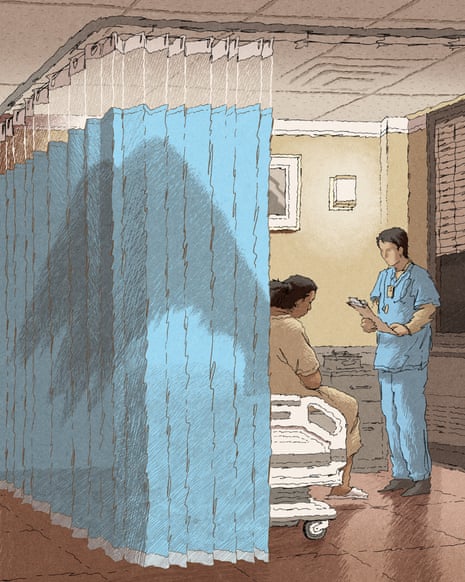
I believe that if Diane had gotten the psychiatric care she needed, if the hospital had admitted her for six weeks or more, like Bellevue had done for Jerry, and if she was willing to try medication, she would eventually stabilize to a point where she could be housed.
I’ll never know the exact reasons the doctor discharged Diane (although in my cynicism I could list a few), but I do know that a lot of our clients with extensive psychiatric histories are savvy (or “clinically trained”) and know what language to use when speaking with doctors and others who potentially stand between them and their freedom. And who can blame them?
As a clinician, I don’t make diagnoses and don’t put much credence in their overall usefulness. However we needed one for housing, and I wanted a psychiatrist to accurately diagnose Diane so she could qualify for the categories best suited for her.
A few months earlier, I had scheduled an evaluation with a doctor who worked with one of our partner organizations. In the biopsychosocial assessment that I’d prepared beforehand, I had indicated that Diane exhibited what appeared to be auditory hallucinations. I detailed the spiritual delusions, and shared a story about the time Diane found me in the soup kitchen and whispered, “Pastor, there’s a demon attached to my leg and it’s moving toward you, so beware.” (I had thanked her for the heads up and rebuked the demon just as casually, which seemed to satisfy her).
In the assessment, I had also detailed the heartbreaking story of a woman whose parents had abandoned her as a child but who had nonetheless managed to thrive, graduated with honors, completed a masters degree, and enjoyed a professional career until mental illness derailed everything. She had been in and out of hospitals for over a decade and homeless most of that time.
As a chaplain and pastor, my job is to facilitate a language of faith that perhaps other clinicians cannot. For this reason, I assume Diane felt at ease expressing to me what was happening in her mind.
In that way, our soup kitchen doubles as a kind of mental health day-program for folks whose behavior would otherwise isolate them from the rest of the world. One of our regulars, Franklin, paces his own labyrinth through the tables while wrestling with the voices in his head. One woman sits with her face inches from the wall and eats her meals, a floppy hat pulled low over her eyes. Some find relief from their voices in our computer lab where we lend them headphones to watch endless YouTube videos and stream music.
A sign on our wall declares our core values, which we try to embody and announce each day before lunch: “In this room: you belong here. You matter. You are worth it. You are important. You are loved. You have a voice. You are valued. You are respected.” No matter what’s happening inside a person’s brain, in our space they are affirmed as children of God who are worthy and deserving of love. As long as they’re peaceful they can find community in being their true selves – which in Diane’s case, often presented as a person at war with her own mind.
This is what I expected to see when Diane sat down with the psychiatrist for her evaluation, which I attended. Prepped with my assessment plus a previous, outdated evaluation, the doctor asked Diane a series of questions about her mental health that could point toward some of the behavior I’d described. But Diane seemed miles ahead. She sat calmly, cross legged, and answered every question thoughtfully as if she were sitting for a job interview. Over the course of an hour, she denied all mental health symptoms and gave a linear and detailed version of her childhood and professional career. It was a masterful code switch.
But right at the end, as Diane was speaking with me, the subject of demons came up and she began to stammer and fumble with her phone and fell back into her delusions. The doctor confirmed her diagnosis of schizophrenia, and given the length of time she’d been on the streets, she easily qualified for supportive housing.
By springtime, Jerry’s unpaid rent on his apartment had reached more than $35,000. In April, he received a final eviction warrant giving him 14 days before the city marshalls showed up to his door to put him out. I called and emailed the housing office hoping to see what was taking so long to reinstate his voucher and discovered that due to a miscommunication within the agency, his case had been closed for months.
No one had even bothered to send a letter.
Fortunately, Jerry’s IMT team had been able to stabilize him enough. Using this moment of clarity, he went to the courts and got a stay on the eviction, an effort that drained every bit of his energy. He then entered a deep and long depression, staying in bed for days at a time and not answering his phone. When he appeared at the soup kitchen his affect was flat, his beard scraggly, and he smelled as if he hadn’t bathed in a while.
However, during the downsides of his illness is when Jerry became the most introspective. He sat in my office and reflected on his life growing up, his family’s history with mental illness, substance use and suicide, and together we tried to find some perspective.
For years he had been separated from his wife and child, who lived in another state. He had lost a lucrative career, cars, homes, and now lived in a neighborhood surrounded by drugs and poverty. But as low on the ladder as he had fallen, Jerry somehow found reason to be hopeful. “For whatever reason, I just feel like everything is going to work out for me,” he said. It was also during these periods that he also expressed gratitude to me and Isaac and the rest of his team who had been helping him.
One day, Jerry agreed to grant me power of attorney so I could advocate on his behalf. The next morning, I wore my clergy collar down to the housing office and got on line at 7am, hoping to be seen while the clerks were still fresh. I explained that Jerry’s poor mental health had caused him to stay in the shelter and inadvertently void his voucher. I brought a letter from his landlord confirming he lived in the apartment, along with hospital discharge papers, doctors’ letters, and my email correspondence with supervisors. After two visits they agreed to reinstate his voucher and pay the backrent – an outcome that would have been highly unlikely had Jerry tried alone. Shortly after, I went to Jerry’s court appearance and got the case adjourned for two more months to allow the checks to arrive.
For Diane, the period after her hospital discharge did not bring any clarity. She remained locked in her spiritual delusions and passed up opportunity after opportunity: an apartment in West Harlem, one in the Bronx, then two more in Brooklyn.
In the early mornings I would sit in my office and listen to her argue and plead with the characters in her head: Whoopie Goldberg, Céline Dion, plus the coterie of demons that hounded her. The previous year our team had managed to get her Social Security turned on but soon discovered she was spending her monthly checks on clothing at a nearby department store instead of doing laundry. Every few weeks we found bags of these clothes, with tags still on.
She rebuffed all our efforts to intervene. “I am strong!” she told me, slapping a flexed bicep. I asked her to try to see what I was seeing: a woman whose health was clearly in danger. She leaned in close and assured me she could see just fine: “I have 240 guillotine vision for the warp-speed future.”
Around this time Diane had another altercation with our overnight staff that demanded our action. By then, we were out of options. We’d found her housing, tried hospitalizing her. We’d even gotten her an IMT team whom she mostly refused to work with. All that remained was finding her a specialized city shelter with psychiatric and medical care in house that could hopefully meet her higher level of need.
When the transfer finally went through, Diane refused to leave. Then one night she didn’t check in to the shelter. A diligent search of the hospitals and jails turned up nothing, and for months she was in the wind.
Then one day, another case worker called saying she’ had spotted Diane that morning. She was pushing her heavy cart up Amsterdam Avenue.
In the late summer, as our team waited for Jerry’s checks to arrive, he entered another prolonged state of mania. Gone was the quiet introspection, the self-advocacy, and the rational goal planning. Once again we were receiving 30 emails in the middle of the night with photos documenting his nocturnal mad wanderings through the city: ambulances, police officers, emergency room triages, a 3am selfie of him in Times Square, the lights ablaze behind him, wearing a T-shirt that read: “Mental Illness is Not a Crime.”
Once again Jerry began turning up at the soup kitchen in full flamboyance wearing giant furry hats and bearing bags of gifts he had found on the street or stolen. One day he dragged in a bag of soccer balls to start a youth program. Later it was bags of books, a television, even a rare live Beatles album I was afraid to ask about. Each day, he wore a different hospital bracelet from the ER visit the night before that collected like bangles on his arm. One morning he was so manic and sleep-deprived his body was quaking so I called a car and took him to Bellevue myself, making the case with the doctors for a few days’ admission. But the doctors had seen him twice that week already, and before I even reached the subway they called saying he was discharged.
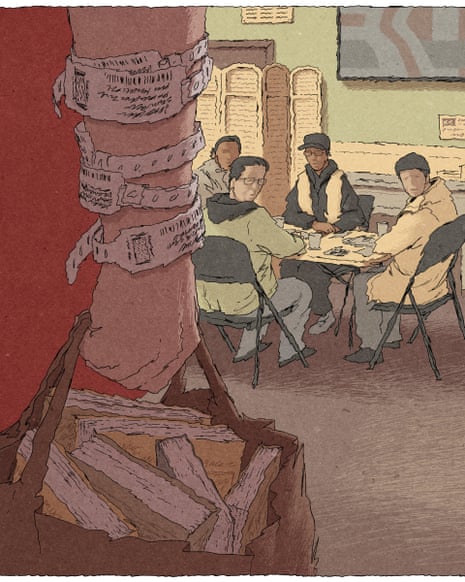
Finally, his condition became so dire that Mt Sinai hospital agreed to admit him, giving Jerry – and his care team – a much-needed time of rest.
With Jerry in the hospital, our team worked on the final steps to try to save his apartment. On the morning of the hearing, while waiting to be called, I watched person after person go before the judge or the court attorney with only the assistance of a public defender who in most cases had been assigned to them that very day. From what I could hear, most were navigating this enormous eviction journey on their own and still had a long way to go, and for many it would all amount to the marshall padlocking the door.
A few days after the final court hearing, I received an email saying the balance was settled and the case was being dropped. We had made it just under the wire.
I felt grateful to be part of a team who could help people like Jerry and so many others at Broadway Community, and I thanked God for giving me this call as difficult as it was sometimes.
It was about noon when I returned to the soup kitchen from court. The basement was full with our usual lunch crowd. I got a call on my walkie saying that Jerry was upstairs and I should come quickly. I climbed the stairs and there he was at the doorway, talking 100 miles per hour. He looked worse than before.
“When did you get out of the hospital?” I asked.
“Oh they let me out a couple days ago,” he said. “I lost the keys to my apartment so I’ve been staying at 30th Street.”
I couldn’t believe it. “Wait, you stayed in a shelter?”
“No need to worry, the city is giving me $10m a month until I die. They say it’s the least they can do for me. I’ll just buy my building.”
I expressed my anger that he’d stayed in the shelter rather than calling us. How we had worked for over a year to get his back rent paid and how he had been days away from losing his home. And now all that was in jeopardy again: one shelter intake was enough for the city to cancel his voucher and start the entire process again.
As chaplains, we’re taught that one of our most innate spiritual needs is that of reconciliation – reconciling with our pasts, as well as our actions that have caused harm to ourselves and others. Redemption and growth can only happen if first we take responsibility for who we’ve been and what we’ve done. And for the chaplain, it means applying a measure of tough love to help our clients see it.
But of course, mental illness complicates everything. I knew that Jerry was not in his right state of mind, that bipolar disorder had hijacked the functional part of his brain and that somewhere beneath it all was a healthy and relational person, the same child of God who had dreams and sorrows and hopes of getting better. So I yelled at that person.
Jerry was taken aback by my reaction. He grew quiet and then apologized, saying that he would have called but he didn’t have a phone.
“Right, I remember,” I said, “We were going to help you get another one.”
I alerted the rest of the team to what had happened and warned them to prepare. A call to the landlord revealed that Jerry had somehow taken their master key and there was no way of getting into the apartment.
I called a car and told him to get in.
We would have to go drill out the lock.
-
Illustrations by Chris Kim. The names of clients, plus identifying characteristics, have been changed to protect their identities.