2 months ago
129
2 months ago
129
I have a $1,400 mat stashed under my pink velvet couch.
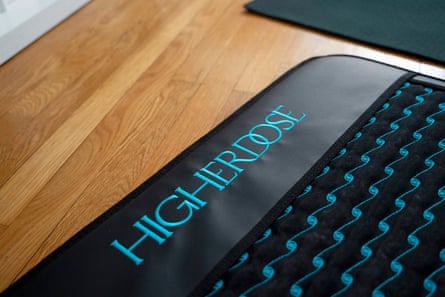
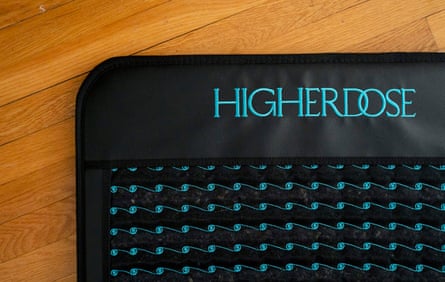
It’s my roommate’s PEMF and infrared therapy mat, and yes, it costs nearly as much as my monthly rent. Measuring 6ft in length, made of vegan leather, layered with bright-blue amethyst and obsidian crystals and weighing as much as a Siberian husky, the HigherDose mat makes my basic yoga mat feel like a flimsy slab of cardboard.
The wellness brand claims its bestselling mat can boost mood, improve sleep and speed up muscle recovery with “total-body relaxation”. All you have to do is spend 20 minutes lying on it: the brand says “a quick session on the mat is equivalent to an hour of yoga or meditation.”
HigherDose is at the forefront of our collective obsession with biohacking, which has popularized wellness treatments such as Oura rings and red light therapy masks. The brand sells a zany-sounding list of products: infrared sauna blankets, red light showerhead filters and even a red light baseball cap that claims to promote fuller hair. As for the mat, celebrities including Julianne Hough and Gwyneth Paltrow have touted its benefits. It’s even been raved about in other review outlets.
In my roommate’s case, she uses the mat’s “focus” setting the most. “I feel like I get work done,” she told me about using the mat for the past year. It also helped her relax.
This all sounded like a dream to me. As a certified yoga instructor and somewhat of a wellness junkie, I’ve experimented with supplements, tried trendy magnesium tonics and written about mindfulness and running. I’m constantly sore from jogging upwards of 20 miles per week. And my type A personality often leaves me feeling overwhelmed and anxious.
So I decided to spend a week testing it out. (My roommate graciously agreed to it.) I also asked experts studying PEMF therapy about the science behind a mat like this.
At a glance
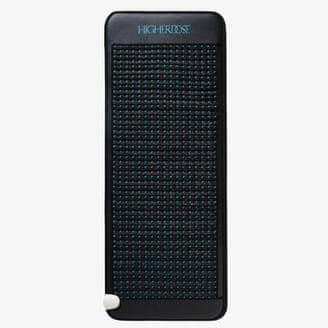
HigherDose
Infrared PEMF Pro Mat
$1,374
Does PEMF therapy work?
Pulsed electromagnetic field (PEMF) therapy delivers electromagnetic vibrations to your cells, which can stimulate them to promote healing and reduce pain, according to studies. It may sound like sci-fi, but PEMF has been around since the 1970s. It earned FDA approval for medical use in 1979 and has since been adopted by some physical therapists and professional athletes for recovery.
Does infrared heat therapy work?
HigherDose’s mat also uses far infrared heat technology. Commonly used in saunas, this type of therapy has been shown to treat ailments such as fatigue, low blood pressure and depression. Because I used both of the mat’s settings at once, my results could be chalked up to the mat’s heat therapy too.
As for those embedded crystals, the brand claims they “amplify benefits”. No scientific studies have proven that they have any sort of physical health benefit, though they could help soothe or uplift you through the placebo effect.
How I tested
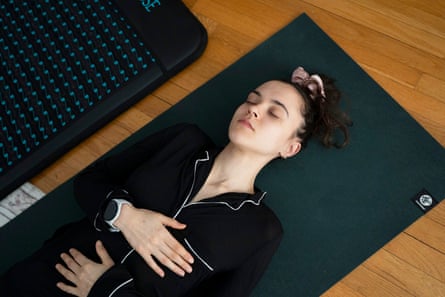
I spent one week comparing HigherDose’s mat to Manduka’s standard rubber yoga mat, the one I typically use.
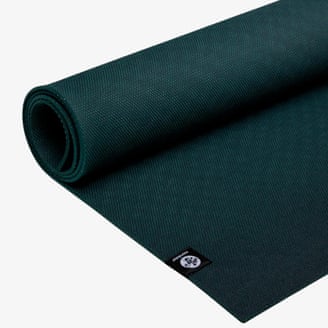
Manduka
X Yoga Mat 5mm
from $59
Every evening, I placed them beside each other in my living room and laid flat on my back for 20 minutes on each mat, the amount of time HigherDose suggests for a “full PEMF cycle”. Each day, I alternated the order that I tested them in. I limited movement while on the mats and didn’t talk, instead closing my eyes or reading on my Kindle (The Mad Wife and You’ll Never Know).
The HigherDose mat’s four PEMF frequencies purportedly have different effects: “sleep” (3Hz), “grounding” (7.8Hz), “create (10 Hz), and “focus” (23Hz). I opted for 3Hz because I’m always eager to improve my sleep, and the highest infrared heat setting since it’s been so cold out.
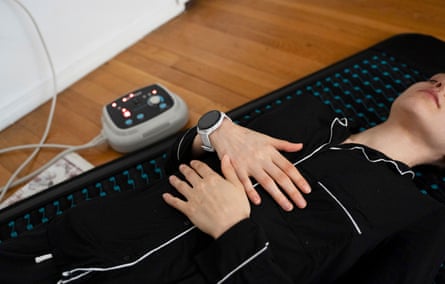
Using my Garmin watch’s “health snapshot” feature, I measured heart rate variability and stress level after lying on each mat. Heart rate variability is one indicator of how well your body responds to stress. A dip can indicate that your body is struggling to recover from physical or mental stressors.
My week with HigherDose’s PEMF mat
On day one, I unceremoniously lugged the 43lb mat out from underneath our couch.
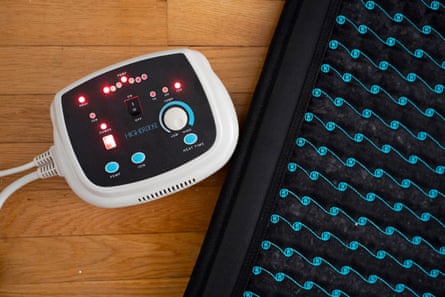
To activate its infrared heat and electromagnetic frequencies, I plugged a bulky, square-shaped controller into one of its corners. (The buttons and dials on the controller’s display make it look like something sold by a mad scientist rather than a buzzy wellness brand.) Then I adjusted the mat’s settings, listening to the high-pitched beep as I raised the heat setting to “high” and the PEMF frequency to “sleep.”
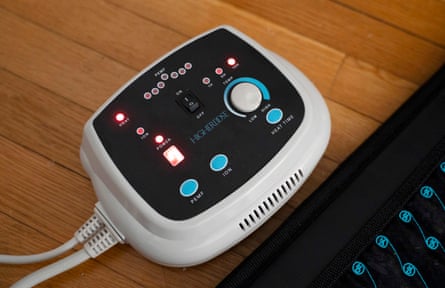
The minute I lay back on the mat, the infrared heat enveloped me in its warmth. I felt calm and even a bit drowsy. After 20 minutes, I was ready to crawl into bed and fall asleep – though I’d felt a similar effect after a cup of chamomile tea ($0.50 a bag) or a hot bath (included in my rent). And for all the mat’s bells and whistles, my body didn’t feel recharged “at the cellular level”, as the brand claims.
And the following nights, my precious sleep (of which I need at least eight hours to function) didn’t improve. Rather, I was waking up around 1 am each night, something that wasn’t typical for me. I was also experiencing unsettlingly vivid dreams that matched up with when I started testing. (That first morning after, I silently cursed the mat. It peeked at me innocently from underneath our couch.)
“Some people can initially feel more stimulated before their system settles into a parasympathetic response,” said Jessica Alcalde, the brand’s vice-president of product. The parasympathetic nervous system manages rest. “In those cases, we recommend earlier-evening use or starting with shorter sessions.”
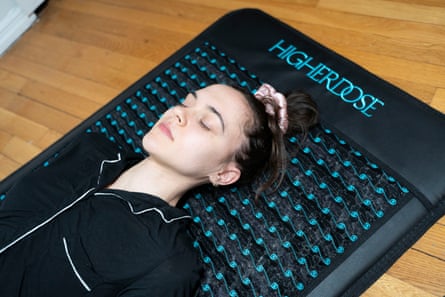
By halfway in my testing journey, though, I still wondered if the mat was simply a glorified, oversized heating pad. On day three, I’d run 7 frigid miles. Then I had my nightly session on the mat, which involved yet another struggle of moving its heavy weight out from underneath my couch. The morning after, I woke up eager to feel the healing magic of fancy PEMF tech.
To my disappointment, my calves still felt tight, my feet still achy.
Dr Robert Dennis, an engineer and researcher who developed PEMF devices for Nasa, thought I should wait longer. “Forty years from now, when you’re in your mid-60s, the effect will be spectacularly profound. It’s like a retirement account – it’s better when you’re older,” he said. (Dennis is a particularly strong proponent of PEMF therapy, and has developed devices using the technology for another business. He also told me that, having personally felt pain relief from using it, “my purpose in life is to make this available to everybody.”) HigherDose’s Alcalde also said the mat’s PEMF tech supported muscle recovery “more cumulatively”.
In recent Guardian coverage of at-home PEMF mats, however, another expert was more skeptical. Gary Housley, the chair of physiology at the University of New South Wales, was referring to mats with only this technology (no infrared heat or crystals), but told our health reporter that the category was “highly variable”. The electromagnetic fields they generated were “very, very weak”, he said, compared to formal PEMF medical devices.
My results
As a yoga instructor, I pride myself on being in tune with my body. To my surprise, though, my Garmin saw a small heart rate variability (HRV) bump after I lay on the PEMF infrared mat – about two milliseconds higher than usual. It typically ranges in the mid-90s but can drop as low as the upper 80s when I’m stressed.
This change is “not something that people can sometimes feel,” Dr Magda Havas said when I asked her about it. Her studies have concluded that PEMF could help reduce pain from osteoarthritis.
But HRV does naturally fluctuate in milliseconds throughout the day, and my Garmin showed slightly lower proprietary “stress levels” while using my regular mat. I didn’t feel more or less stressed on either one. In other words, the data was sort of a draw. If the HigherDose mat (or the Manduka mat) was doing anything measurable for my nervous system, my watch couldn’t confidently prove it after a week.
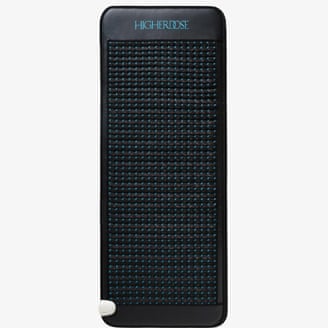
HigherDose
Infrared PEMF Pro Mat
$1,374
It’s possible that PEMF technology would have helped more if I used it longer. “Once your cells are energized, it then affects your organs. And once your organs are energized, it affects your whole body. So it takes time,” Havas said.
Still, you may not feel like spending the equivalent of an annual membership to a yoga studio on a mat, if you can already feel relaxed from 15-minute meditations or a $20 heating pad (our contributor Maria Ricapito recommended this “cushy” one).
As for me and my more budget-conscious quest for better sleep and less stress: I’d rather read a novel in bed – or simply stretch it out on my good ol’ rubber mat.