3 months ago
127
3 months ago
127
The students at Ellis Prep academy – like most high schoolers – have a lot on their mind right now.
Essay deadlines, college applications, younger siblings and dance rehearsals. But also, the immigration operations across the US and the president’s goal of “mass deportations”.
This small high school in the Bronx is one of the few in New York City that is dedicated exclusively to students who recently arrived in the US.
In May last year, 20-year-old Dylan Lopez Contreras – a senior at Ellis – was detained at a routine immigration court hearing. He was completing his education, which had been disrupted by the arduous journey he had made from Venezuela to the US border. Then suddenly, he disappeared from class. And his name was all over the local and national news. According to his lawyers, he was the first New York public school student detained by Immigration and Customs Enforcement. He has been detained at the Moshannon Valley ICE processing center in Philipsburg, Pennsylvania, ever since.
“It was a shock,” said Roger, one of his friends at Ellis.
In the months since Dylan’s arrest, Roger and other students have tried to process their anger and their grief about what happened while rallying support for their friend. They have also tried to imagine the lives they want to live, and a world they want to live in, after they graduate high school.
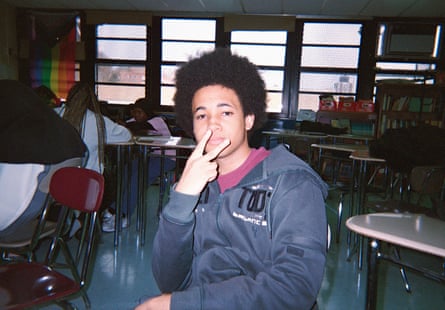
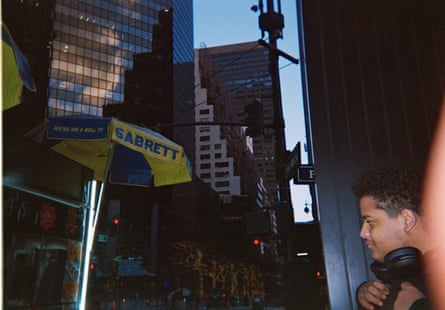
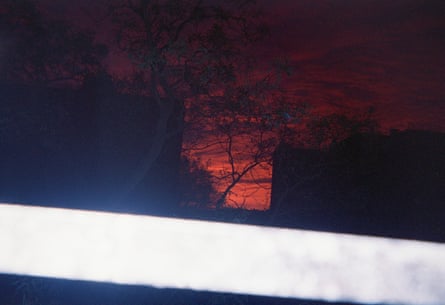
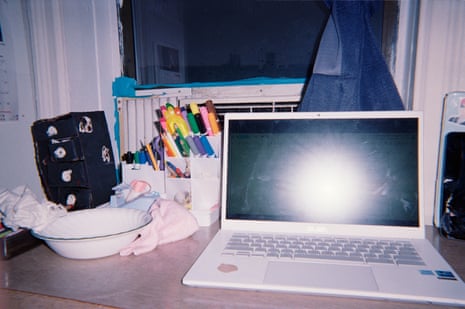
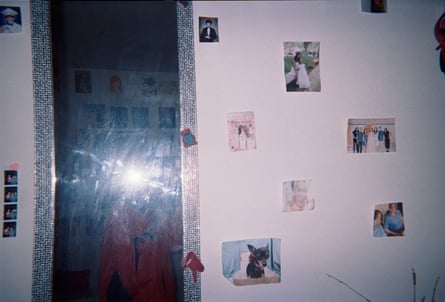
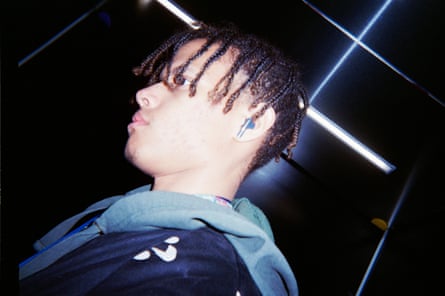
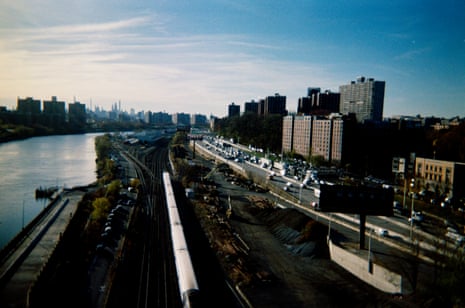
This winter, Dylan and five of his classmates at Ellis documented their worlds – using disposable cameras, illustrations and words to capture everything they were seeing, feeling and thinking in this moment.
These are their stories.
Dylan, 20, freshman
Writing from inside the Moshannon Valley ICE processing center in Philipsburg, Pennsylvania.
Life in here tends to be quite uncomfortable, stressful and monotonous, among other things. There are often many conflicts over things as simple and trivial as snoring or leaving a small piece of trash. Here we are living together with people from different cultures, and on top of that we also have to tolerate the guards, who are often racist and mistreat us.
There is a lot of noise in here for multiple reasons, so it is quite difficult to sleep.
Seeing what one has to endure and how extremely difficult it is to get out of this “prison” in the US without being deported (the most common situation is spending several months waiting for a court date and still being denied everything), many people end up immediately requesting “self-deportation” just to avoid having to endure the psychological torture we are being put through.
If you want stress and depression not to take over, you have to find ways to occupy and distract your mind.

For example, I have seen people coloring, painting and drawing, and others who even manage to create their designs and drawings on clothing and hats – like a guy from “C1” who paints animé characters like Goku and makes drawings on request. There is also an elderly man who made a needle from a battery and threads from towels. He dyes them different colors and does embroidery on clothing.
I distract myself by doing Sudoku, word searches and playing board games such as Ludo, Uno, and Monopoly. In addition, I read books; right now, I am reading one titled María, of Colombian origin.
We have access all day to make phone calls, so I can communicate with my family whenever I want, although all calls are charged. I have not spoken with friends because I do not have their numbers. I would not know what to say is the hardest thing, but if I had to lean toward something, it would be the confiscation of my cellphone, which has left me cut off from my relationships.
And the food, which is terrible. I miss my mother’s food.
To my friends, I ask them to take good care of themselves, because I do not want them to go through something as terrible as this.
I hope this comes to an end soon so I can be with you, and if it does not, I will carry you in my heart.
Roger, 17, sophomore
When I found out that Dylan was arrested it was early in the morning, around 9.15am – more or less. We had been doing a history assignment.
My reaction was shock. I didn’t know what to say or do, I couldn’t process it yet.
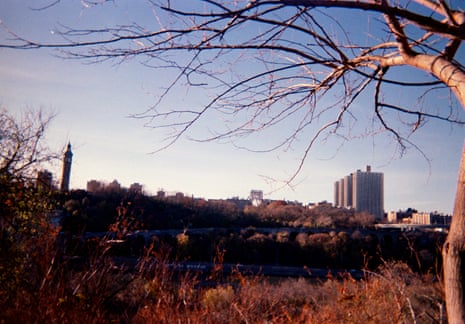
My friendship with Dylan was close, we always played together and used to sit together in classes. He was charismatic. We quickly became really good friends. We used to talk about anything and everything – it wasn’t anything specific – classes, assignments, family, life soccer. Something I liked about him is that always helped or tried to help when someone needed it. He was very kind.
I couldn’t believe he had been taken. I texted him, just in case: “Hola milaneso” (“Hey cutlet” – it was just a way we greeted each other). He didn’t respond. I tried again: “Dude, are you OK? Why aren’t you responding?”.
We don’t talk about Dylan now or not much. We wonder: “Why did they arrest Dylan? He is a good kid.” There are so many criminals and they took someone who wasn’t doing anything wrong who was just trying to get ahead.”
I worry that my other friends could be arrested, too. It’s a constant fear I have and I’m always worried when they go out and I’m not there because I don’t want anything bad to happen to them. I fear and worry about what could happen to them. When I am at home, I tend to think about all the worst case scenarios, and it depresses me quite a bit.
Something that helps me feel better is listening to music or entertaining myself, playing badminton. That way I clear my mind a bit and it helps me think better, so I’m not so overwhelmed thinking about the immigration raids.
If I could talk to Dylan now I would tell him: “Hey dude, it’s been a while, I hope everything gets better soon, you’ll get through this, bro.” I would like to talk about how he’s feeling. I really don’t know what Dylan would tell me, but surely it would be something reassuring, to calm me down a bit.
Shannel, 19, senior
Immigration is not just a topic for me; it is my reality. As a student at an international school in New York, I am surrounded by stories of migration every single day filled with hope, fear, courage and a deep desire for something better. I’m an immigrant, my classmates are immigrants and my teachers are children of immigrants.
Even though we come from different places, we all share the same dream of safety, opportunity and freedom. However, the paths we take to reach those dreams are often very different, and some are filled with far more obstacles than others. Some of my friends live with a constant fear that shapes their daily lives. Their parents could be taken away at any moment simply for not being “legal”, even while going to work or doing ordinary things that most people do not think twice about.
I see the worry in my friends’ eyes, the silence in their voices, and the stress they carry from home. Sometimes, as I sit in class, I wonder whether my friend will still be there the next day or if something unfair will separate them from the people they love most. Living with that uncertainty is unimaginable for many, yet it is a daily reality for countless families around me.
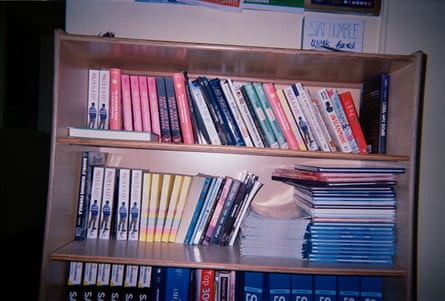
My own journey as an immigrant has taught me about adaptation, resilience and sacrifice. Moving to a new country means learning a new language, adjusting to unfamiliar customs and missing home in ways that cannot always be put into words.
Watching my classmates face even greater struggles has opened my eyes to the fact that immigration is not just a political debate or a legal issue. An immigration arrest doesn’t only affect the person detained; its consequences can tear entire lives apart. Those being arrested are not simply “cases” or “numbers.” They are sons and daughters, parents and caregivers, people who are deeply loved and who came seeking a chance at a better future. When one of them is taken away, it is not only their life that is shattered, but also the lives of the families who depend on them and carry a pain that most will never truly see.
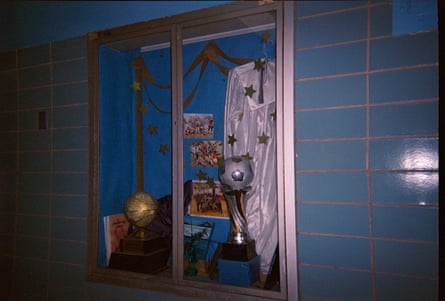
Oumar, 21, senior
Does anyone truly “belong” to the United States? Even if you were born here, your family’s story started somewhere else. America is not a place of one origin, but a place of many journeys.
America says it welcomes immigrants, but it does not always feel true. I saw it myself the moment I heard ICE arrested one of my schoolmates. The first question I had was: “Since when are they arresting someone who was in school ?” Every time I was coming to school or work, the fear of losing someone I cared about terrified me and made me constantly worried.
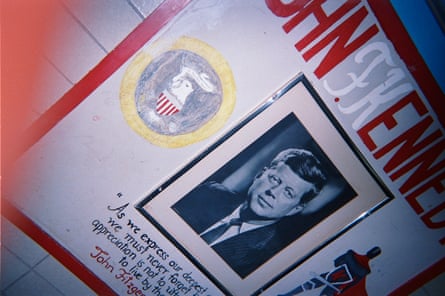
Over time, I began to notice law enforcement officers more often, especially in places where people usually felt comfortable, like near the train or in front of stores. I heard even citizens were being arrested, which felt like the ground cracked open, a system swallowing people who would have been safe.
Living in New York during that time changed the way I moved around the city. People didn’t always talk about it out loud, but we all knew which areas ICE had been in recently. New York calls itself a sanctuary city, which gave me a little comfort, but it didn’t erase the fear I saw around me. Sometimes I caught myself looking around more than I used to, just to see who was standing nearby. I didn’t wake up every morning afraid, but I did start being more careful without even realizing it. It became something I carried with me every time I left home, almost like a habit I never asked for.
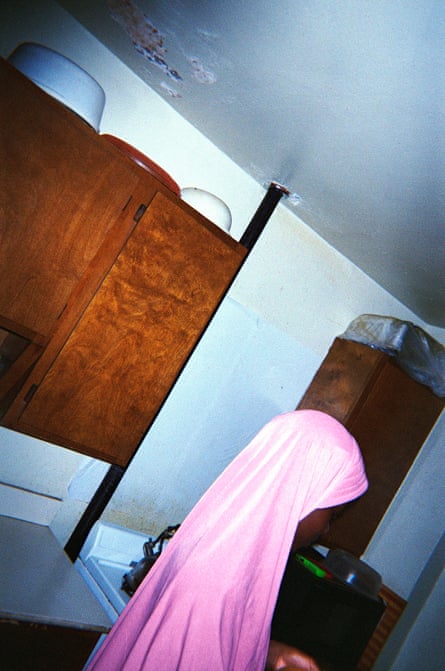
I’m still trying to understand how a country that calls itself “United” has turned into a nation divided between those who are welcomed, and those who are watched. A country that forgets its own promises – because if America is supposed to protect people, then why do so many feel like they’re being targeted? And before we create new laws about who belongs here, shouldn’t we rethink who lived here first, and who was pushed away?
Linda, 18, junior
I moved to New York City from the Dominican Republic in 2022. And slowly, I started to open up. I started to find people I connected with.
I grew up knowing I was distinct and for the first time, I had found a home where I could be myself with friends that are also Dominican or Latinx, and most are, like me, members of LGBTQ+ community. Seeing their smiles with every joke, or looking back at the pictures we took makes me feel grateful.
Last year, I went to my first pride parade. I went with a group of my friends – we all took the subway from the Bronx to Manhattan. My friend brought me a huge rainbow flag that I tied around my neck and a smaller pansexual flag I put in my afro. I felt powerful – I thought about all the people who fought for me and us to be right there in that moment.
However, soon I realized life in the US is like a rose with thorns.
I see how the rights of trans people, LBGTQ+ people, immigrants are being taken away, and I get scared. When I go on my Instagram “Explore” page, or on Google, and I see the news, I share it for anybody who needs to know it. A classmate told me about how the government wanted to put trans people’s biological sex on their documents. I let them know I’ll always be there for them.
In the spring, I remember a counselor told us to be careful, because ICE was present in our neighborhoods. Immediately, panic hit me.

Whenever anyone knocks at my apartment door, I am frightened it’s the people who hate the communities I belong to.
I wish I could have done more, I wish I was able to speak aloud in protests; but I was too scared because I’m an immigrant myself.
I was afraid of going out and not being able to get back home. I was afraid to affect others in my household. I was afraid that my words would turn into a weapon aiming at me.
ICE is not only taking immigrants, it is also taking their ambitions. During these times, we are pushed to give up on our peace, safety and equality.
Dancing and journaling helps me get through these scary moments. I flow my body around to the beat of a great variety of melodies to keep away the demons. It helps me because I’m able to create a different persona within myself, someone who is able to defend themself.
Yesiel, 18, junior
I first came to the Bronx from San Francisco de Macorís in the Dominican Republic, in 2018. In many ways, New York was very completely different from the Dominican Republic – but in other ways, it felt familiar. The Bronx was loud and busy. It was full of music and movement, just like my hometown. My neighborhood was full of other immigrants, just like me – my neighbors and classmates were also from the Dominican Republic, or from Colombia, or Ecuador. Many of them spoke Spanish, so I felt like I could connect with them more easily.
But within a year, my family had to move again, for economic reasons, to Pennsylvania. That was a big change. In Pennsylvania, things are very quiet. You don’t hear trains or music like in the Bronx, meaning you don’t hear the movement of the place. I found it boring and difficult to get used to. I also lived with the nerves – wondering whether the new people I’d meet would like me, how they would treat me.
Four years later, we moved back to the Bronx. I had to once again get used to a loud, bustling environment. And once again, I had to start at a new school.
Finding a new one was complicated, because the move was sudden. But by the grace of God, Ellis international preparatory opened its doors to me.
The first weeks were hard. As soon as I enrolled, the administrators told me that my English level wasn’t where it should be and that I had to repeat the 9th grade. I thought “Why? They can’t do this to me!” I have to go through everything again, the same homework, classes, re-learning what I already know.
I was angry. It bothered me for months, but I had to accept it. I am learning more English, and I now consider myself an English speaker, but one never knows something 100%. I’m still learning.
It is still complicated for me to speak with an American, because I can’t express myself the way I wanted to. It was like being inside a lonely world, where your expression is misunderstood.
-
Reporting methodology: This story was produced in collaboration with students and teachers at Ellis prep academy. Over the course of two months, students met with the Guardian, shared oral histories and wrote original essays in English and Spanish. The Guardian also provided the disposable cameras for students to document their lives. First names have been used for most students in order to protect their safety.
-
This article was co-published with Documented, an independent, non-profit newsroom dedicated to reporting with and for immigrant communities in New York City.