3 months ago
142
3 months ago
142
Pro-Israel Palestinian militia have launched repeated raids, clandestine assassination and abduction operations deep inside parts of Gaza controlled by Hamas in recent months, with new operations launched recently despite the outbreak of conflict with Iran.
The militia, which are all based in eastern parts of Gaza that are under Israeli control after a ceasefire came into effect in October, have received significant logistic support from Israel since last year but appear to have increased their firepower, allowing new and more aggressive attacks in recent weeks.
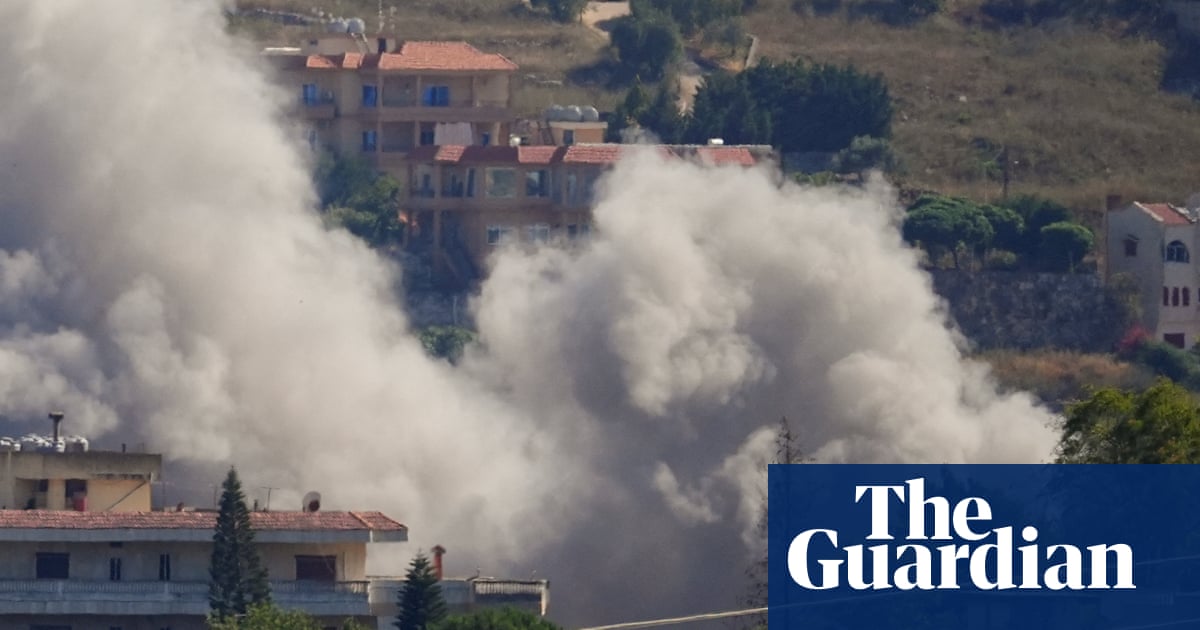
Israeli strikes in Gaza, which had averaged around 10 a day across the devastated territory over the last five months, have continued even as Israeli jets carry out bombing campaigns in Iran and Lebanon.
On Sunday, an Israeli airstrike and tank shelling killed six Palestinians, including two women and a girl, in separate attacks in Gaza City, the deadliest incidents in Gaza since the US-Israeli offensive on Iran began, health officials said. At least 16 Palestinians have been killed in Gaza by airstrikes since the outbreak of war with Iran on 28 February, health officials say.
The most powerful among the Israeli-backed militia are the Popular Forces, based around the ruins of Rafah in the south of Gaza, and the Strike Force Against Terror, which operates east of the shattered city of Khan Younis. Both have struck into Hamas-controlled territory in recent weeks.
Israel has tasked the militia with security duties within the zone it controls and deployed armed men from the Popular Forces at the Rafah crossing to Egypt after it partially opened last month. Days later, the UN human rights office (OHCHR) warned of “a pattern of ill-treatment, abuse and humiliation of returnees by Israeli forces and armed Palestinians allegedly backed by the Israeli military”.
A third pro-Israeli militia based in northern Gaza, known as the Ashraf al-Mansi group, sent fighters across the “yellow line”, which currently divides zones of control in Gaza, last week, on what appears to have been a mission to ambush Hamas patrols and possibly assassinate senior Hamas figures. Officials from Hamas said it had foiled the attempt amid fighting in the Nasser neighbourhood of Gaza City.
Two weeks ago, the same militia clashed with Hamas fighters in Jabaliya, on the eastern outskirts of Gaza City, which is also within the Hamas-controlled zone.
“The militia are recruiting and becoming more active against Hamas, especially in Rafah … They seem to be getting more leverage. The Popular Forces, particularly now, [have] more capabilities and are more experienced,” said Nasser Khdour of Acled, an independent conflict monitor.
“Hamas is launching a counteroffensive, and is trying to focus on borders and positions where the militias are based. That is one reason why the violence has gone up,” Khdour said.
The enhanced role of the militias is a further challenge for plans for an international stabilisation force in Gaza.
The US-brokered Gaza ceasefire, which aims to demilitarise the territory, formally entered its second phase in January, but progress had stalled even before the joint US-Israeli offensive against Iran, and the spiralling conflict it has triggered.
Hamas, which controls most of the coastal strip where almost all the 2.3 million population of Gaza now live, is reluctant to fully disarm and Israel appears unwilling to relinquish its control over more than half of the territory.
The Popular Forces have also been deployed against Hamas militants holding out in a tunnel complex near Rafah.
In January, the group posted footage of Ghassan al-Duhaini, its leader, with a captured semi-naked, injured Hamas commander.
On camera, Duhaini slapped the captive and addressed Hamas, telling the group: “Your terrorism is over. We’ll fight with force and won’t allow anyone to sabotage efforts for peace.” He later threatened to execute the captive.
The pro-Israeli militia groups, who have a collective strength of only a few hundred fighters, have also been used for attacks deep into the Hamas-controlled coastal strip.
The Popular Army, another Israel-supported militia, which has around 30 fighters, recently assassinated the senior officer of a Hamas police unit that targets collaborators.
According to reliable analysts and reports from Gaza, Hamas militants chased the attackers as they returned to the Israeli-controlled zone from the scene of the attack in the coastal al-Mawasi area, but abandoned their pursuit when targeted by Israeli drones.
In early February, Hamas said it had thwarted a new attack by the Strike Force inside the Hamas-controlled zone in Khan Younis, killing 11. The militia denied any losses and said it had launched a raid that killed six Hamas militants. There was no independent confirmation of either claim.
The same day, Hamas police ambushed a group of Israeli-supported armed men in Gaza City, possibly killing three and confiscating their weapons, local sources said.
Hamas appears rattled by the new attacks. It issued a statement last month promising to eliminate the pro-Israeli militias, and claiming arrests of “collaborators” allegedly helping them. Hamas spokespeople posted on social media that the militias faced “death and annihilation”.
Statistics from Acled show 265 attacks launched by Israel in the month after the October ceasefire, rising to about 350 each month since, to reach a total of 1,664 in mid-March.
Israeli officials say the strikes are retaliation after attacks by Hamas and infiltration attempts across the yellow line, but many target individuals far from the immediate site of any alleged breach of the ceasefire, suggesting a campaign with broader strategic aims.
In one incident, on 24 February, members of a pro-Israeli militia shot and killed two Palestinian men collecting wood who approached the yellow line near Beit Lahiya.
More than 600 Palestinians have been killed in Gaza since the ceasefire, bringing the overall total for the war to more than 72,000, mostly civilians.
Tahani Mustafa, an expert in regional armed groups and lecturer in international relations at King’s College London, said the intensified activity of the militia in Gaza was unlikely to stabilise the devastated territory.
“The problem is that these [pro-Israeli] gangs have not only been implicated in criminality but also are operating with an occupying force that is responsible for mass devastation and starvation … They have given Hamas an inadvertent popularity boost, not because people sympathise with Hamas ideology, but because there is no one else.”
Hamas has so far stayed on the sidelines of the new conflict in the region, restricting any involvement to a statement welcoming the appointment of Mojtaba Khamenei as Iran’s supreme leader and condemning “Israeli-US aggression”.