2 months ago
100
2 months ago
100
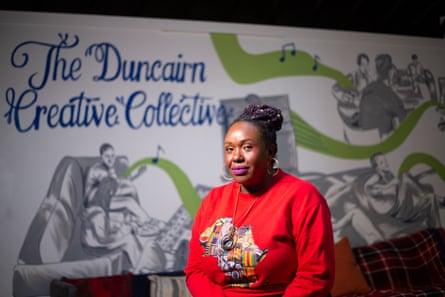
As a black woman in Northern Ireland, Maureen Hamblin knows that racism comes in many forms. “It’s not just the smashing in of shop windows,” she says. “It can be quiet, it can be silent.”
Bystanders who hear racist remarks and remain mute, as if oblivious, amplify the hurt and leave victims feeling alone and isolated, a recurring experience that left Hamblin drained. “There was a time when I’d lost a lot of faith in white people, in white men.”
Race riots in Belfast, Ballymena and other towns in the past two years might have extinguished the last of that faith but instead Hamblin, who is originally from Kenya, stumbled upon hope.
She joined an initiative called the Circle of Change, which connects strangers from different backgrounds – rich and poor, black and white, gay and straight – and tasks them with a subversive activity: getting to know each other.
Each year a different circle, about a dozen strong, is formed and meets at monthly gatherings around Belfast to share stories and raise funds for organisations that promote tolerance and reconciliation.
Hamblin related tales of racist abuse to her circle – its members reacted with shock – and listened to their own stories. Some had lives of privilege, others had experienced deprivation and exclusion. All recognised a commonality: Belfast was their home, and it should be welcoming. “It restored my hope. It humanised us all,” said Hamblin.
The Circle of Change is the brainchild of 174 Trust, a charity based in the New Lodge area of north Belfast, an interface of Catholic and Protestant housing estates that endured murderous violence during the Troubles. Based at the Duncairn centre for culture and arts, a former Presbyterian church, it offers clothing and support to vulnerable people and is a hub for artists and musicians.
As a member of Locality, a partner in the Guardian’s 2025 Hope charity appeal, 174 Trust will receive a grant to help it develop its work bridging community divisions and promoting positive local change to create an antidote to hate and distrust.
The charity launched the first circle in 2018 with the goal of tackling polarisation, said Tim Magowan, the chief executive. “We try to create a microcosm of Belfast in each group. We want to challenge stereotypes.”
Suzanne Lagan, who joined the first circle, found herself meeting fellow members at locations, such as an east Belfast food shelter, far removed from her middle class, Catholic upbringing. “A lot of places I’d never been to before. The more uncomfortable we felt the happier they [the organisers] were,” she laughs.
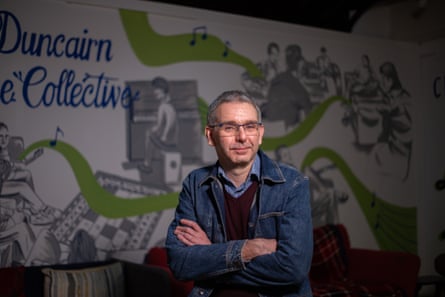
Liza Wilkinson, 48, from a working-class Protestant background, viewed homelessness with new eyes after conversations with a young member who had lived on the streets to escape parents with addiction issues. “It made me realise how privileged I was to have a family network that I could rely on.”
Wilkinson recalls her horror when another member, a mother from Africa, said that white youths routinely threw dog excrement at her children. “She wasn’t especially angry, her tone was matter-of-fact. It was heartbreaking.”
The 2018 circle raised £50,000 for after-school care for black children – an achievement all the more poignant given the subsequent eruption of racial tensions. “There is a tradition here of ‘say nothing’,” said Magowan, referencing a Seamus Heaney line. “No one realised at that time just how racist we were. But when the riots came they were less of a surprise to us because of what we had heard.”
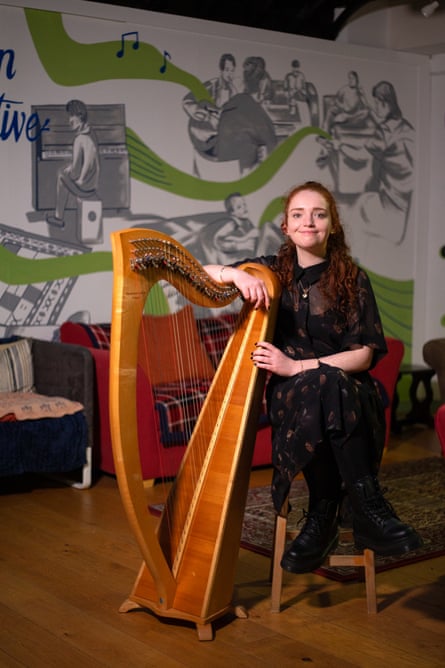
When Hamblin joined the fifth circle in 2024 she despaired at the “bystander effect”. Even in her local church, which was ostensibly progressive, prejudiced comments went unchallenged. “When people are quiet it’s like being double gaslighted.”
She forged a bond with fellow members, especially Tony Macaulay, who shared an anecdote about challenging racist comments – at the risk of a thumping – in a chip shop.
Hamblin, 37, loves to sing – “I sing for the joy of it, and to keep my sanity” – and Macaulay, 62, is the author of a celebrated memoir, Paperboy, so they teamed up to record literary readings and songs in TikTok vignettes titled Paperboy and Kenya Girl.
For all its sectarian and racial faultlines, Northern Ireland holds valuable lessons, said Macaulay, a peace activist. “We used to think that the Troubles would never end, that peace would never come. But it did come. Things can turn around.”
Thousands of ordinary people contributed to the end of political violence with small, individual acts, said Magowan. “It gives me hope. I can’t do anything about what happens at international level but I can turn up here and do what I can at a personal level. I genuinely believe that’s where change come from.”
The 2024 circle raised funds for Tunes Translated, a scheme which teaches traditional Irish music to weekly classes evenly divided between foreigners – immigrants and refugees – and natives.
“Music transcends language barriers and gives a sense of cohesion and belonging,” said Catherine Crean, 30, who runs the scheme. “One member told he me he’d never realised that Muslims could be good craic.”
If the music classes are swimming against the tide – race hate incidents in Northern Ireland this year were the third highest on record – all the more reason to do them, says Crean. “That’s why they’re important.”