2 months ago
64
2 months ago
64
Patrice Lumumba was assassinated more than 60 years ago, but his killing still hangs over the Democratic Republic of the Congo. Even for non-Congolese Africans, some born years after Lumumba’s death, his killing symbolises something traumatic – the suffocation of the pan-African liberation dream by western colonial forces.
Last week, after decades of avoidance and denial, there was an extraordinary development. A Belgian court ruled that a former Belgian diplomat, 93-year-old Étienne Davignon, will stand trial in connection with the killing.
For this week’s newsletter, I spoke with the Congolese film-maker Patrick Kabeya, director of the documentary From Patrice to Lumumba, about what this moment means for the country, and to him.
From tooth to trial
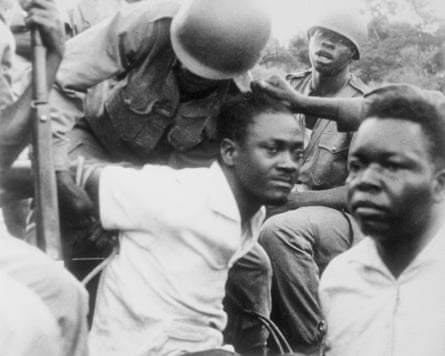
Lumumba was not only the Congo’s first prime minister, he was also a firebrand of the continent’s anti-colonial movement. On 30 June 1960 – independence day – in what has since become an legendary speech, Lumumba eviscerated Belgium in front of its dignitaries and its own king for the “untold suffering” inflicted on the Congolese. That speech signalled to Belgium that Lumumba would continue to be a threat to its still-deep economic and political interests in the country.
The chain of events that triggered his assassination involved separatist Congolese forces, his political rivals and Belgium. It all culminated in Lumumba’s detention, torture and killing in January 1961 at the hands of a Congolese firing squad, with the logistical help of Belgian forces. Lumumba was not only murdered, his body was dissolved in acid, and a gold-capped tooth of his was stolen and taken back to Belgium. Étienne Davignon is the last surviving Belgian, among 10, that the Lumumba family accuses of involvement in the plot.
Kabeya tells me something unexpected: people did not speak about Lumumba in the Congo for decades, for all the trauma and treachery surrounding his death. “We see him as the father of the nation, there has never been a person who loved his people like Lumumba. But people were scared to talk about him” under the dictatorship of Mobutu Sese Seko, who launched the military coup that deposed Lumumba, and then ruled for more than 30 years. Lumumba’s death was seen as “mysterious – there was no deep dive in it”. It was only over the last two decades that people started talking about his death more. Mobutu “was the general who handed him over” to his fate, so lingering on Lumumba was like “telling Mobutu that we know you had a hand in this. There was that fear of getting arrested” for implicitly pointing out Mobutu’s culpability.
Death of Mobutu – and a Belgian confession
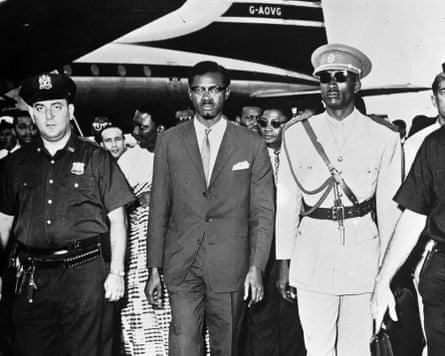
This changed in the late 1990s and early noughties. Mobutu died in 1997, and in 2002, Belgium finally admitted, and apologised for, its role in Lumumba’s killing, conceding to “moral responsibility”. The Belgian foreign minister stated that “certain members of government … and certain Belgian officials of that time carry an irrefutable part of the responsibility in the events that led to the death of Patrice Lumumba”.
These two events “gave people in the Congo an opportunity to talk about it”, Kabeya told me. “I, as a 17-year-old, began to ask my dad questions about it. It was like oh, OK, we have never had this conversation before. Everybody knew about it,” he said, but the subject was essentially buried for more than 30 years.
Kabeya said there was a sense of vindication in Belgium’s admission. It gave Congolese people the opportunity to tell the world: “‘Hey you see? We’re not crazy after all, you lot killed our person’. That really woke people up.”
The CIA’s own plans to assassinate Lumumba also came to light. Kabeya mentions Larry Devlin, who was the chief of station for the CIA in Congo during the time of Lumumba’s premiership and killing. In his 2007 memoir, Devlin writes of how, in late 1960, the CIA sent to the CIA’s top poisons expert to deliver to Devlin a tube of poisonous toothpaste that if administered successfully would infect Lumumba with the polio virus. Devlin was told that the assassination order came from President Eisenhower himself. Kabeya laughed with some irony when he talked about all these now-verified plots. Africans are accused, he said, of “always being emotional, always blaming the white man, but in this case, it is”!
Justice at last?
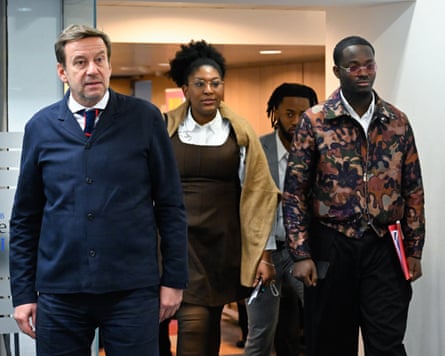
Kabeya attributes Davignon finally coming to trial to the efforts and pressure on the Belgian government on the part of the Lumumba family. “This has been 25 years in the making. I want this to go all the way so that we Africans can hold our heads up high and say we weren’t making these things up. You took this man, you killed him six months after he was elected, you poured acid on him and you took his tooth. And since then, Congo has been a political tragedy.”
Kabeya said that taking the matter from Belgium’s “moral responsibility” to its “criminal responsibility” is important. As part of its long process of admission of culpability, Belgium returned Lumumba’s gold tooth, something which Kabeya said was almost “an insult”, and confirmed to him that Congo’s former colonisers considered it a trophy. “Can you just admit what you did? It was a monument for them.”
What matters to the Congolese is the truth. “Can you give us the entire script without anything redacted from it?” Kabeya said. “Who took him, who signed for it? And then we can close the case. You take the tooth of my family member, but you don’t tell me what you did to get that tooth?”
The trial is not only redress for the Congolese, said Kabeya. “He was the only Congolese leader whose campaign was to unite Congo. [Many] don’t know what tribe he was from. Every other leader, their tribe is the first thing we talk about. Lumumba was a Congolese. But he also doesn’t belong to the Congo any more. He belongs to Africa in terms of where he stands in the independence struggle.”
What was lost with Lumumba’s death was not only the chance to build a strong, nationally united Congo, free in all ways from colonial interests and influence, but the opportunity to model for other African leaders that such a thing was possible. The loss is vast and reverberates through the decades. The trial of a 93-year-old man is not going to reverse any of that, Kabeya said, but it will achieve something that has been sought and campaigned for over half a century: “It’s going to give us closure.”