3 months ago
114
3 months ago
114
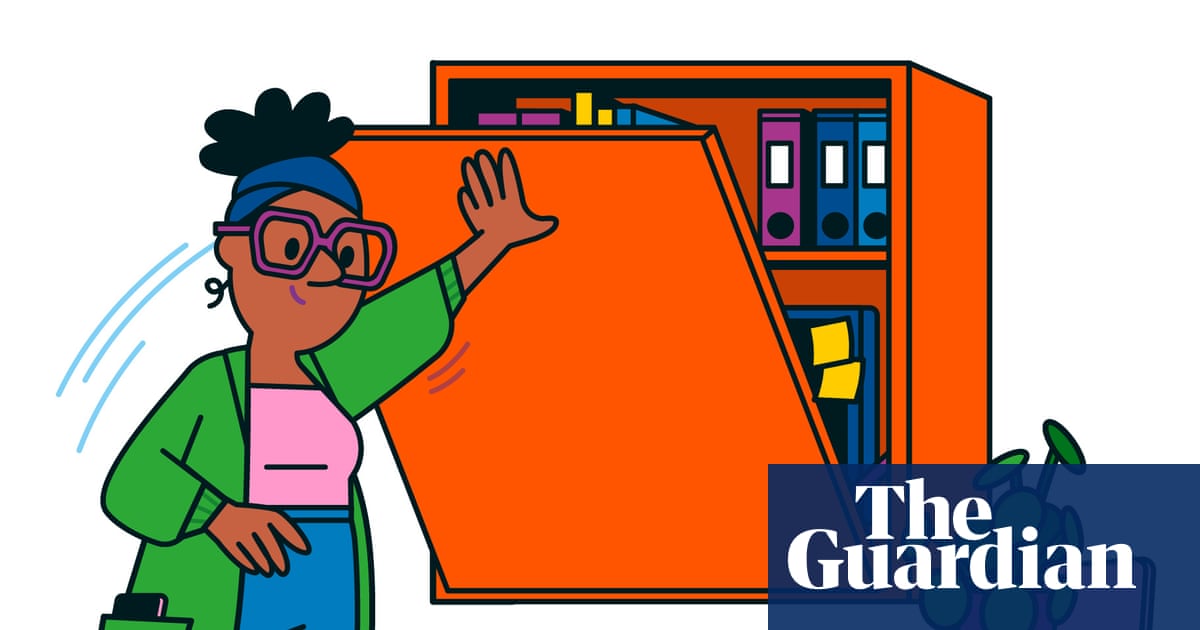
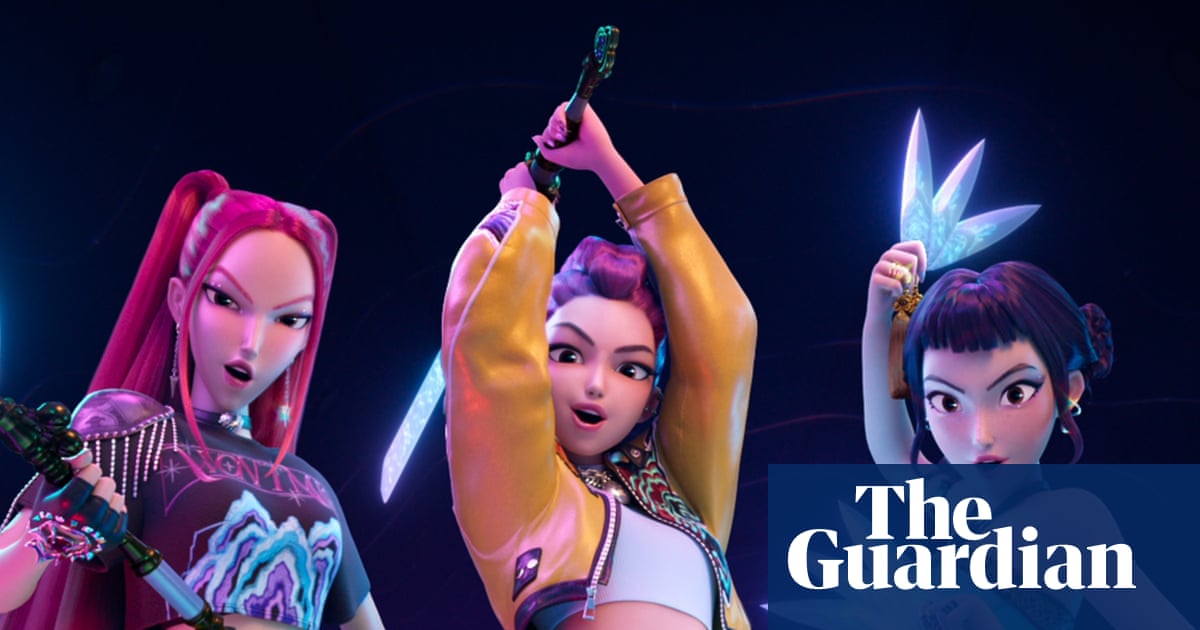
What do a purple cartoon cat and abortion have in common? Nothing – and that is the point, say the women behind Jacarandas, a Colombian abortion helpline. Determined to set themselves apart from more traditional reproductive health organisations, Jacarandas commissions street and graphic artists to create eye-catching illustrations – most recently a cartoon feline called Gataranda, inspired by the team’s much-loved office pet.
The aim is not to make light of abortion but to appeal to the teenagers and young women who use Jacarandas’ services. “A lot of people do not connect with [an image of] the uterus on fire, so we thought ‘what can we do to connect more with young women?’” says Carolina Benítez Mendoza, the deputy director.
“We try to stay current and make things that are fun; we adapt our vibe for whatever’s trending. We don’t want to be that feminist organisation that’s had the same logo since 1995. Make abortion cats mainstream!”
Established soon after abortion was decriminalised in Colombia in 2022, Jacarandas provides advice on abortion and sexual and reproductive rights through a WhatsApp helpline. The all-female team, including a lawyer, psychologist, nurse and social worker, respond to every inquiry, ensuring that users receive accurate information about their legal rights and the closest clinic, as well as emotional support.
“The law changed but society will be the same for a long time,” says Jacarandas director, Viviana Bohórquez Monsalve, referring to the stigma that still surrounds abortion in Colombia. The message from Jacarandas is that abortion is a normal health procedure that does not have to be traumatic.
“We wanted to explain how and where to get a safe, legal abortion,” she says. “Most people didn’t know – they thought they had to pay. It’s simple but so important; if you get the right information you will have a positive experience.”
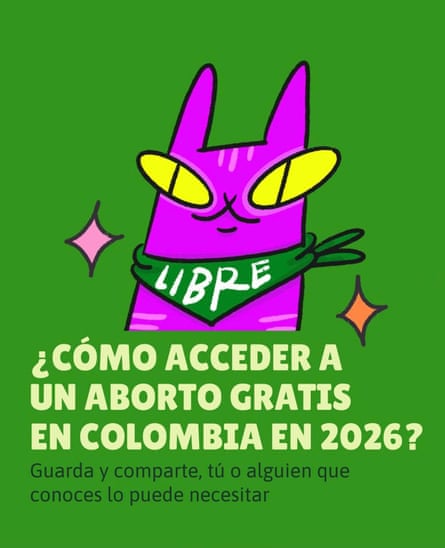
Using colourful graphics and choosing a name (jacaranda is a purple flowering plant native to South America) that have no direct link to abortion is just one part of a communications strategy that differentiates the organisation. The Jacarandas team addresses a wide range of gender issues from periods to body dysmorphia, sex to films through friendly, irreverent TikTok videos, Instagram and Facebook posts.
They also attend events such as music festivals, concerts and an annual comic book convention to raise awareness of the service, and sell merchandise that helps pay for travel and accommodation for women and girls who would not otherwise be able to attend a clinic.
Benítez says: “It is our goal to reach new people and open the conversation – we try to redesign and reinvent. It’s not the 90s any more – people don’t need statistics; a 14-year-old who needs an abortion doesn’t care about a court ruling, she needs to know where to go.”
The strategy is working. Jacarandas is the most-followed abortion account on social media in the Spanish-speaking world, with nearly 400,000 followers on TikTok, and 312,000 on Instagram. Since it started it has received messages from more than 26,300 people, and in 2025 provided advice to about 700 users a month. Abortion is legal up to 24 weeks in Colombia, but most users contact Jacarandas as soon as they miss a period, and 93% have an abortion before 12 weeks.
They also offer legal support to women and girls who are denied their right to a free abortion or who have a bad experience. In one case, a woman who attended a clinic for an abortion was threatened and criticised by the medical staff, experienced delays in the delivery of medication, lack of supervision and mistreatment in pain management.
“We think it is torture – she felt pain for a whole week,” says the Jacarandas’ lawyer, Laura Camila Bernate Ramos.
A court ruled that the woman had suffered physical and psychological obstetric violence – the first such ruling in Colombia in connection with abortion. It also found that her insurance company had violated her privacy and dignity when it approached her father for authorisation, despite her being an adult.
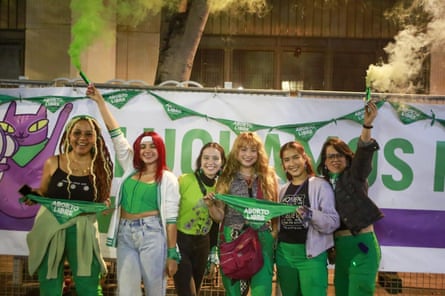
Jacarandas’ success has attracted attention from organisations across Latin America. “We teach organisations about branding, how to create content, how to play with music, trends, who is following them – how to reinvent themselves,” says Benítez.
“We have the Chinese world as owners of TikTok, and the American world with Meta, and censorship is very different on the platforms.”
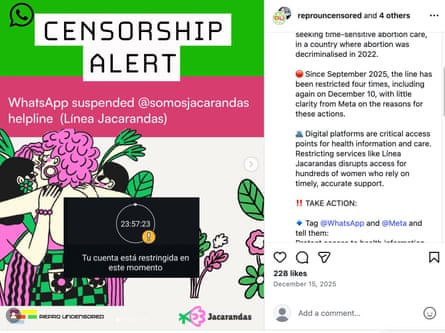
Jacarandas has direct experience of censorship. Between September and December 2025 its WhatsApp line was restricted four times by Meta, forcing it to temporarily switch its hotline to Telegram.
Repro Uncensored, a nonprofit organisation that tracks digital censorship, says this is part of an escalating trend of global censorship, which Meta has denied, saying its policies remain unchanged.
Bohórquez Monsalve, a lawyer who has campaigned for abortion rights for 20 years, was in the crowd waiting outside the constitutional court in Bogotá for news of the abortion ruling in 2022. She had been part of the 14 por Colombia campaign to legalise abortion – a reference to Argentina’s 2020 law, which allowed elective abortion up to 14 weeks.
Few expected the Colombian court to go further and introduce a 24-week cut-off. “It was really exciting. I was there and I was really, ‘24 weeks?!’ It was amazing.”
Four years on, the mood among reproductive justice activists is still buoyant, but there is no room for complacency, says Bohórquez Monsalve.
“Now, we are in a good moment in Colombia – we’re in the honeymoon period. [But] the US shows it’s never ending – you have to keep working.”