3 months ago
122
3 months ago
122
How many Labour policy U-turns does it take to form a complete circle? How many Labour policy complete circles does it take to form a black hole? A black hole in which public interest and party loyalty is crushed past the point of no return.
The reversing of fundamental decisions in the blink of an eye has dire consequences for the integrity of both government and democracy. The latest, quite breathtaking example being the staggering decision to allow the United States to use British airbases for an illegal war on Iran.
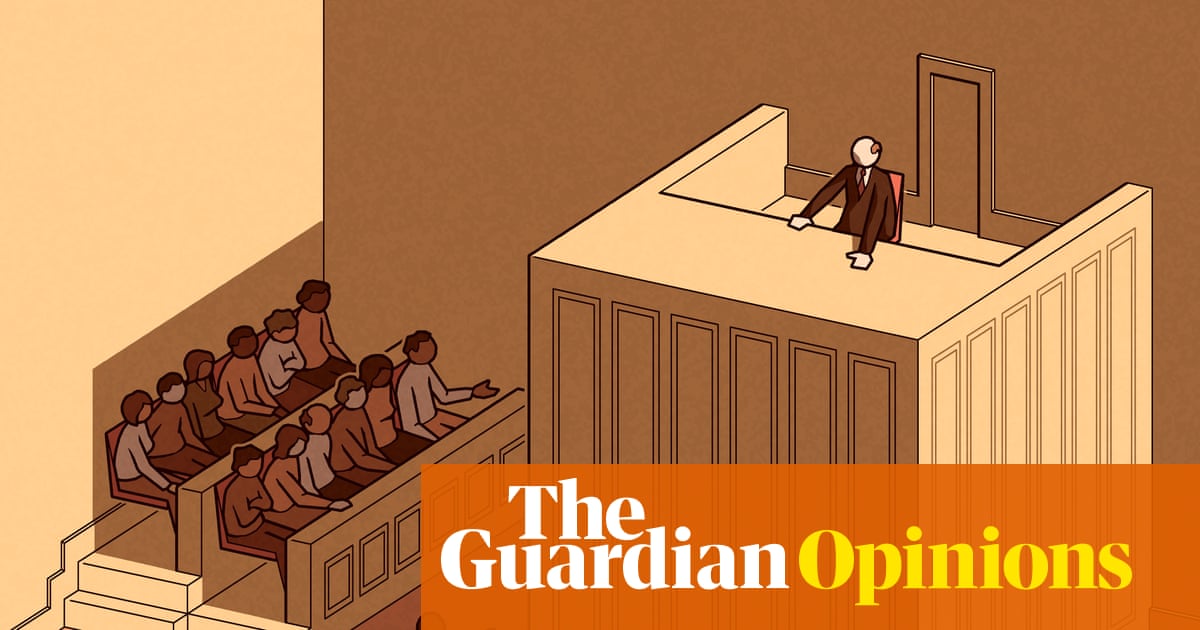
At least we still have juries, I hear you say? Well, only just. Juries, once held in high esteem by so-called political reformers, are the latest core democratic mainstay to be discarded for bogus and opportunistic reasons by this arbitrary and whimsical form of cabinet governance.
The English criminal jury system was developed and honed over the course of eight centuries. It has become the envy of the world as one of the fairest ways to determine guilt or innocence. A jury of 12 randomly chosen individuals has long been regarded as a vital bulwark against the excesses of government, the threats posed to basic human rights by oppressive legislation and, of course, arbitrary governance. It provides a constitutional and democratic safeguard unlike any other.
These principles were not questioned during the current debate over the Labour government’s proposals to cut the number of jury trials by half. This move is not because juries are unfit for purpose or inherently unfair. Rather it is the opposite: juries are conscientious and return verdicts that are inconvenient and challenge government, thereby reflecting a sense of justice and fairness.
Take public order and the issue of free speech. This government and its Tory predecessors have been frantically passing a plethora of laws curtailing rights to protest, assemble, march, rally and display placards defending juries. Yet, at the same time, those very juries are displaying an honourable record of acquitting large numbers charged with such offences.
Indeed, this is exactly what is at the heart of the much-cited 1670 example of Mr Bushell, who is commemorated by a plaque discreetly displayed on the ground floor of the Old Bailey. He and his fellow jurors were trying two Quakers (William Penn and William Mead) charged with that era’s equivalent public order offence, “unlawful assembly”. They had contravened the Conventicle Act, which banned nonconformist religious gatherings. The jury was cajoled by the judge to convict, but steadfastly refused to do so despite being imprisoned without basic necessities.
The jury system is a key to maintaining public faith and confidence in how justice is dispensed. Retention of jury trials has remained a central tenet for proponents of judicial reform until recently, when there was a sudden seismic shift against juries – one that was conspicuously absent from the 2024 Labour manifesto.
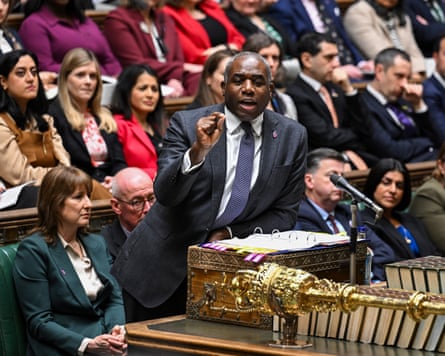
Take David Lammy, the deputy prime minister, secretary of state for justice and lord chancellor. He was very much against jury abolition – so much so that on 20 June 2020, he tweeted: “Jury trials are a fundamental part of our democratic settlement. Criminal trials without juries are a bad idea. The government need to pull their finger out and acquire empty buildings across the country to make sure these can happen in a way that is safe … You don’t fix the backlog with trials that are widely perceived as unfair.” Lammy is now proposing the exact opposite, with judge-only trials for offences likely to attract a sentence of less than three years. Such offences are not necessarily minor and can include theft, fraud, wounding and burglary. It’s not just about sentences but defendants’ reputations.
There is a very real risk of an increase in miscarriages of justice where trials are presided over by a cynical case-hardened judiciary without the safeguard of a diverse jury. In addition to which, judges who sit alone will be burdened with the onerous task of compiling a reasoned judgment setting out the evidence, the law, their findings and a final verdict. This will inevitably add a considerable period of delay at the end of a trial.
So what conceivable, legitimate basis can there be for such a volte-face? The purported justification is the shocking criminal court backlog of more than 80,000 cases, which is projected to rise to 100,000 by 2028. No evidence or causal link has been produced to support the government’s reasoning at any stage, up to and including the recent debate on the second reading of the courts and tribunal bill. The public, and especially the victims of crime, are being seriously misled.
The Institute for Government has examined the government’s proposals in meticulous detail and concludes that any difference to the backlog will be uncertain. Brian Leveson, who conducted the recent independent review of the criminal justice system, expressed similar doubts in the overview to his report, and even went so far as to state: “The most significant cause [of the crisis] is chronic underfunding at every step.”
There has been a substantial lack of investment over decades in the fabric of criminal justice: the buildings, staffing, judicial support and legal aid provisions. In major city centres, courts have stood empty as there has been a cap on judges’ sitting hours.
This is not the first time there have been attempts to clip the wings of juries. At one point it was believed that only members of the propertied classes were suitable for jury service. More recently, there have been calls for some form of intellectual qualification for jury members in particularly complex cases. There is also the snobbish legal assumption that ordinary citizens are incapable of concentrating for protracted periods.
These misconceptions were emphatically dispelled by the jury in the Hillsborough inquests. They sat for the best part of two years, between March 2014 and April 2016. They returned 14 detailed, reasoned narrative findings (formerly known as verdicts) which constituted a resounding rejection of the Thatcher government’s position of blaming the fans.
A sacred principle is being sacrificed and scapegoated to falsely explain systemic failure. The prime minister knows this. In 1992, he wrote: “The right to trial by jury is an important factor in the delicate balance between the power of the state and the freedom of the individual. The further it is restricted, the greater the imbalance.”
-
Michael Mansfield KC is a human rights lawyer, and has represented the Lawrence family since 1993