3 months ago
159
3 months ago
159
There is a heavy cloud hanging over Labour’s Christmas celebrations.
The most recent figures show the economy is going backwards and worse, the slide is prompting recession talk in the corridors of City banks.
If there is a recession, it will only be slight, but with unemployment rising and businesses reluctant to invest, the economy remains stuck in first gear.
In this gloomy atmosphere, not many Labour MPs will feel comfortable donning paper hats and toasting their leaders.
Especially not when Whitehall is dominated by a single activity – procrastination. That is, when it comes to boosting the economy.
Time after time, a department produces a document setting out a problem and a framework for dealing with it, often winning cross-party praise (this summer’s industrial strategy being a case in point) only to freeze when considering what should happen on the ground.
And then, after months of delay, a quick decision is made that ends up being harmful.
The new business rates regime is the latest example. Since the budget last month, pubs and hotels have been calculating how much they will pay from April under a regime pieced together by Treasury officials without apparently being road tested.
Small, independent pub chains will be among the worst hit, with some saying the rise in business rates will be 500% or more for an individual pub.
Signs have begun appearing outside local taverns – 200 and counting – barring Labour MPs with the #taxedout slogan.
The campaign, which originated at the Larder House pub in Bournemouth, is a painful reminder of the delicate ecosystem in publand and the difference between massive chains such as Wetherspoons and the much smaller local pub groups, often operating on wafer-thin profit margins.
James Fowler, owner of the Larder House, called the changes a “devastating blow”.
He was joined by Andy Lennox, owner and managing director of the Fired Up Collective, which operates three pubs and three restaurants in and around Dorset.
Lennox told the Caterer magazine: “One of my pubs, The Old Thatch, is Dorset’s best pub having won pub of the year, I employ 200 people and turnover is good – we’re not in a bad place, but we’re just not making any money.”
He says his business rates are poised to increase 126% by 2028. “We took £1.5m last year and made £50,000 – what’s the point?”
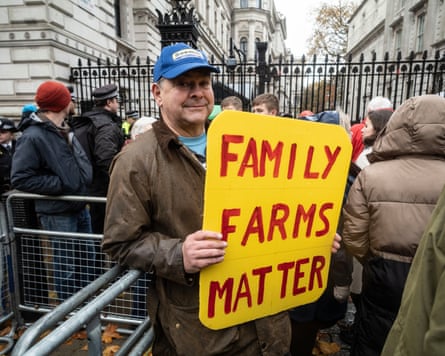
It’s the same Whitehall mindset that identifies farmers as a legitimate target for extra tax.
Rachel Reeves wants farmers to pay a new inheritance tax (IHT) levy from next April that in many cases denies them passing on the land to their children. Despite a tweak in the recent budget, farmers say the IHT changes will be too onerous and many farms will be sold, most likely to private equity firms or foreign businesses.
It should go without saying that farmers are different. A report by an independent body or even a conversation with the farming community would have revealed why it is not like other industries. For one thing, like pub owners, they can occupy expensive land and yet operate on slim margins.
It is the same for family businesses. A panicked grab for cash in the chancellor’s first budget meant family-owned businesses must also pay IHT after four decades of not paying any.
The previous justification for not paying IHT was that the assets were worthless as long as the owners kept the business going. If the assets were put up for sale, then capital gains tax would apply. Without a sale, the assets were passed through the generations.
Understandably, family businesses have proved reluctant to make much noise about their predicament. The cost of living crisis means that special pleading by a group with significant paper wealth is not a good look.
All these tax increases should be reviewed and their effects reduced. Otherwise, much of British farming and the family business sector will be shut down or sold off to foreign interests.
This trend is already under way, but is likely to accelerate from next April when the new taxes take effect.
One reason procrastination has become such a problem is the Labour leadership’s two-term, 10-year project, which allows for endless meetings and delayed decision-making. This contradicts the short-term demands of Keir Starmer’s advisers, who want to put every decision through an election MRI scanner to decide whether it is a vote winner in next year’s local elections and the 2029 general election.
With these cross-currents sweeping ministers this way and that, almost on a daily basis, it becomes difficult to reflect on proposals, checking for the unintended consequences.
It’s possible the economy will hand Labour a new year present and the recent run of poor economic data transforms 0.1% monthly contractions into 0.1% increases.
Yet, for the long-term health of the economy, the inherent contradiction of procrastination and electionitis will mean that the industrial strategy, most of the proposed new towns, local government reform and much public investment remains stuck in the Whitehall mud. And a series of poorly targeted taxes will, in the meantime, hit British businesses, which could do without the extra punishment.