3 months ago
84
3 months ago
84

A new exhibition explores how graphic design helped define New York City’s response to Aids from the late 1970s to the 2000s. Grassroots groups such as Gay Men’s Health Crisis and Act Up created posters to promote safe sex and healthcare, as well as calling out the Reagan administration for inaction in the face of the crisis. Love & Fury: New York’s Fight Against AIDS is on display until 6 September.
The poster for Silence = Death. Photograph: Silence=Death Project: Avram Finkelstein, Brian Howard, Oliver Johnston, Charles Kreloff and Chris Lione/Courtesy of Poster HouseWed 18 Mar 2026 10.04 CET
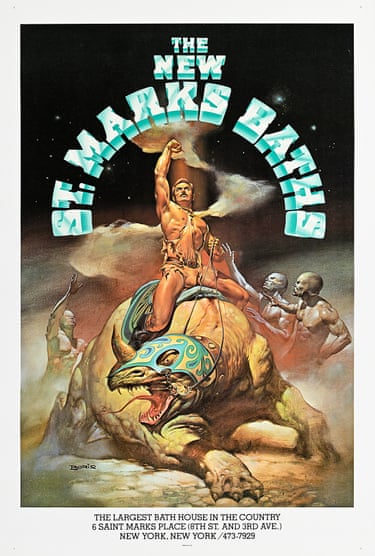
The New St Marks Baths, 1979
In the post-gay liberation and pre-Aids 1970s, bathhouse culture thrived across the US. Communal, men-only establishments offered saunas and plunge pools as well as cruising areas and dark rooms for sex. The East Village’s St Marks was one of the country’s largest bathhouses, with massage rooms, lounges and even a restaurant for patrons who got peckish from all their exertion. This poster by artist Boris Vallejo seems to capture the sex positivity of the time, drawing viewers into a fantastical erotic world. Photograph: Boris Vallejo/Courtesy of Poster House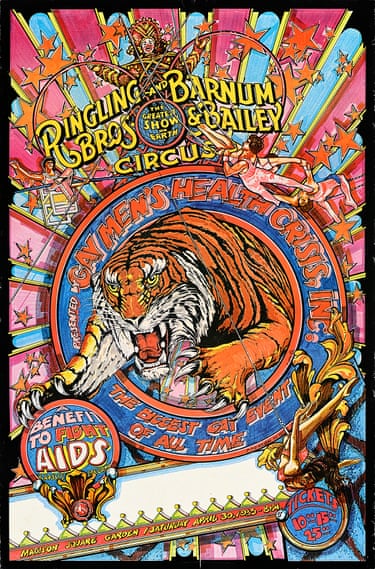
Ringling Bros and Barnum & Bailey Circus, 1983
In the spring of 1983, Gay Men’s Health Crisis organized the first major US fundraiser for Aids. A Ringling Brothers and Barnum & Bailey Circus production at Madison Square Garden was attended by more than 18,000 people, and featured Patti LuPone, Leonard Bernstein and the opera singer Shirley Verrett, in a landmark collaboration between an Aids organization and a heavyweight entertainment brand.Photograph: Enno Poersch/sad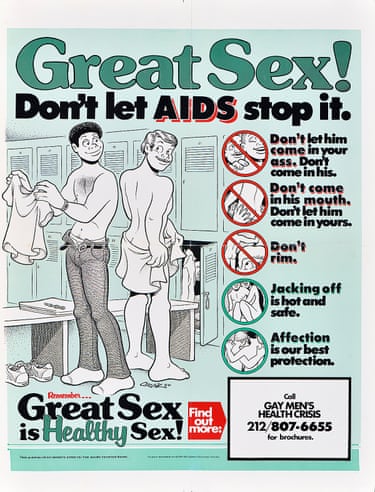
Great Sex! Don’t Let Aids Stop It., 1984
This poster featuring illustrations from Howard Cruse – the cartoonist behind 1995’s classic Stuck Rubber Baby – is symbolic of a new attitude to gay sex, spreading the message that safe hook-ups could be (nearly) as fun. It was adapted from the 1983 pamphlet How to Have Sex in an Epidemic, the landmark publication by Michael Callen and Richard Berkowitz, and displayed at communal gay spaces including The New St Marks Baths. Photograph: Howard Cruse/Courtesy of Poster House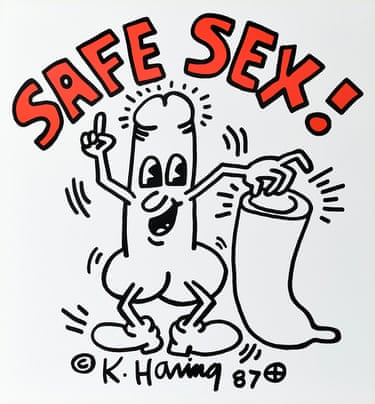
Safe Sex!, 1987
Copyright © Keith Haring FoundationCondom use was pretty rare among gay men before the Aids era, but the onset of the epidemic made rubber johnnies crucial. The activists Michael Callen and Richard Berkowitz coined the term “safe sex” in 1983, and artists such as Keith Haring helped to bring it to life in a light hearted poster that encouraged gay men to watch out for themselves and each other – and wrap it up.Photograph: Robert Feliciano/Courtesy of Poster House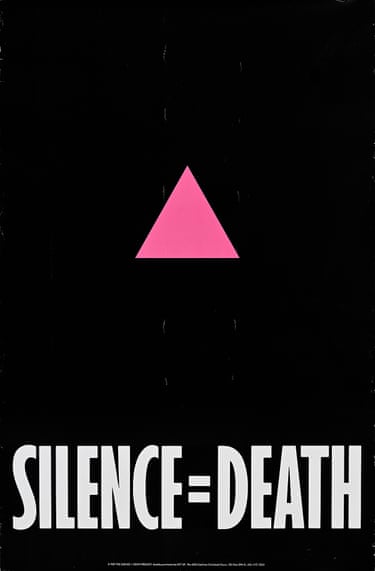
SILENCE=DEATH, 1987
The Silence=Death Project, which predated the founding of Act Up, was formed by a political collective of six gay men in 1986. In the Aids era’s most enduring image, they reclaimed the pink triangle which had previously been used by Nazis to identify LGBTQ+ prisoners, transforming it into a symbol of resistance.Photograph: Silence=Death Project: Avram Finkelstein, Brian Howard, Oliver Johnston, Charles Kreloff and Chris Lione/Courtesy of Poster House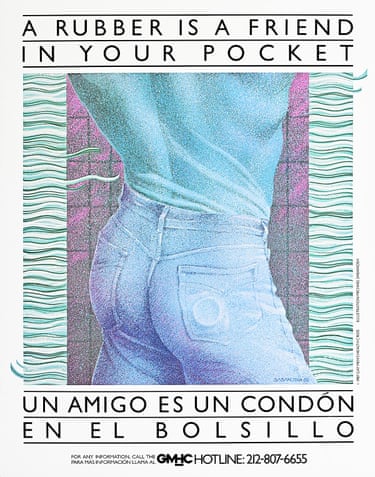
A Rubber is a Friend in Your Pocket, 1987
Gay Men’s Health Crisis had risen from a gathering in writer and activist Larry Kramer’s apartment in 1981 to become a powerful force in Aids advocacy. This bilingual poster signals an aim that their safe sex message reach a wider audience, showing that condoms aren’t just a must to protect yourself and your partner – they can be a hot accessory to boot.Photograph: Michael Sabanosh/Courtesy of Poster House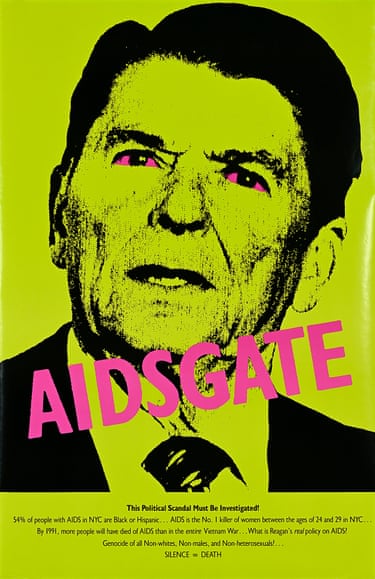
AIDSGATE, 1987
In the same year that they produced the pink triangle, the Silence=Death Project created AIDSGATE to publicly shame Ronald Reagan’s inaction in the face of the epidemic. By borrowing the terminology of Watergate, the collective repositioned the Republican government’s inaction as a scandal and demanded lawmakers be held to account. Photograph: Silence=Death Project: Avram Finkelstein, Brian Howard, Oliver Johnston, Charles Kreloff and Chris Lione/Courtesy of Poster House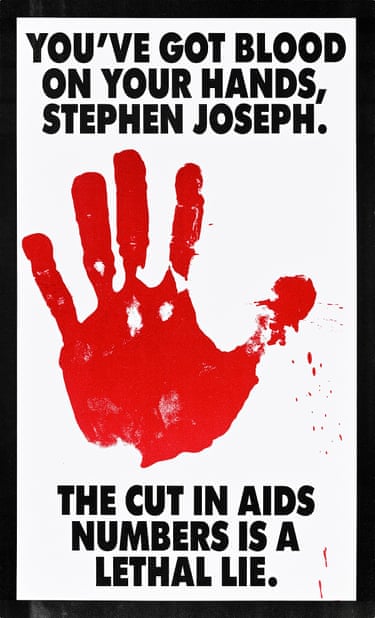
You’ve Got Blood On Your Hands, Stephen Joseph, 1988
While he was the New York City commissioner of health, Dr Stephen Joseph lowered the estimated number of people with HIV and Aids from 200,000 to about 50,000. Activists were outraged, accusing Joseph of downplaying the epidemic to cut public funding for the crisis.Photograph: Gran Fury/Courtesy of Poster House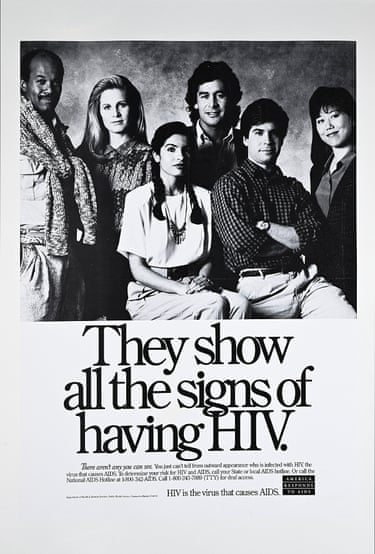
They Show All the Signs of Having HIV, 1991
This America Responds to Aids (ARTA) poster is emblematic of the early 90s’ shift in federal messaging around HIV and Aids. Government posters prioritized education, underlining that there is not one ‘type’ of person that lives with HIV. Activists condemned the campaign for putting an inaccurate ‘respectable’ face on the crisis.Photograph: Designer Unknown /Courtesy of Poster House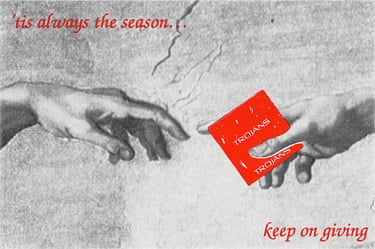
Always the Season, 1991
This double sided handbill advertises the dance party Dancetaria on one side, and cheekily promotes safe sex on the other. Michelangelo’s Creation of Adam is given an Aids era update here with God handing Adam a Trojan condom – issuing a divine blessing to ‘keep on giving.’Photograph: Designer Unknown/Collection of David Kennerley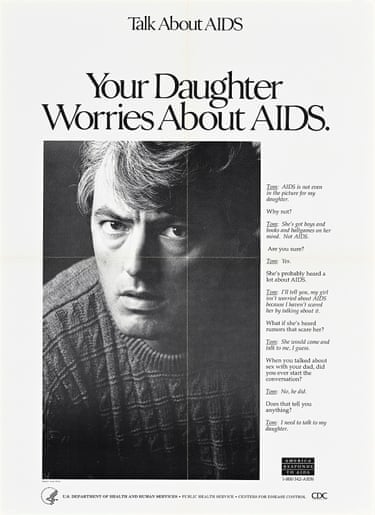
Your Daughter Worries About Aids, 1991
The Talk About Aids campaign was aimed at straight, middle-class Americans, imploring them to take responsibility for their sexual health. The advert’s cozy, optimistic tone was slammed by critics, who saw it as erasing those who were at highest risk for HIV and Aids, especially gay men, sex workers and drug users.Photograph: Designer Unknown /Courtesy of Poster House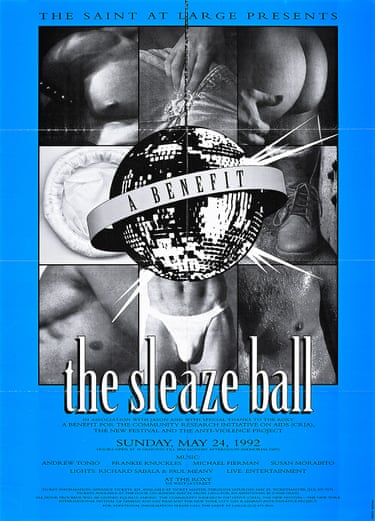
The Sleaze Ball, 1992
The Aids epidemic still raged in 1992, but nightlife represented defiance. The poster for the Sleaze Ball put (safe) sex squarely back in the picture, at a fundraiser where 100% of proceeds went to gay causes. Held at New York’s The Roxy nightclub, the event featured DJ sets from Chicago house legend Frankie Knuckles, Fire Island mainstay Michael Fierman and Limelight regular Susan Morabito.Photograph: Jon McEwan/Collection of David Kennerley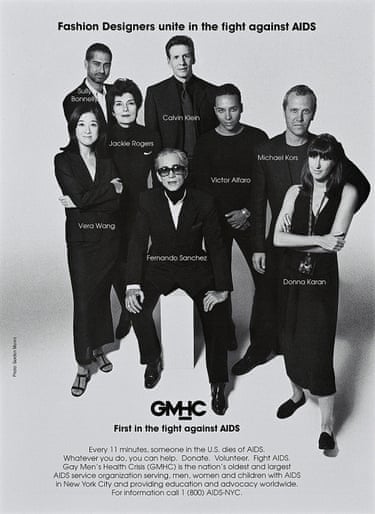
GMHC Magazine Advertisement, 1996
This advert from the October 1996 issue of American Vogue saw the decade’s top fashion designers unite to support GMHC. Calvin Klein, Donna Karan, Michael Kors and Vera Wang were among those featured, coming together after many of the fashion community being lost to HIVAids. Photograph: Gordon Munro/Private collection, NYC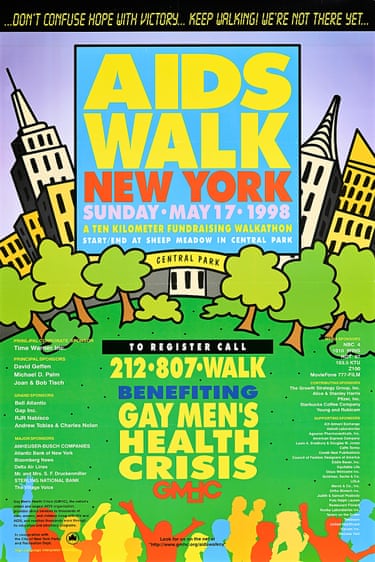
Aids Walk New York, 1998
“Don’t confuse hope with victory, we’re not there yet,” read the 1998 poster for Aids Walk New York, highlighting that the epidemic was not over despite advancements in HIV medication. Founded in 1986, Aids Walk had grown to become one of the world’s largest Aids fundraising events, with the 1998 event attracting tens of thousands of participants and raising over $4m for GMHC.Photograph: Designer Unknown/Courtesy of Poster HouseExplore more on these topics