2 months ago
110
2 months ago
110
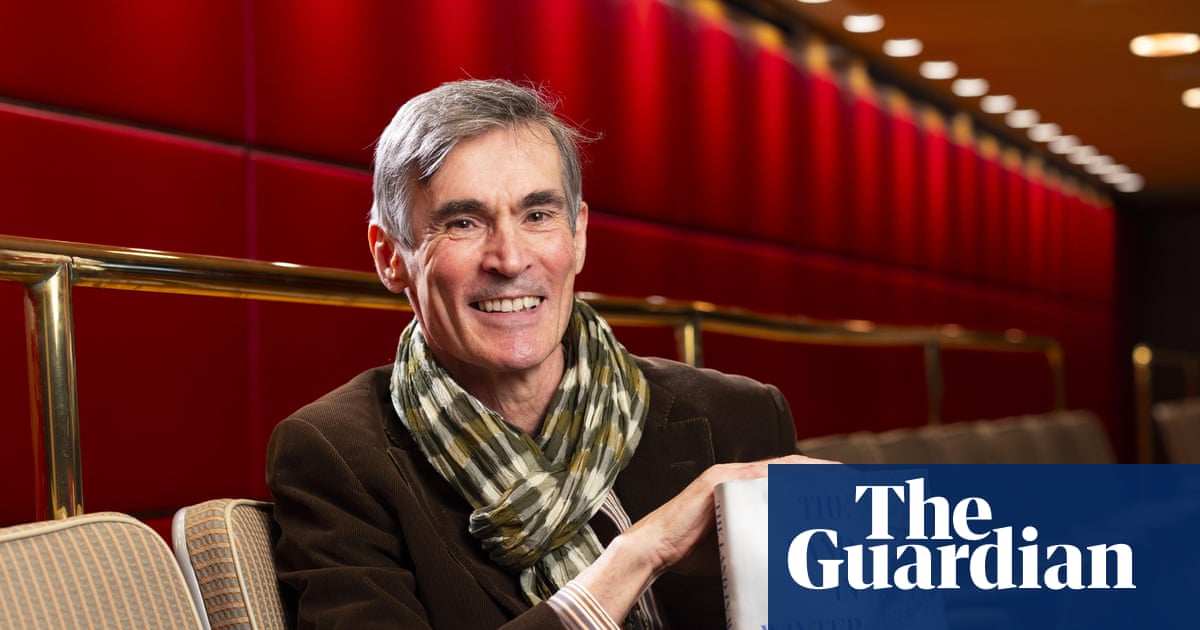
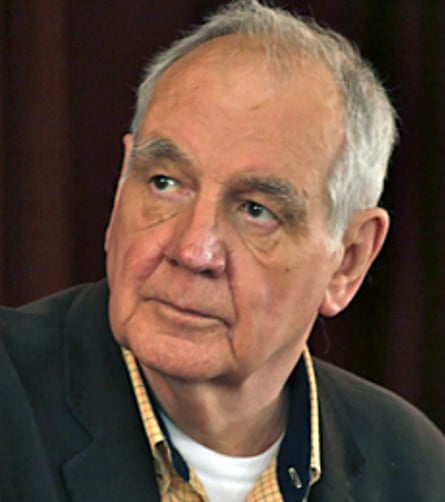
Michael Slater, who has died aged 88, was an expert on the life and writings of Charles Dickens. He sought to engage the widest possible readership in Dickens’s work, and to bring into the public domain all those writings that still lay in the shadows cast by the canonical novels and popular Christmas books.
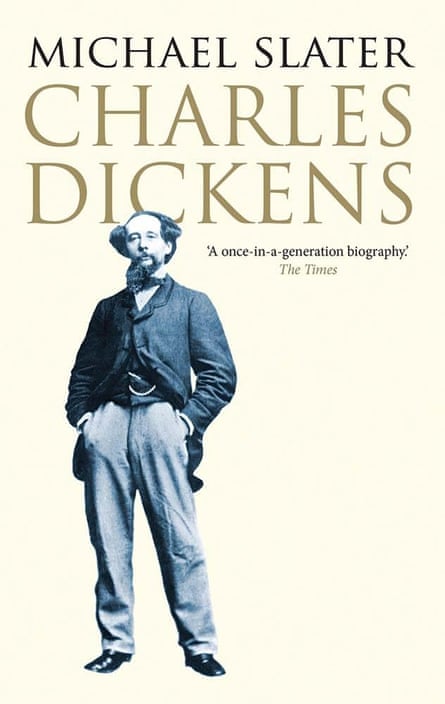
His biography Charles Dickens: A Life Defined by Writing (2009) gives a detailed account of Dickens’s life and the full range of his work, bringing out the web of connections between the two. He produced a four-volume edition of Dickens’ Journalism (1994-2000, with volume four co-edited with John Drew), and from 1993 was series editor of the multi-volume Everyman Dickens: all the novels, most of the minor works, the travel books, the writings for children, and the mass of hitherto neglected short stories culled from Dickens’s journals. Michael was excited by the range, richness and diversity of Dickens’s writings, and wanted them to excite others. His work significantly advanced Dickens’s reputation and opened new fields for research.
In order to counter the divide between Dickens’s academic and “lay” readerships, he edited The Dickensian (1968-77), the journal of the Dickens Fellowship, introducing a new academic rigour and sophistication to its articles and formatting, while preserving its old literary-fellowship features. A similar bridging project came with his inauguration in 1986 of a Dickens Day at his academic base of Birkbeck College, London, a one-day conference combining fellowship members, academics and students.
For several decades he was an academic adviser and a trustee of the Charles Dickens Museum, housed in the writer’s former home in Doughty Street, central London. He helped to secure for it two collections of Dickensiana from private ownership, producing an annotated catalogue (1975) for one of them, the magnificent Suzannet collection.
Michael’s pioneering book Dickens and Women (1983) combined analytic accounts of Dickens’s own relationships with women and his representations of female characters in the novels. It countered some of the myths that had grown up about his relationships, illustrated clearly the variety and unresolved complexity of Dickens’s attitudes to women, and led indirectly (and to his surprise) to his appearances on stage in London theatres to answer questions from the audience in Miriam Margolyes’s popular one-person show, Dickens’ Women.
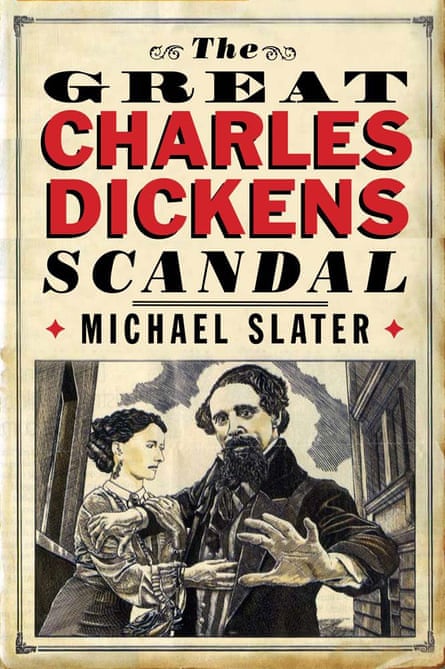
The Great Charles Dickens Scandal (2012) examined Dickens’s relationship with the young actor Ellen Ternan. It became public only in the late 1930s, with sensational headlines in the national press, and consequences for Dickens’s reputation within and beyond the literary world.
Born in Reading, Berkshire, Michael was the son of Valentine (nee Clément), from northern France, where, in 1915 she had met her husband-to-be, Jesse Slater, as a British soldier in the first world war. He remained in the army into the 1920s, and by the time of Michael’s birth was a travelling salesman for Palmolive soap.
Michael was seven or eight when he first tasted Dickens in Oliver Twist and Nicholas Nickleby. Like the wide-eyed young heroes of these novels, at Wilson primary school and Reading school he took in the characters he encountered, such as, for instance, a French master in plus-fours and with a waxed moustache, who would literally dance with rage before the class at any misbehaviour. Such episodes, he later recalled, “must have seemed entirely continuous with the weird and wonderful world I was discovering in Dickens’s novels”.
He believed that Dickens’s distinctive genius lay in his humour and his creation of characters who live “in a perpetual summer of being themselves” (as he used to quote GK Chesterton). The humour was easier to celebrate than to analyse, and as it went missing from the more earnest discourses of lit-crit over the last half-century or so, Michael promoted these convictions with passion and eloquence, as a teacher, formally and informally, and through his readings from Dickens.
After school, by way of national service he learned Russian at the Joint Services School for Linguists (JSSL) in Bodmin, Cornwall. He was then stationed at a listening post in West Berlin, eavesdropping on the mundane conversations of Soviet pilots.
In 1957 Michael went to Balliol College, Oxford, to study English. There he was told that the BA literature curriculum ended at 1832; “After that, it’s only books,” explained his tutor.
When it later proved difficult to find anyone at Oxford to supervise his planned doctorate on Dickens, Michael gravitated to London and the tutorship of Kathleen Tillotson. She and John Butt at Edinburgh were the leading Dickens scholars in the UK. There and in the US there was a significant new wave of academic interest in the writer, which Michael’s work built on. On receiving his doctorate in 1965 he was appointed to a lectureship in English at what is now Birkbeck, University of London, where he remained for 36 years, becoming professor of Victorian literature in 1991 and retiring as emeritus a decade later.
Michael shared his apartment home in Bloomsbury with his partner, John Grigg, whom he had met on the Russian course. It was a summer-visit focus for the many overseas friends he’d made during his frequent lecturing tours.
As an international organisation, the Dickens Fellowship, of which Michael served as president (1988-90), brought him invitations from branches and universities around the world. He was also president of the Dickens Society of America. In 2014 he was appointed MBE.
One of Dickens’s obituarists wrote that the master “brought all that he saw and felt into a magic circle of dramatic creation”. Michael had something of the same impulse, and with a similar histrionic flair. Each anecdote from his repertoire of personal misadventures lengthened over the years as he elaborated scenes and characters to the point where life seemed to be impersonating Dickens. He admitted that Dickens “has to a large extent been my life”.
John Grigg died in 2013. Michael is survived by four nephews and a niece.