3 months ago
150
3 months ago
150
Welcome summary
Hello and welcome to our continuing live coverage of the US-Israel war on Iran and the broader crisis in the region, and global economy.
Here are the latest developments:
-
The Iranian army has vowed revenge for the killing of security chief Ali Larijani in an Israeli airstrike, with Iran’s army chief threatening to launch a “decisive and regrettable” retaliation.
-
Iran also confirmed the death of the Basij militia commander Gholamreza Soleimani, after Israel earlier claimed its military assassinated him. It marks the highest level assassination in the war since joint US-Israeli strikes killed the former supreme leader Ali Khamenei on 28 February.
-
The Israeli military called on residents of a central Beirut neighbourhood to evacuate early Wednesday, warning of an imminent attack on the Lebanese capital targeting Iran-backed militant group Hezbollah. In a statement on social media, the military’s Arabic-language spokesman Avichay Adraee issued “an urgent warning to residents of... Bashoura neighbourhood”, saying Israeli forces would operate against a Hezbollah facility there.
-
Donald Trump continued to lash out at Nato allies, claiming “we don’t need” their help in the Iran war after pressuring them to help the US secure the strait of Hormuz, but added that “they should’ve been there”. Trump said Nato was making a “foolish mistake” and once again framed the issue as a loyalty test for the alliance.
-
The US military said it targeted sites along Iran’s coastline near the strait of Hormuz because Iranian anti-ship missiles posed a risk to international shipping there. US Central Command said US forces successfully employed “multiple 5,000-pound deep penetrator munitions” in the strikes.
-
Trump’s former director of the national counterterrorism center Joe Kent quit, saying he “cannot in good conscience support the ongoing war in Iran”. In his resignation letter, Kent accused “high-ranking Israeli officials and influential members of the American media” of deploying “a misinformation campaign” that ultimately “sowed pro-war sentiments to encourage a war with Iran”.
-
Israel’s assault on Lebanon has killed at least 912 people, including 111 children, and wounded 2,221 others, per the Lebanese health ministry, with over a million people displaced.
-
Israeli attacks on residential buildings and civilian infrastructure in Lebanon may amount to war crimes, the United Nations human rights office said.
-
The Israeli military earlier issued a fresh evacuation order for the coastal Lebanese city of Tyre and its surrounding villages and Palestinian refugee camps, sparking an exodus of residents from Lebanon’s fourth largest city.
-
A projectile hit the premises of Iran’s Bushehr nuclear power plant on Tuesday night. But no damage to the plant or injuries to staff were reported, Iran told the UN nuclear watchdog International Atomic Energy Agency (IAEA).
Key events Show key events only Please turn on JavaScript to use this feature
International shipping regulator to discuss possible 'safe maritime corridor' for stranded ships, seafarers
The International Maritime Organization will begin an extraordinary session today to discuss shipping, including establishing “a safe maritime corridor to allow the safe evacuation of seafarers and ships stranded in the Persian Gulf”.
The meeting of the London-based UN agency – responsible for regulating international shipping safety – comes as fears grow over the fate of thousands of ships and seafarers stranded by the war. Iran’s retaliation to Israeli-US strikes has crippled commercial shipping in or near the strait of Hormuz.
Although, as we noted in an earlier, post Iran is still managing to export millions of barrels of oil.
An effective Iranian blockade of the strait has dramatically spiked oil prices, spooked markets, and left about 20,000 seafarers stranded on approximately 3,200 vessels west of the strait, according to the IMO.
At least 21 ships have been hit, targeted or have reported attacks since the start of the conflict, according to an AFP tally based on data from the UK Maritime Trade Operations, the IMO and Iraqi and Iranian authorities.
Iran is still exporting millions of barrels of oil, with about 90 ships, including oil tankers, having crossed the strait of Hormuz since the beginning of the war with Iran, according to maritime and trade data platforms reports.
This is despite Iran saying it had closed the vital waterway to vessels from the US and its allies.
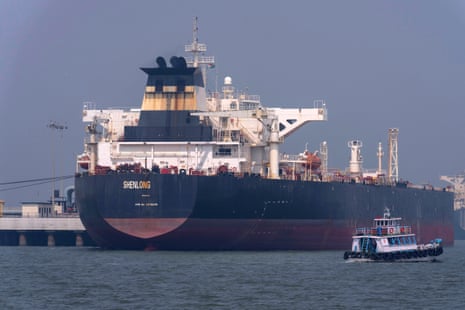
Associated Press reports that many of the ships that have passed through the strait are so-called “dark” transits evading western sanctions that likely have ties with Iran. More recently, vessels with ties to India and Pakistan have also successfully crossed the strait as governments stepped up negotiations.
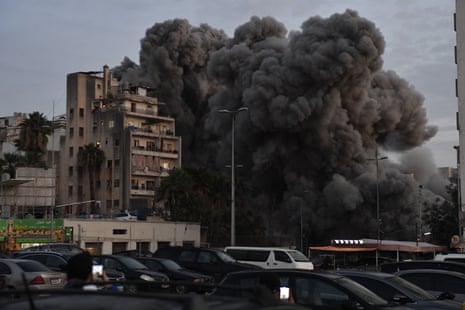
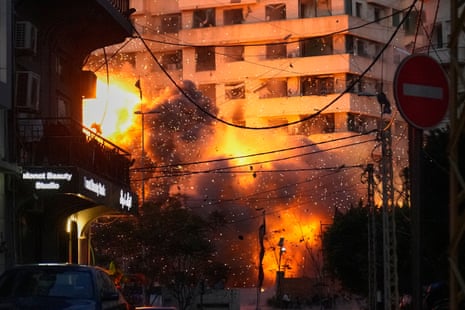
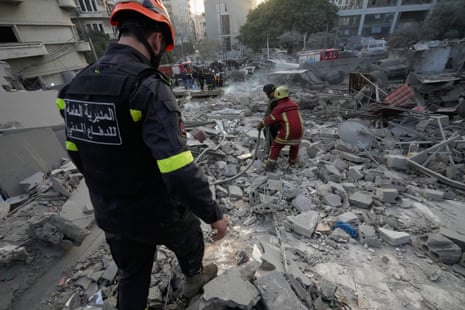
Israeli strikes targeting central Beirut – far from the city’s southern suburbs, for which the army issued evacuation notices early in the war with Hezbollah – have become increasingly frequent in recent days, with or without prior warning.
The images coming in overnight show smoke still rising from the rubble of collapsed buildings and firefighters and rescuers at work amid the debris.
Qatar’s defence ministry said it intercepted a missile attack today as blasts were heard in Doha.
“Armed forces intercepted missile attack which targeted State of Qatar,” the Ministry of Defence said in a statement, released shortly after an AFP journalist in the capital heard several blasts.
Updating our earlier post about an Iranian missile barrage that killed two people in Ramat Gan, near Tel Aviv, Israel’s national railway company said shrapnel had also disrupted train services.
Authorities reported that falling munitions had hit multiple sites in central Israel in the overnight barrage that triggered air raid sirens across the area, after another day of heavy Israeli bombardments in Iran and Lebanon.
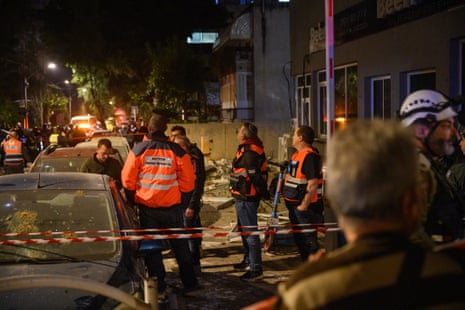
Police spokesperson Dean Elsdunne said that, according to an initial assessment of the deadly impact, a residential building was hit by a cluster bomb in Ramat Gan. The munition “collapsed the roof in on an elderly couple that were in their room. Unfortunately, this couple did not go to the safe room when the alarm sounded, and as a result, we have this unfortunate tragedy,” Elsdunne said.
The latest deaths took the toll from missile attacks on Israel since the start of the Middle East war late last month to 14 people.
Global air travel remains severely disrupted after the war in Iran forced the closure of important Middle Eastern hubs including Dubai, Doha and Abu Dhabi, stranding tens of thousands of passengers.
Greece’s largest carrier is latest to announce cancellations: flights to Tel Aviv, Beirut and Amman have been cancelled until 22 April, and to Erbil and Baghdad until 24 May. Flights to Dubai were cancelled until 19 April and to Riyadh until 18 April.
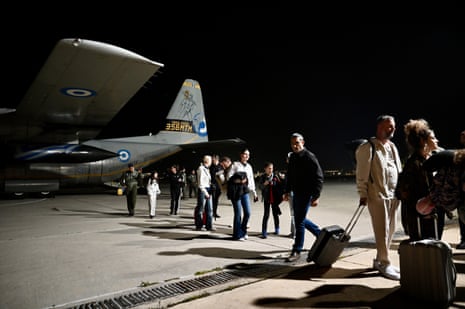
Other international carriers suspending flights to Middle Eastern destinations including Tel Aviv and Dubai are Air Canada, Air France KLM and Cathay Pacific, in some cases through to May.
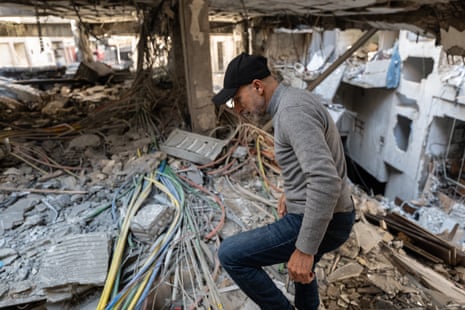
Israeli airstrike hits Beirut’s Bashoura neighbourhood
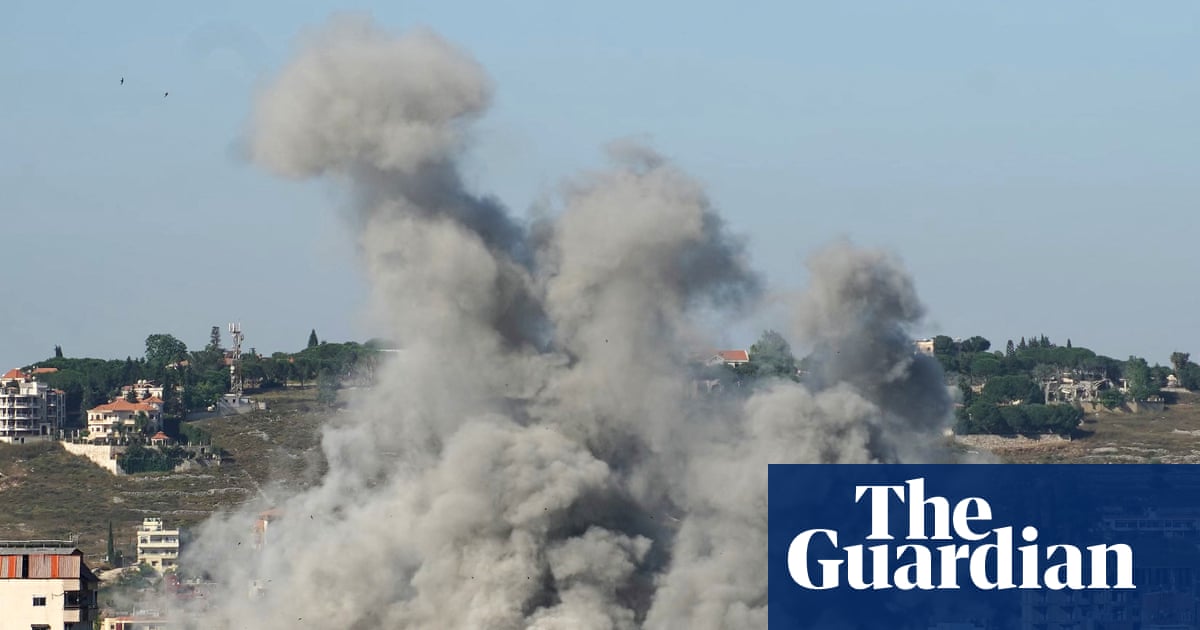
An Israeli airstrike has hit Beirut’s Bashoura neighbourhood, according to reports from Reuters and AFP, with a loud explosion heard in the area.
The strike came after the Israeli military issued a statement urging the evacuation of a building in the central Beirut neighbourhood ahead of the attack targeting Iran-backed militant group Hezbollah.
The residential and commercial area has become a target of Israeli airstrikes this month.
The war on Iran has not delayed shipments of weapons to Taiwan or changed US policy toward the island, officials from President Donald Trump’s administration told members of Congress on Tuesday, despite the demands of the intense air campaign.
“Have we delayed moving things to Taiwan? We haven’t,” Stanley Brown, principal deputy assistant secretary of state for Political-Military Affairs, told a House of Representatives Foreign Affairs Committee hearing.
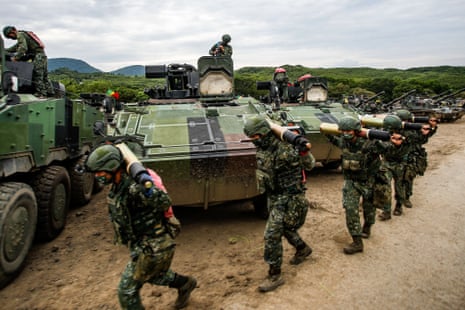
The US and Israel began airstrikes against Iran on 28 February, a campaign that has raised concerns among some US officials that the US defense industry would be unable to keep up with demand and could be forced to slow shipments to buyers such as Taiwan, which faces steadily rising military pressure from China.
There was already a backlog of US arms shipments to Taiwan before the Iran war started. Brown said the administration was looking at ways to expedite shipments, without providing specifics.
Speaking at the same hearing, Director of the Defense Security cooperation Agency Michael Miller said in 2023 he signed a directive to prioritize Taiwan above other buyers that may be in the queue for competing weapons purchases.
“That remains standing guidance. So, in the matter of whether there was a competition between provision of Harpoons to Saudi Arabia or to Taiwan, Taiwan would take priority,” he added, referring to the anti-ship missile.
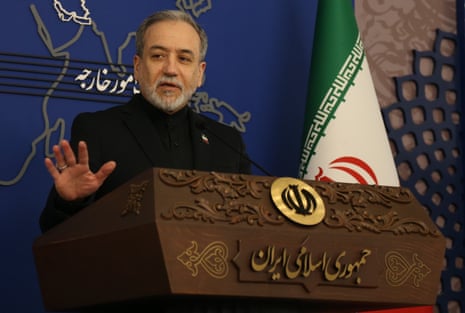
Iran foreign minister says global repercussions of the war 'will hit all'
Iran’s foreign minister said today that the global repercussions of the Middle East war “will hit all”, suggesting more western officials should push back against the conflict.
“[A] wave of global repercussions has only begun and will hit all – regardless of wealth, faith, or race,” Iranian Foreign Minister Abbas Araghchi posted on X, accompanied by a copy of the US National Counterterrorism Center director Joe Kent’s resignation on Tuesday.
In his resignation letter, Kent said he could not “in good conscience” support the ongoing war in Iran,” because “Iran posed no imminent threat to our nation”.
Abbas Araghchi said there was a “rising number of voices – (including) European and US officials” exclaiming that the war on Iran was unjust. “More members of the international community should follow suit,” his post said.
Lebanon said Israeli strikes on central Beirut early Wednesday without warning killed at least six people, as Israel’s military warned it would strike a third district in the capital.
Lebanon was drawn into the Middle East war on 2 March when Iran-backed militant group Hezbollah launched rockets towards Israel in response to US-Israeli strikes that killed Iranian supreme leader Ayatollah Ali Khamenei.
Israel has responded with intense strikes in multiple Lebanese regions and ground operations in the south, and has hit central Beirut several times, with and without warning.
Lebanon’s official National News Agency (NNA) said a strike in the early hours of Wednesday hit an apartment in the central Zuqaq al-Blat neighbourhood, a densely populated area close to the government’s headquarters and several embassies.
Welcome summary
Hello and welcome to our continuing live coverage of the US-Israel war on Iran and the broader crisis in the region, and global economy.
Here are the latest developments:
-
The Iranian army has vowed revenge for the killing of security chief Ali Larijani in an Israeli airstrike, with Iran’s army chief threatening to launch a “decisive and regrettable” retaliation.
-
Iran also confirmed the death of the Basij militia commander Gholamreza Soleimani, after Israel earlier claimed its military assassinated him. It marks the highest level assassination in the war since joint US-Israeli strikes killed the former supreme leader Ali Khamenei on 28 February.
-
The Israeli military called on residents of a central Beirut neighbourhood to evacuate early Wednesday, warning of an imminent attack on the Lebanese capital targeting Iran-backed militant group Hezbollah. In a statement on social media, the military’s Arabic-language spokesman Avichay Adraee issued “an urgent warning to residents of... Bashoura neighbourhood”, saying Israeli forces would operate against a Hezbollah facility there.
-
Donald Trump continued to lash out at Nato allies, claiming “we don’t need” their help in the Iran war after pressuring them to help the US secure the strait of Hormuz, but added that “they should’ve been there”. Trump said Nato was making a “foolish mistake” and once again framed the issue as a loyalty test for the alliance.
-
The US military said it targeted sites along Iran’s coastline near the strait of Hormuz because Iranian anti-ship missiles posed a risk to international shipping there. US Central Command said US forces successfully employed “multiple 5,000-pound deep penetrator munitions” in the strikes.
-
Trump’s former director of the national counterterrorism center Joe Kent quit, saying he “cannot in good conscience support the ongoing war in Iran”. In his resignation letter, Kent accused “high-ranking Israeli officials and influential members of the American media” of deploying “a misinformation campaign” that ultimately “sowed pro-war sentiments to encourage a war with Iran”.
-
Israel’s assault on Lebanon has killed at least 912 people, including 111 children, and wounded 2,221 others, per the Lebanese health ministry, with over a million people displaced.
-
Israeli attacks on residential buildings and civilian infrastructure in Lebanon may amount to war crimes, the United Nations human rights office said.
-
The Israeli military earlier issued a fresh evacuation order for the coastal Lebanese city of Tyre and its surrounding villages and Palestinian refugee camps, sparking an exodus of residents from Lebanon’s fourth largest city.
-
A projectile hit the premises of Iran’s Bushehr nuclear power plant on Tuesday night. But no damage to the plant or injuries to staff were reported, Iran told the UN nuclear watchdog International Atomic Energy Agency (IAEA).