2 months ago
135
2 months ago
135
US says Iranian radar and command and control sites struck over the weekend
US central command (Centcom) has said that it struck targets in Iran over the weekend, in a statement that came just minutes after Kuwait announced it was under attack.
Labelling their actions “self-defence”, the US said it hit Iranian “radar and command and control sites for drones in Goruk, Iran and Qeshm Island”.
Centcom said the attack was in response to “aggressive Iranian actions”, including the “shootdown of a U.S. MQ-1 drone that was operating over international waters.”
The US strikes mark the third time that the ceasefire between Iran and America has been violated since it was agreed in early April. On both previous occasions, Tehran and Washington played down the significance of the exchange of strikes and the truce was able to continue.
The latest action comes amid a flurry of diplomatic wrangling between the Trump administration and Iran’s leadership to secure a lasting ceasefire and return shipping to the strait of Hormuz.
Key events Show key events only Please turn on JavaScript to use this feature
The exchange of strikes between the US and Iran reflects the fragility of the current ceasefire, which has seen repeated violations even as American and Iranian officials try to negotiate a deal to extend it.
Iran has maintained its chokehold on the strait of Hormuz, disrupting global energy supplies as a fifth of all oil and natural gas traded once passed through the narrow mouth of the Persian Gulf. The US continues to enforce its own blockade on the strait, as it pressures Tehran to reach an agreement.
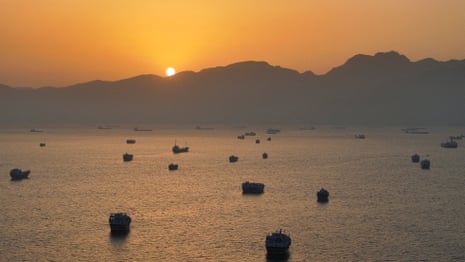
Both sides insist that they are continuing to negotiate, particularly over Iran’s stockpile of highly enriched uranium. Donald Trump met with advisers on Friday but has yet to decide on whether to move ahead with a deal to extend the ceasefire and reopen the strait. Iran has said the deal had not been finalised.
A trickle of ships have made it out of the strait, but pressure continues on global energy supplies, as well as chemical fertiliser which has led to fears of food shortages. The Gulf region produces 30% of globally traded chemical fertilisers.
Iran 'really wants to make a deal', says Trump
Donald Trump has said “Iran really wants to make a deal”, in a new post on Truth Social, while also taking aim at critics of his efforts to secure an agreement with Tehran.
Don’t the Dumocrats, and various seemingly unpatriotic Republicans, understand that it is MUCH tougher for me to properly do my job and negotiate, when political hacks keep negatively “chirping,” at levels never seen before, over and over again, that I should move faster, or move slower, or go to war, or not go to war, or whatever. Just sit back and relax, it will all work out well in the end - It always does!
The US presidents post makes no mention of the attack on Kuwait, or the US strikes on Iran over the weekend.
European leaders have condemned Israel’s expanding incursion into Lebanon, after its military captured the medieval Beaufort castle and Israel’s prime minister, Benjamin Netanyahu, vowed to push even deeper into the country.
France’s president Emmanuel Macron called for an end to fighting, saying “nothing justifies the major escalation under way in south Lebanon”. The country’s foreign minister, Jean-Noel Barrot, has requested a meeting of the UN security council for Monday.
The foreign ministers of the UK and Germany joined France in condemning the new operation. Britain’s Yvette Cooper called for the ceasefire that has been in place between Israel and Iran-backed Hezbollah since April to be respected. The US-brokered truce to halt the fighting between both sides has rarely been observed.
Netanyahu has called Sunday’s capture of Beaufort castle a “dramatic shift” in the campaign against Hezbollah. Israeli forces used the Beaufort castle, also known as Qalaat al-Shaqif, as a base during their previous two-decade occupation of southern Lebanon that ended in 2000.
The castle offers views across Lebanon and into northern Israel. It was built as a crusader castle around the 12th century and later occupied by Saladin’s Jerusalem army, the Ottomans, the French and the Palestinian Liberation Organisation.
Netanyahu noted the historic significance of the castle, which the military first seized in 1982, calling it a “symbol of a heroic battle for our fighters.”
But some experts have questioned the strategic significance of the capture, and said its capture amounted to little more than a public relations coup.
The military’s presence there will not solve the issue with Hezbollah, Orna Mizrahi, a former deputy director in Israel’s national security council, told the Associated Press. “We are damaging them in the operations, but in parallel we need to pursue a political and diplomatic solution,” Mizrahi said.
Israel has said an “aerial target that was fired from Lebanese territory” was intercepted early on Monday.
The IDF said the interception happened after alerts sound across “several areas in northern Israel.”
Israel has in recent days expanded its incursion into southern Lebanon, as part of its ongoing war against Iran-backed Hezbollah. The continuing operations have displaced more than a million people and left thousands dead, and come despite a nominal ceasefire that has been in place between the two sides since April.
In its Monday morning statement announcing the weekend strikes on Iran, US central command (Centcom) said that the action was in response to the “shootdown of a U.S. MQ-1 drone”.
On Sunday, Iran’s Islamic Revolutionary Guard Corps (IRGC) said it had shot down an MQ-1 drone over its “territorial waters”.
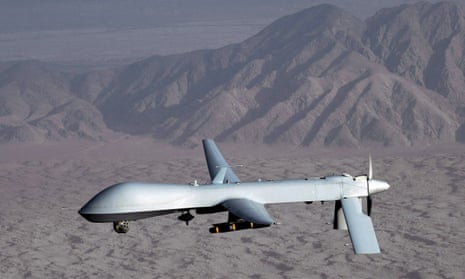
The statement, reported by Iranian media, described the drone as “hostile”, and said it was shot down after it crossed over into Iran’s territorial waters.
Centcom said on Monday that the US drone was operating “over international waters.”
The latest exchange of fire between the US and Iran marks the third major violation of a ceasefire that was agreed by both sides in April.
That deal was reached after almost six weeks of violent conflict that began when the US and Israel launched strikes on Iran in February, killing the country’s supreme leader Ayatollah Ali Khamenei.
Since then, the truce has largely held, while the Trump administration has used a blockade on ships in the strait of Hormuz to pressure Iran into agreeing to a more permanent peace agreement that would reopen the vital waterway and address concerns over Tehran’s nuclear program.
However on 7 May, the US and Iran exchanged fire, testing the strength of the ceasefire. Iran accused the US of violations by targeting two ships in the strait of Hormuz and attacking civilian areas, while the US insisted it struck in retaliation, after three US destroyers were targeted.
Then last week, the US said it had targeted missile launch sites and boats attempting to lay mines.
On both previous occasions, the US insisted that the action carried out was limited, and did not indicate the ceasefire with Iran was over.
Iran’s Islamic Revolutionary Guards Corps (IRGC) has said it targeted an airbase used by the US to launch an attack on Sirik Island in southern Iran, according to a statement in Iranian media.
Sirik Island is located in the strait of Hormuz. The IRGC said the US was targeting a telecoms tower on the island.
More from the Kuwaiti army, which has announced that its air defences are intercepting missile and drone attacks.
The General Staff of the Army wishes to advise that any sounds of explosions heard are the result of air defense systems intercepting these hostile attacks.”
Kuna, the state news agency, reported that air raid sirens were ringing across the Gulf nation.
US says Iranian radar and command and control sites struck over the weekend
US central command (Centcom) has said that it struck targets in Iran over the weekend, in a statement that came just minutes after Kuwait announced it was under attack.
Labelling their actions “self-defence”, the US said it hit Iranian “radar and command and control sites for drones in Goruk, Iran and Qeshm Island”.
Centcom said the attack was in response to “aggressive Iranian actions”, including the “shootdown of a U.S. MQ-1 drone that was operating over international waters.”
The US strikes mark the third time that the ceasefire between Iran and America has been violated since it was agreed in early April. On both previous occasions, Tehran and Washington played down the significance of the exchange of strikes and the truce was able to continue.
The latest action comes amid a flurry of diplomatic wrangling between the Trump administration and Iran’s leadership to secure a lasting ceasefire and return shipping to the strait of Hormuz.
Summary
Hello and welcome to the Guardian’s continuing coverage of the crisis in the Middle East.
The Kuwaiti military has said that the country’s air defences are currently intercepting hostile missile and drone attacks, after the US said it conducted strikes on radar and control sites in Iran over the weekend. Kuwaiti state media reported that sirens were sounding across the country on Monday morning.
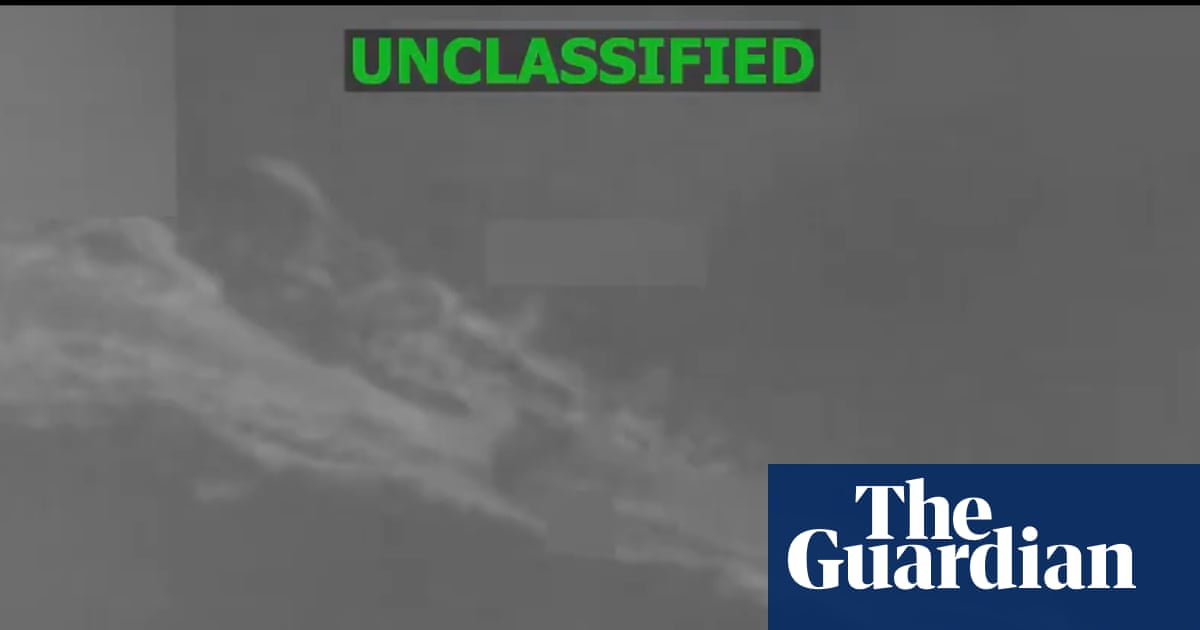
Minutes after Kuwait reported coming under attack, US central command (Centcom) said it had conducted “strikes on Iranian radar and command and control sites for drones” over the weekend.
The measured and deliberate strikes occurred on Saturday and Sunday in response to aggressive Iranian actions that included the shootdown of a U.S. MQ-1 drone that was operating over international waters. U.S. fighter aircraft swiftly responded by eliminating Iranian air defenses, a ground control station, and two one-way attack drones that posed clear threats to ships transiting regional waters.”
Kuwait was one of a number of Gulf countries to face weeks of reprisal attacks from Iran, after the US and Israel launched their war in February. A ceasefire reached between the US and Iran in April has since largely held.