2 months ago
158
2 months ago
158
‘I wasn’t aware that I am such a brave writer and illustrator,” says Anna Fiske, a softly spoken Swedish-born author living in Norway who received death threats for a book she wrote in 2019. “I just tell things as they are.”
Fiske doesn’t write political polemics but books for children: the title of the offending book is Hvordan Lager Man en Baby?, “How Do You Make a Baby” – and, yes, there are illustrations. Distributed in English-speaking territories through Fiske’s New Zealand publisher, it triggered threats from Canada and was banned from several school libraries in the US. “They said it was pornographic.”
In jaunty line drawings, Fiske’s book depicts complex issues such as IVF, insemination and adoption as well as what goes where during intercourse. A mother’s group in Russia contacted her to object to the grimacing, contorted faces on her drawings of women giving birth. “They said, you must draw happy faces,” she recalls, laughing. “Like they should have jazz hands.” The pushback left Fiske bewildered. “I thought: ‘What is this? What is the adult so afraid of? Why is that something that they make so ugly?’”
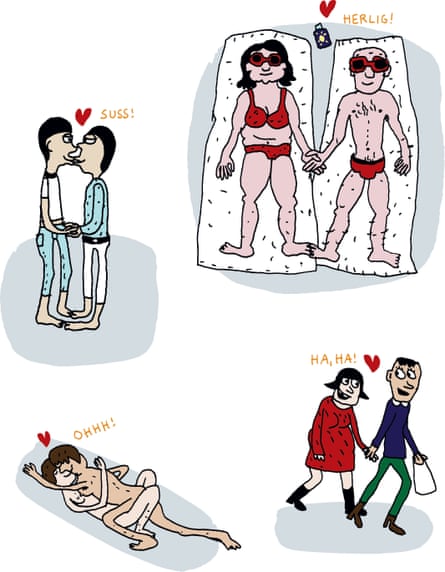
In Norway where she lives, by contrast, Fiske’s unvarnished introduction to childbirth and other subjects is welcomed with open arms. Her “How to” series have sold more than 100,000 copies, and the author won the Honorary Brage award in 2025, one of Norway’s most prestigious literary prizes. Her success is reflective of a literary industry that actively embraces taboo subjects as its unique calling card. Norwegian literature and illustration for children aims to “question, explore and imagine without limits”, according to Norla (Norwegian Literature Abroad), the government agency that promotes Norwegian books around the world. “Children are independent individuals with their own thoughts, feelings and perspectives – and they deserve artistic expressions that take them seriously.”
In June, at the Norwegian festival of literature in Lillehammer, the largest event of its kind in the country, that attitude will be on proud display: this year’s programme presents books on a variety of sensitive topics such as “exclusion, bullying, identity, queer literature, climate issues, mental health challenges and people on the run forced to flee their home country”, says the festival’s director, Marit Borkenhagen. She concedes that not all topics are suitable for all age groups. “But it depends on how you define difficult subjects, and for whom they are considered difficult: children or adults?”
The festival has previously hosted Laurie Halse Anderson, the American author and winner of the Astrid Lindgren memorial award, whose books for teenagers have dealt with rape and anorexia and have been banned in her own country. “But her books did not face such opposition in Norway,” says Borkenhagen. There has been a similar welcoming response to homegrown talent: Girls by Cathrine Sandmæl, a Norwegian tale of girls who like girls (for readers aged between 9 and 11), and Super Brother by Cathrine Louise Finstad and illustrated by Karoline L Førsund, which focuses on a boy whose sister is stillborn, were both well-received by festival audiences.
Fiske is a regular at the Lillehammer festival. When we meet at the Bologna children’s book fair earlier in the year, she says that children are like sponges that draw on the anxieties of adults. “They notice their parents are afraid looking at war and the news, and they snap up what we talk about and make their own ideas and dark clouds.” Her father was bipolar, a condition that was never explained to her as a child. “I think that is why I want to do these books.”
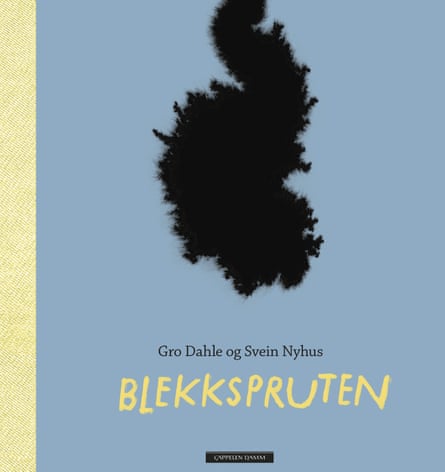
“In principle, you can tell anything to anybody,” says Svein Nyhus, a Norwegian writer and illustrator who co-authors children’s books with his wife, Gro Dahle. “It’s all about form,” he notes. “Symbols, expressive drawings, poetic language, metaphors.” The couple’s oeuvre includes Angry Man (about a violent father) and The Octopus, which broached the subject of incest. Nyhus says that the only taboo is “to take away hope from children … I would never do that”. The aim of his books is “to open doors and let some light into these rooms”.
Two key factors underpin the Norwegian approach, one cultural, the other economic. Scandinavians have a markedly different view of childhood from the British, one in which the child has far more agency. There is far less discipline and far more discussion between generations. Helicopter parenting is frowned on, while an element of risk is considered normal, healthy even. Gunnar Breivik, a professor at the Norwegian School of Sport Sciences in Oslo, has said: “We have failed as parents if our children haven’t broken any bones by the time they turn 18.”
In this rough-and-tumble cultural landscape, children’s books serve a less didactic purpose. And this is where money matters: the Norwegian publishing industry is supported by the state, which buys a large stock of every book for its national libraries, irrespective of the title’s popularity. Books are seen as part of a toolkit for parents and teachers, as social instruments as much as products. And authors are well served by government grants. The Norwegian model shows that when writers don’t need to cater to the market, experimentation can flourish.
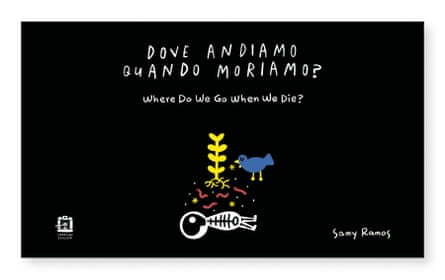
Of course, publishers in other countries are also daring. Girl With Scars by German author Lilly Bogenberger, which was being offered to foreign publishers at the Bologna fair, follows the struggles of a 15-year-old girl who self-harms. Italian publisher Corraini Edizioni had a hit this year with Where Do We Go When We Die? by Samy Ramos, which won the Opera Prima at the BolognaRagazzi awards. Ramos’s approach to mortality is both macabre and jaunty – the cover features a body lying underground surrounded by worms, while a bird pecks at the earth above. It’s a philosophical book with no answers. Instead, death is treated as a fun, unsolvable puzzle.
Challenging subjects invite political opinion. It’s not just in the US that banning children’s books has become an issue – Budmouth Academy in Weymouth, Dorset, recently removed The Hate U Give, a young adult novel by Angie Thomas about a black girl dealing with race relations and police violence in the US, from its year 10 reading list. “Here in Italy, I know that our government would love to ban books,” says Elena Pasoli, director of the Bologna children’s bookfair.
But Norwegians appear to push the boundaries more than most. I ask Fiske where her responsibilities lie: with the child or the parents? “Children first,” she tells me. “And I always write books that I’m curious about myself. Things I wonder about … The idea is the most important thing.”
But are some ideas too much for a child? “No. Nothing is too much. It’s how you tell it,” Fiske says. And she works hard to avoid scaring her readers. “I wrote a book about death and I wanted to describe suicide, because it’s a common thing,” she says. “I contacted a child psychiatrist who looked at what I’d written and said: ‘This is really good but you can word that differently.’” Many children think it’s their fault when a parent kills themself, Fiske says. “I wanted to comfort the children and say: ‘It’s the parents, it’s not you, it’s never you.’ I want to take away the misunderstanding, the ghost in the mind.”
-
The Norwegian festival of literature takes place in Lillehammer from 1-7 June