2 months ago
68
2 months ago
68
More than 300 earthquakes have been recorded in the UK this year, according to the British Geological Survey (BGS).
Among the most active regions to experience quakes were Perthshire and the western Highlands in Scotland, southern parts of Wales, and Yorkshire and Lancashire in England, the BGS data shows.
Perth and Kinross experienced the two most powerful onshore earthquakes, which occurred hours apart on 20 October near Loch Lyon: a 3.7-magnitude tremor followed by a 3.6-magnitude event.
One person described it as feeling “like an underground subway under my house”, while another said “the house shook and all the windows rattled”.
After the event, the BGS received 198 “felt reports” from people describing their experience of the quake, some more than 37 miles from the epicentre.
The BGS reported that 34 out of the 309 recorded earthquakes occurred near Loch Lyon between October and December. The third-largest onshore earthquake recorded was a magnitude-3.2 event at Silverdale, Lancashire, on 3 December, with 700 people reporting the tremor.
The Dogger Bank earthquake of 1931 remains the strongest earthquake recorded in the UK since measurements began, with a magnitude of 6.1.
Dr Brian Baptie, a seismologist at the BGS, said: “The data shows that earthquakes occurred in many parts of Great Britain over the past 12 months, with numerous events in Scotland, England and Wales that were each significant enough to be widely felt by many nearby.”
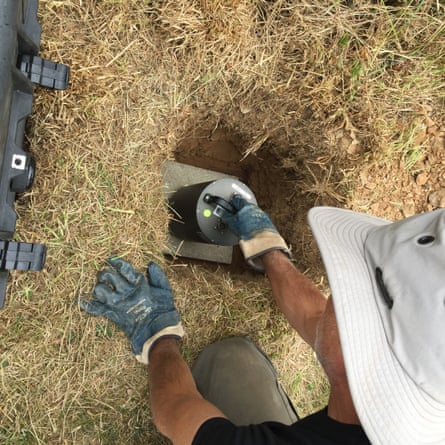
Baptie added that while significant quakes are rare, the UK experienced one virtually every day this year. “It is a reminder that small earthquakes happen all the time and it remains of critical importance that they are studied to help us understand the possible impact of the rare large earthquakes on major energy and infrastructure projects around the country,” he said.
The BGS use a network of 80 monitoring stations around the UK to record seismic activity.
Baptie said it was no surprise that Perth and Kinross topped the list. “The west of Scotland is one of the more active parts of the UK. Some of this activity can be attributed to well-known geological faults like the Great Glen fault and the Highland Boundary fault.”
He added: “Earthquakes can happen in other parts of the UK where there are geological faults. The earth under our feet has got lots of what we call geological faults in it, and those are caused by our turbulent geological history, and because there’s still ongoing deformation around the UK.
“Sometimes those faults are activated by present day stresses, and when they are, you get these small earthquakes.”
The BGS has received 1,320 reports from members of the public who felt earthquakes this year. The magnitude of many of these quakes was too low to be felt by humans, but larger seismic tremors, which have occurred in the UK in the past with magnitudes of 5 to 6, can pose safety risks.
A magnitude-4 event in the UK and surrounding areas is typically recorded every three to four years, a magnitude-5 every few decades and a magnitude-6 every few hundred years, the BGS said.