2 months ago
81
2 months ago
81
Between the slash-and-burn US government reboot led by a dank meme fan and the relentless pushing of AI by venture capital-backed blowhards, 2025 has felt like peak obnoxious tech bro. Fittingly, jargon-spouting, self-regarding digital visionaries also became Hollywood’s go-to baddies this year in everything from blockbusters to slapstick spoofs. Spare a thought for the overworked props departments tasked with mocking up fake Forbes magazine covers heralding yet another smirking white guy as “Master of the Metaverse” or whatever.
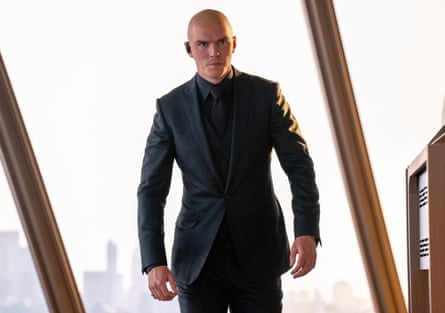
With such market saturation, the risk is that all these delusional dudes blend into one smarmy morass. It felt reasonable to expect that Stanley Tucci might sprinkle a little prosciutto on The Electric State, Netflix’s no-expense-spared alt-history robot fantasia. As Ethan Skate – creator of the “neurocaster” technology that quashed an AI uprising then turned the general populace into listless virtual-reality addicts – Tucci certainly looked the part: bald and imperious in retro Bond villain wardrobe. But even the great cocktail-maker couldn’t squeeze much out of sour existential proclamations such as: “Our world is a tyre fire floating on an ocean of piss.”
There was more baldness in Superman, where Nicholas Hoult’s Lex Luthor embodied the worst kind of wannabe paradigm-changer: one desperate to appear on talkshows. Incensed that the world seemed to be ignoring his genius in favour of a flying alien do-gooder, the LuthorCorp founder spent a fortune to rig social media, deploying an army of vivisected monkey cyborgs to swamp platforms with anti-Superman hashtags and memes. That the film itself was met with farmed outrage about perceived wokeness added a disconcerting hall-of-mirrors feel to what was essentially an overstuffed crowdpleaser. Hoult’s Lex was also a distractingly hot tech CEO, which pushed the film further into the realm of fantasy.
Is it more appealing when these self-regarding douchebags are funny? In the heightened world of killer doll action thriller M3gan 2.0, Jemaine Clement was sleazily overconfident as Alton Appleton, a high-functioning billionaire whose latest wheeze was pushing an unwanted neural implant on the masses. Seduced by an impassive fembot assassin, Alton was humiliated in his final moments, his signature Altwave tech effortlessly hacked, his weird prosthetic six-pack coming unstuck. It was pathetic but humanising. As the movie trundled on, you actually began to miss him.
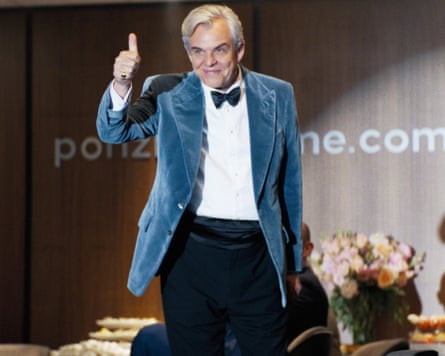
If Clement nailed tech bro obliviousness, Danny Huston had to remain deadpan opposite Liam Neeson’s blathering Frank Drebin Jr in The Naked Gun reboot. Huston’s Richard Cane was a hybrid Jeff Bezos/Elon Musk-esque blowhard who used the galactic profits from his online retail and electric car empires to make a Primordial Law of Toughness device . His master plan was to zap the general public back to a prehistoric mindset, violently culling the herd and ushering in a new age for humankind (or at least his zillionaire class). Cane was obsessed with men’s sperm counts, building luxury bunkers for the super-rich and Black Eyed Peas. In other words: truly psychotic.
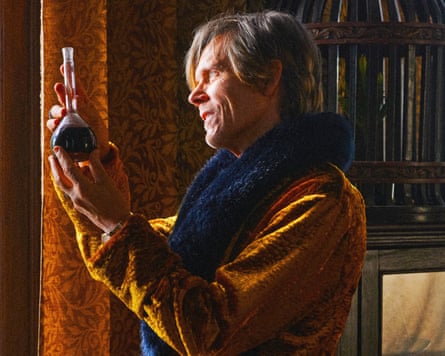
In the goopy, grungy world of The Toxic Avenger reboot, Kevin Bacon’s floppy-haired biotech baddie Bob Garbinger stood out simply because he looked so pale and pampered. While it’s not a great sign when a self-proclaimed “healthstyle” guru gets Sisyphus and syphilis mixed up, Garbinger’s habit of going shirtless while flogging “proprietary cutting-edge bio-boosters” in TV ads felt like a timely skewering of immortality-seeking biohackers such as Bryan Johnson.
In 2022, Evan Peters played the lead in Netflix’s ghoulish Monster: The Jeffrey Dahmer Story. Did that influence his casting as a second-generation nepo baby in Tron: Ares? To be fair, his Julian Dillinger – grandson of David Warner’s boardroom bully from the original 1982 Tron – seemed more neurotic than psychotic: a baby-faced tech huckster with crappy circuit board sleeve tattoos whose audacious move into 3D-printing wicked neon war machines and digital commandos was only slightly scuppered by the fact that they imploded within 30 minutes. A wildly expensive, resource-intensive, essentially useless product? Intentionally or not, it felt like an appropriate metaphor for the AI bubble.
But why stop at just one douchey tech bro? Jesse Armstrong’s jagged satire Mountainhead took the bold step of making every single character the absolute worst of the “move fast, break stuff” billionaire mindset, isolating them – and the viewer – in a remote, repellently deluxe ski lodge while the spectre of possible Armageddon encroached. As the Musk-alike owner of a social media app spreading dangerous AI-augmented misinformation, Cory Michael Smith captured the glib, morality-agnostic tone of someone richer than God who views the world as their plaything.
As Venis (Smith), silverback investor Randall (Steve Carell), canny algorithm tamer Jeff (Ramy Youssef) and would-be wellness app supremo Souper (Jason Schwartzman) relentlessly needled each other, there was the illicit thrill of dialling into the combative quartet’s inside-baseball repartee of boasting, toasting and roasting. But as the globe lurched further into chaos, watching these four nominal thought leaders clumsily workshop how best to exploit the situation was depressing, not least because it seemed so plausible. We have all been forced to absorb the pathologies of our tech overlords due to their disproportionate influence in the real world. As a new cinema year looms, is it too much to ask that we don’t have to keep doing it at the movies too?