1 month ago
96
1 month ago
96
It has not yet been two weeks since James Eden, the founder of the Manchester men’s clothier Private White VC, saw one of his best-known customers move in to No 10 Downing Street.
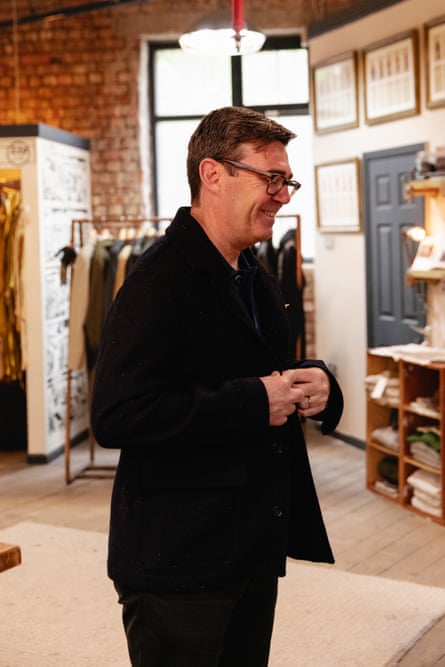
In any sane world the man who makes the prime minister’s jackets would be popping open the champagne. His garments have been seen by millions of people and described by journalists all over the world writing about Burnham’s buttoned-down style.
Instead, Eden, a proud advocate of British manufacturing, has found himself defending his company in the face of a media onslaught.
“‘Man of the people’ Andy Burnham’s down-to-earth outfits are all actually designer – including an £80 T-shirt … that’s more than he cut electricity bills by,” said the Daily Mail in a front-page story.
A slew of online hate followed, with commentators accusing the PM of being a hypocrite for wearing expensive clothes when voters’ personal finances are stretched.
Eden’s clothes are not cheap, a fact he is proud of. And, perhaps typically for a man whose company was founded by his Victoria Cross-winning great-grandfather Jack, he is not going to take the “outrageous” criticism lying down.
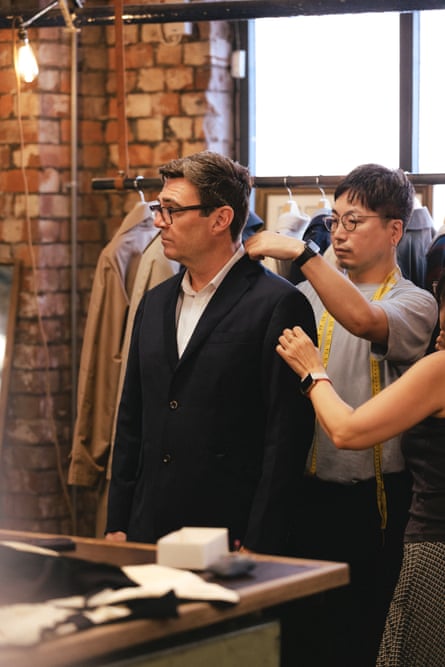
“There should be no cynicism or criticism about a British PM promoting British goods,” he says. “There’s nothing to debate. He is the premier spokesperson of British trade and industry. Of course he should be wearing British-made stuff.”
Eden is speaking to the Guardian from the 173-year-old Manchester mill where every piece of the brand’s clothing is designed, cut and stitched together. He describes Burnham as “down-to-earth” and a “proud Mancunian”, saying the PM first started buying from the brand about three years ago.
Burnham’s dress sense is just one of many points of difference between “the king in the north” and his stuffier predecessor, Kier Starmer. The former Manchester mayor’s look is rooted in the casual style of north-west England.
It is here that Eden, a former venture capitalist, runs the clothing manufacturing business his great-grandfather established in the 1940s.
While Jack White’s company focused on raincoats, Eden’s label includes ready-to-wear alongside bespoke tailoring. Employing about 100 people, 90% of its products are made in the mill that overlooks the River Irwell, while the other 10% come from small independent suppliers, including cashmere from Scotland.
Such a focus on handcrafted items made by local craftspeople comes with a high price tag. Burnham’s waterproof Harrington jacket costs £695, his ‘ “marine” jeans £295 and a zipped polo shirt £195.
Eden does not shy away from these prices. In fact, as one of the last survivors of Britain’s once-thriving manufacturing industry, he is keen to talk about numbers.
“I don’t believe we are expensive at all,” he says. “We offer a world-class product. We don’t compromise on quality. We work with the best of the best, including the best weavers and the best finishers.” On average, Eden pays his workers £20 per hour, “not the €2 you’d get in a factory in eastern Europe or 20 pence in the far east”. His longest-serving employee has been working for the family’s companies nearly 60 years.
Due to the widespread impact of fast fashion, super-low prices and a throwaway culture around clothing have become normalised, especially in the UK.
“I understand there is an affordability issue with many of the items we sell,” he says. “[But] if you spend £10 or even £50 on a piece of clothing and it collapses after one wash, that suddenly becomes a very expensive piece of clothing,” he says.
On Instagram, Eden has posted videos where he breaks down where a customer’s money goes when they buy an item from the brand. He estimates that 99% of an £850 jacket stays in the UK economy.
“Sourcing things from local suppliers and employing people locally, all those proceeds stay within the local community and within the UK,” he says. The person who maintains the mill’s boiler started as an apprentice in the 1980s, his full-time customer service team all live locally, and every photographer, stylist and makeup artist for its shoots is Manchester-based.
It is bright news in an industry that over the past decade has found itself in a fight for survival. According to the British Retail Consortium there have been more than 400,000 retail jobs lost since 2016 while several British brands have closed or been sold off.
While Burnham has been quick to cut business rates for the hospitality industry, Eden says an easy win for the fashion industry is to allocate a proportion of defence and NHS apparel-making to UK manufacturers, the bulk of which are made in Bangladesh and China.
During the pandemic, Eden’s factory was awarded a PPE contract. He hired dozens of extra staff to make millions of medical-grade gowns and face masks. He has since repurposed the specialist equipment to make jersey collections, meaning he was able to retain many of those extra workers.
“If the Ministry of Defence or the NHS were to establish a supply chain here, the country could employ thousands of people,” he says. “At face value, the prices might not be cheaper than abroad, but that money and tax will stay in the towns where the factories are.”
Eden says he is aware of some factories in the UK paying workers cash in hand and treating them unfairly. By contrast he compares his factory to “an open kitchen” where anyone is welcome to have a tour. Photos of Burnham doing just that sparked debate in the brand’s comment section, leading Eden to write on LinkedIn: “I knew posting about Andy Burnham was going to divide the city, the country.”
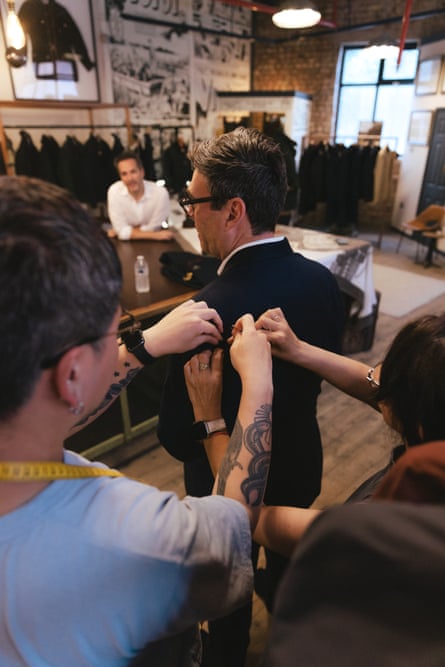
Eden says he “remains apolitical”, stressing that he will support anyone who advocates for British-made products and local businesses.
David Beckham and Liam Gallagher have also visited the mill, while other high-profile customers include Eddie Redmayne, Tom Hardy, Pierce Brosnan, the Eagles, Daniel Craig and Robert De Niro. The brand has never given anything to anyone for free.
He suspects Burnham originally discovered the brand via word of mouth. “Our customers are incredibly loyal,” he says. “They wear our pieces because they absolutely love them. And then they end up talking to others about the story behind those pieces.”
Eden has found that praise from the men that buy his clothing has much more impact than a paid influencer ever could. And his rule about no complimentary pieces applies even to the prime minister. “We wouldn’t consider anyone that is after a freebie,” says Eden. “It shows that they are not respecting the time, the labour, the tradition and all the hard bloody work that’s gone into what we do. They are not for us.”