1 month ago
73
1 month ago
73
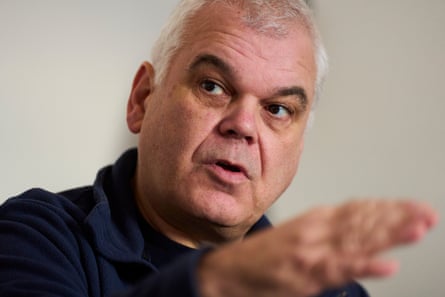
“We’ve lost so much,” says Mike Pratt, reflecting on Britain’s nature crisis. “We’re getting to the point where if we’re not careful, children in the future won’t know what a hedgehog is. They won’t have encountered one.”
Pratt, the chief executive of Northumberland Wildlife Trust, is speaking on an unseasonably sunny, calm, blue-skied December day surrounded by ruggedly beautiful, spirit-lifting countryside.
You look around at the dramatic Simonside Hills, or stunning moorland, or bucolic fields of grazing sheep and you don’t immediately see crisis. But, as ecologists, environmentalists and politicians have highlighted, the UK is one of the most nature depleted countries in the world.
Pratt is taking the Guardian on a tour of north Northumberland to talk about one of the most ambitious nature recovery projects ever undertaken in England.
The trust wants to buy the Rothbury estate, put up for sale by the Duke of Northumberland’s youngest son, Max Percy. At more than 3,800 hectares (nearly 15 sq miles), the Rothbury estate is the largest piece of land in single ownership to come up for sale in England for more than 30 years. No one expects anything like it to happen again any time soon.
The land is roughly the size of Athens. “Or Reading,” says the person who uncovered the comparison. “We went with Athens.”
The trust was last year given until September 2026 to raise the £30m asking price. It has so far raised about a third of that. The clock is not just ticking, “it’s clanging”, says one insider.
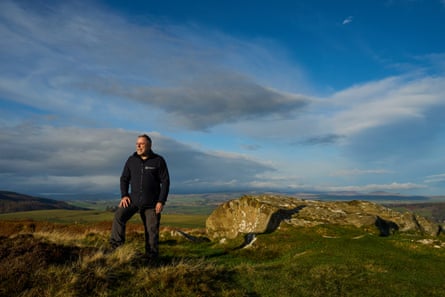
It is a once-in-a-generation opportunity, says Pratt, emphasising that the plan is about much more than the estate. The hope is that it will be the “beating heart” of a 40-mile nature corridor from the coast at Druridge Bay to the Scottish-English border at Kielderhead and Whitelee national nature reserves.
Pratt says he and colleagues had something of an epiphany when they went to the Netherlands and saw what could be achieved by connecting big areas of land across whole landscapes. The goal is nature recovery and the solution is “ecological connectivity on a big scale”, he says.
The Rothbury land came up for sale and the plan was hatched. “It is ambitious. It is super-ambitious,” says Pratt. “We’ve obviously been doing conservation of nature reserves for years but we’ve realised that it’s just not enough. We really need to work at a big scale.”
Pratt says the land they want to buy is a mosaic of habitats and not a blank canvas – but there is much that can be done.
Rewilding is not the immediate priority, although the trust does hope that bison may some day roam the land. “Down the line there will be more species,” says Pratt. “We’re not shying away from that. There will be pine martens, golden eagles, beavers in the landscape.”
The trust has already bought the western side of the Rothbury estate, including the Simonside Hills, and is making plans that include restoring drained bogs.
The campaign to buy the estate received a boost earlier this year when Sir David Attenborough championed the bid in a video.
He said: “People know and love the Simonside Hills that rise here. They walk the ridges and listen for the calls of the curlew, they watch for red squirrels and admire the views as they scramble among the crags.
“They walk along its remote paths and marvel at the astonishing rock carvings left by our distant ancestors, who once lived here.”
Attenborough said the Wildlife Trusts would work with local farmers and communities who lived and worked at Rothbury to “create a place where people and nature can thrive side by side”.
The trust firmly believes that the project will help the town of Rothbury, which is lovely but tends to be off the tourist trail, even though it has a major destination in the shape of the National Trust’s wondrous Cragside nearby.
Creating more tourist opportunities on the land – whether dark skies events, wildlife watching or cookery schools – is part of the trust’s plans.
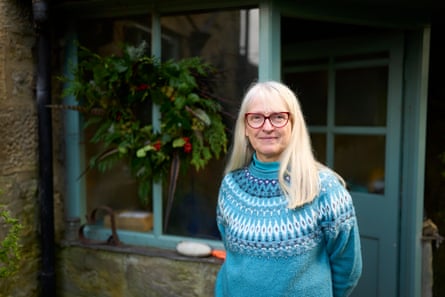
There is a continuing campaign to win the hearts and minds of local people. One person onboard is Katy Nickolls, a retired teacher and secretary of Rothbury Women’s Institute. “I will force you to look at our naked calendar,” she says. “It is very tasteful.” Thankfully, it is.
The WI has been involved in a number of fundraising initiatives for the Rothbury estate purchase, making it its charity of the year.
“I think Rothbury overall does support it, the vast majority does,” says Nickolls. “The plans are fantastic and what is the alternative? Is the alternative somebody coming in … and turfing out the farmers and turning the houses into Airbnbs?”
“With the wildlife trust, we are going to have access to the hills, the wildlife is going to be thought of and protected and they seem to be very sensitive to the needs and wants of the current tenant farmers.”
Like many people, Nickolls notices subtle changes in nature. “I used to hear more cuckoos. Now you really have to listen and you might hear one or two.”
Not everyone is supportive and there have been a lot of misconceptions, she says. “It is the people who have got hold of the wrong end of the stick who are complaining.”
One job of the community development officer Paul Barrett is to address the rumours, one being that the trust wants to introduce lynx to the land.
They’re not planning that. “Lynx would hate it here, absolutely hate it,” he says. “They don’t like people and this is a people landscape.”
Speaking from his office – a room in an isolated house where grouse-shooting parties would once have eaten – Barrett says the biggest part of his job is to listen. “So I’m meeting as many people as I can and allowing them to tell their own story so that we understand what’s important to them, what their challenges are, what their aspirations are.”
In Rothbury, people are concerned about the high street, he says. They are concerned about their children having to leave for work. “There’s a lot for us to take onboard. I would hope when people look back, they’ll be able to say: yes, the trust really listened to us.”
He was asked at a recent parish council meeting how the trust would know if it had succeeded? He replied: “I’ll come back and ask you. That’s the only way we can find out, isn’t it?”
Donations to the appeal have ranged from the tiny to the enormous and come from not only Britain. There is a long way to go but Pratt exudes confidence. It is almost as if he can’t imagine not succeeding.
Pratt is happy to talk about the nature crisis but he would prefer to talk more about how we can help fix things.
“We don’t want to depress people. There’s nothing worse than to keep banging on about loss and how terrible things are. I think it switches a lot of people off. They feel like they can’t do anything. I think what we’re doing here is demonstrating optimism.
“This is about hope. It’s all about instilling a sense of hope that we can turn nature around and we can build on where it’s good already and really, you know, produce and create a better future going forward. It is all fuelled by hope.”