2 months ago
97
2 months ago
97
To understand where we are in the evolution of podcasting, the opening episode of Joe Marler Will See You Now is unexpectedly instructive. The podcast finds Marler, former rugby player and breakout star of The Celebrity Traitors, impersonating a psychotherapist and subjecting guests to “totally unregulated psychological testing”. The mock-therapy conceit is hardly a new one, but on paper it still has the makings of a successful pod. Celebrity host fresh from ratings-busting TV triumph? Check. Fancy studio setup for the viewing crowd? Check. Weird visual stunts that will leave audio listeners baffled? Er … check?
The big news in podcasting from the last 18 months has been the medium’s swift and unstoppable pivot to video. Where a podcast was previously defined as an audio recording available to stream online, it has since expanded to become an umbrella term taking in visual and audio content. The idea, at least in theory, is that audiences get to choose whether they watch or listen. But there are creeping signs that video is taking precedence, with audio considered to be secondary.
Which brings us to Marler’s pod, the opening episode of which has its host in conversation with his fellow Celebrity Traitors contestant Nick Mohammed. Before becoming an actor, Mohammed worked as a magician, which is presumably why Marler gets him to perform a card trick. It’s not exactly riveting visual entertainment, but if you are listening, it’s impossible to know what’s going on. While Mohammed does attempt to explain the mechanics of the trick, there is no tension and no sense, for the listener, of the sleight of hand at the heart of it.
Sillier still is a so-called trust exercise where Marler blindfolds Mohammed and pretends to shoot a paper cup off the top of his head using a crossbow (in fact he uses a child’s gun – which is something you just cannot tell from listening alone). Again, it’s not good in either medium, but listening to it is like eavesdropping on a stranger telling a funny story but missing the vital plot points.
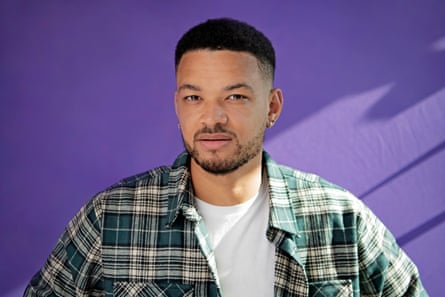
This is not an isolated case of a visualised podcast seemingly forgetting about its listeners. A recent episode of the all-conquering Diary of a CEO With Steven Bartlett, featuring insomnia expert Matthew Walker, saw Bartlett hand his interviewee a jar of gold coins to explain the concept of banking sleep before periods of stress. At no point was this visual aid described for the show’s listeners; instead, they just heard long pauses and incomprehensible shuffling sounds.
Sometimes the problem isn’t visual explainers or gags but simply crappy sound quality. Early episodes of The Rest Is Football podcast, in which hosts Gary Lineker, Micah Richards and Alan Shearer sat around a coffee table wearing tiny clip-on mics, sounded as if they were broadcasting from deep inside a cave. The problem was subsequently fixed, but the fact that the series is set to broadcast daily on Netflix for next year’s World Cup says a lot about where its values lie.
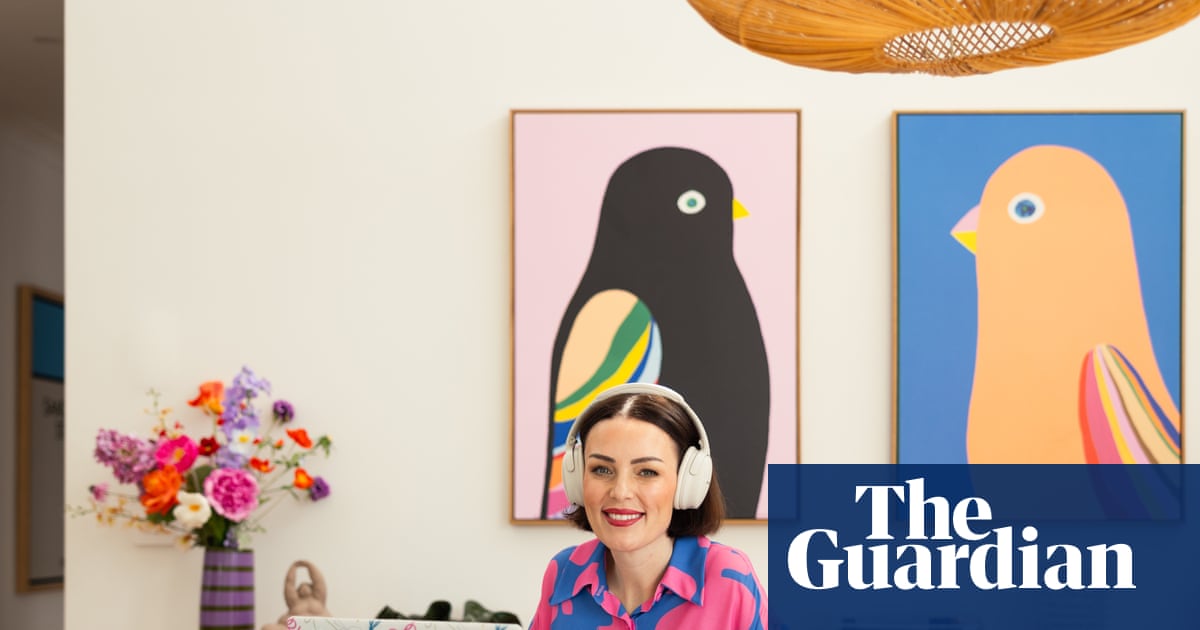
For podcast host and audio critic Miranda Sawyer, the problem is clear. “A podcast made by people who come from a telly, YouTube or Insta background prioritises video rather than audio, and the result can be painful to hear. I’ve heard shows where one or all of the participants are on Zoom and one cuts out, and there’s no editing to make it better to listen to.” Asked if she believes the focus on video content is coming at the expense of audio quality, she says: “I think it comes at the expense of both. A podcast that is made by people who prefer audio means you get a desultory effort when it comes to visuals: presenters sitting in front of a studio bookcase, on a sofa that makes them slump, with mics in an awkward position.”
Much of the drive behind video content comes from its potential as a marketing tool for the show. Footage can easily be clipped up and shared on social media to help drive audience engagement and, where possible, generate news lines. Eleanor McDowall, audio documentary-maker and director of Falling Tree, the production company behind series including Half Life and Short Cuts, notes that “in the hyper-visual landscape of social media, it’s always been a struggle to share audio eye-catchingly”. She adds that she can understand the draw for networks in having celebrities talking in digestible clips, though, she says, “I do get depressed thinking that the funder is more concerned with the ease of advertising something as opposed to the value of the thing itself.”
None of this is to say that beautifully produced audio podcasts are a thing of the past. This October saw the launch of Adrift, an Apple Original podcast telling the true story of the Robertson family, who were shipwrecked in the Pacific in the early 1970s. It’s an audio-only series that goes to great lengths to place the listener in the dinghy with the Robertsons using multilayered sound design. Audible’s all-star remake of Harry Potter and the Philosopher’s Stone also comes with a rich and detailed sound palette, replicating echoing footsteps on Hogwarts corridors and the whoosh of an owl coming in to land.
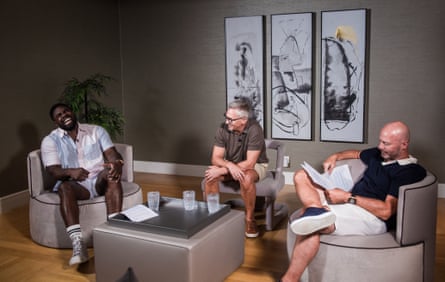
There is, however, a certain type of podcast that is enamoured of studio furnishings, mood lighting and the celebrity in its midst, and which cares a lot less about the listener tuning in on headphones. Can McDowall see a time when audio and video split off again and become distinct mediums? “I hope so,” she replies. “The absence of images from radio and podcasting isn’t some failure of technology. These audio mediums have grown from a deep love of sound and its imaginative possibilities. When I hear people say the future of audio is essentially television, it makes me feel they never knew what was exciting about sound in the first place.”
Judging from the speed at which visualised podcasts have taken hold, it’s clear that they are here to stay. Even so, the focus of major networks on eyeballs over ears overlooks not only the capacity of audio to spark the imagination but also its intrinsic convenience. One of the reasons I love audio pods is that they allow me to do other things while listening, such as walking the dog or cooking. For dedicated audiophiles, poor sound quality or content aimed primarily at viewers is unlikely to drive them to sit down and watch the visual version instead. They will simply switch off altogether.