2 hours ago
7
2 hours ago
7
Pauline Clayden was one of the dancers who formed the core of the Sadler’s Wells Ballet in the decade after the second world war, leading up to its royal charter in 1956. Never a principal, she was one of those talented, adaptable, highly valued soloists without which ballet companies can never survive.
Clayden, who has died aged 103, would feature in the corps de ballet and step out of it to dance leading roles. It says much about her talent that she often stepped into those created for Margot Fonteyn; for Frederick Ashton, the choreographer, she was the ideal dancer to do so.
Among her early Fonteyn roles in Ashton’s ballets were Una in The Quest, which she performed with “touching sincerity”, wrote the musicologist Lionel Bradley; the poignant Flower Girl in Nocturne; and leader of the Children of Light in Dante Sonata. In the 1950s she danced as Queen of the Air in Homage to the Queen and with notable success as Chloé in Daphnis et Chloé. But Ashton also created roles for Clayden. With Brian Shaw, she was one of the pair of copulating snakes in Tiresias and a sacrificial goat in Sylvia (she joked about the menagerie of animals she danced).
Clayden was also the first to perform the fast, stormy solo for the Autumn Fairy in Ashton’s staging of Serge Prokofiev’s Cinderella – although she acknowledged that much of it had been choreographed on Pamela May.
Born in Lewisham, south-east London, to Frederick Clayden, who worked for the Railway Clearing House, and his second wife, Ada (nee Taylor), Pauline was pushed into ballet by her mother, who died when she was 15. Her main training was at the Cone school, where she became lifelong friends with Julia Farron and was spotted by Peggy van Praagh, who was on the lookout for dancers for Antony Tudor’s London Ballet. The company had been invited to serve as the opera-ballet for the 1939 International Opera Season at Covent Garden under Thomas Beecham.
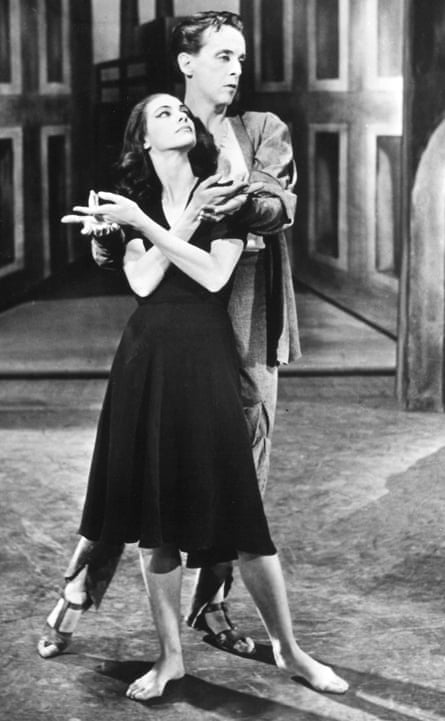
Most of Clayden’s performances were simply moving across the stage – as in the dance sequence for Parsifal – but she was in a larger ballet included in Aida, in which the ballerina was Fonteyn. Their careers would constantly overlap and Covent Garden became her performing home.
When London Ballet re-formed in the early months of the war, in 1939, Clayden was invited to join the company. She was quickly recognised as a valuable member, and in addition to dancing the company’s repertory of ballets by Tudor, she was involved in creations by Keith Lester, Frank Staff, Wendy Toye and most significantly in Andrée Howard’s La Fête Étrange, evoking the party episode in the novel Le Grand Meaulnes.
Clayden was welcomed to the larger Rambert-London Ballet when the two companies amalgamated; the intensity of dancing in up to four hour-long day-time performances for a full year gave her an enormous amount of stage experience. Among the roles she danced were the various variations in Soirée Musicale and a witty role in Staff’s Czerny 2. Other roles, including the Bluebird pas de deux and Canary/Song Bird variation from Aurora’s Wedding, remained in her repertory with the Sadler’s Wells Ballet when she danced in the full Sleeping Beauty. Indeed, she danced the Song Bird variation when it reopened the Royal Opera House in 1946, and when Sadler’s Wells Ballet conquered New York in 1949.
When the London-Rambert company closed in 1941, Clayden was one of the dancers who performed Staff’s choreography in The Tales of Hoffmann and the following year she joined Sadler’s Wells Ballet. Her first created role was the allegro Promenade solo in Ninette de Valois’s ballet of the same name. She also created roles for Howard and Robert Helpmann. For Howard, she made a considerable impact as Mayfly in an iridescent, mainly purple, costume in Le Festin de l’Araignée (The Spider’s Banquet), suggesting in her solo the few hours of happiness before the end of her short life.
For Helpmann she brought nervous tension and pathos to the Suicide in Miracle in the Gorbals. Bradley commented that Clayden “achieved perfection in an adage, a wonderful combination of technique, timing and inspiration”. Clayden never forgot this solo, and when Helpmann’s ballet was reconstructed by Gillian Lynne for Birmingham Royal Ballet in 2014, Clayden was able to set this section accurately, while other parts were evocations of the original ballet.
She retained an interest in dance, and from the 90s her clear memory contributed to the reconstruction of Dante Sonata, and the Queen of the Air’s solo for the Royal Ballet; she taught her solo from Promenade to students of the Royal Ballet School, where she was a guest tutor for various projects.
In 1948, Clayden married Howard J Gamble, an Indian Army officer who later became a professor of neuroanatomy, whom she had known from childhood. Eight years later she retired from the stage and in 1984 moved to Salcombe, Devon, but continued to take an active interest in dance.
Gamble died in 1999. Clayden is survived by their children, Amanda and Roger, five grandchildren and four great-grandchildren.