3 months ago
128
3 months ago
128
Morning opening: Russia, Ukraine agree on temporary ceasefire to repair lines to Zaporizhzhia plant

Jakub Krupa
A local ceasefire around the Zaporizhzhia nuclear plant in southeastern Ukraine has been agreed, with the help of the International Atomic Energy Agency, to allow for necessary repairs of the backup power lines to the plant.
The IAEA has confirmed that a local arrangement has been reached to help the repair teams ensure the safety of the plant, with demining activities in the area ongoing to enable access.
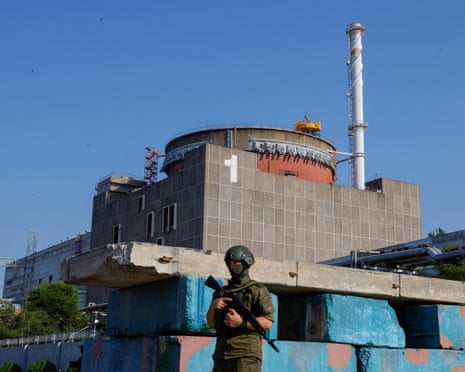
Reuters noted that the plant, Europe’s largest, has been under Russian control since shortly after the start of the war in 2022. It is not currently producing electricity, and relies on external power to keep its nuclear material cool and avoid a catastrophic accident.
Russia and Ukraine have frequently accused each other of jeopardising safety at the plant by staging attacks nearby. The repairs are expected to last for at least a week, according to Russia.
The peace talks between Ukraine, Russia and the US are now expected to resume next month.
“We need to finalise everything achieved so far for real security guarantees and prepare a meeting at the leaders’ level. This is the format that can resolve many issues. At the end of the day, leaders decide key issues and when it comes to Russia … this is relevant even more than in other countries,” Ukraine’s president Volodymyr Zelenskyy said last night.
It’s Friday, 27 February 2026, it’s Jakub Krupa here, and this is Europe Live.
Good morning.
Key events Show key events only Please turn on JavaScript to use this feature
Croatia offers to help resolve stand-off between Hungary and Ukraine
It’s six weeks until Hungary will go to the polls and Viktor Orbán increasingly battles for his political future as he faces a realistic prospect of being ousted after 16 years in power.
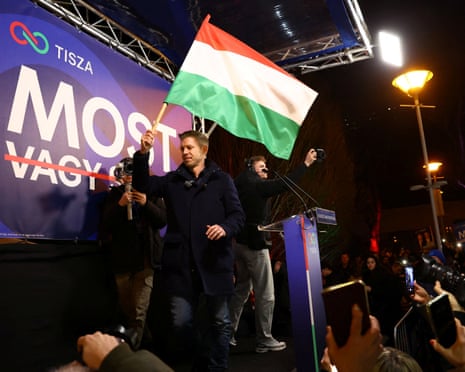
My colleagues Flora Garamvolgyi and Ashifa Kassam looked more closely at how Orbán uses Ukraine to mobilise his support amid worsening poll figures suggesting that he could lose power to the Tisza opposition party, led by Péter Magyar.
Hungary continues to block the EU’s €90bn loan to Ukraine and the 20th round of sanctions against Russia over the disrupted oil supply via the Druzbha pipeline. Ukraine says the interruption is caused by recent Russian strikes and the pipeline requires substantial repairs first, but Budapest continues to question these explanations.
But a new option for resolving the standoff seems to be emerging, with Croatia offering to carry deliveries via its Adria pipeline instead.
Croatian prime minister Andrej Plenković said the Adria pipeline can transport up to 15m tonnes of oil a year, enough to fully meet the needs of both Hungary and the other affected country, Slovakia.
But some observers worry whether it’s really just about oil deliveries or, perhaps, about a strong campaign theme for Orbán, which would give him less of an incentive to actually resolve the problem before 12 April?
Let’s see. It’s six weeks to go.
Morning opening: Russia, Ukraine agree on temporary ceasefire to repair lines to Zaporizhzhia plant
Jakub Krupa
A local ceasefire around the Zaporizhzhia nuclear plant in southeastern Ukraine has been agreed, with the help of the International Atomic Energy Agency, to allow for necessary repairs of the backup power lines to the plant.
The IAEA has confirmed that a local arrangement has been reached to help the repair teams ensure the safety of the plant, with demining activities in the area ongoing to enable access.
Reuters noted that the plant, Europe’s largest, has been under Russian control since shortly after the start of the war in 2022. It is not currently producing electricity, and relies on external power to keep its nuclear material cool and avoid a catastrophic accident.
Russia and Ukraine have frequently accused each other of jeopardising safety at the plant by staging attacks nearby. The repairs are expected to last for at least a week, according to Russia.
The peace talks between Ukraine, Russia and the US are now expected to resume next month.
“We need to finalise everything achieved so far for real security guarantees and prepare a meeting at the leaders’ level. This is the format that can resolve many issues. At the end of the day, leaders decide key issues and when it comes to Russia … this is relevant even more than in other countries,” Ukraine’s president Volodymyr Zelenskyy said last night.
It’s Friday, 27 February 2026, it’s Jakub Krupa here, and this is Europe Live.
Good morning.