6 hours ago
5
6 hours ago
5
This week marks the 25th anniversary of the Nintendo GameCube, the first console I ever bought with my own money. I vividly remember getting on the bus after school with a year’s worth of savings safely zipped into the pocket of my bag and going to a branch of Currys, where I dumped a bunch of notes, coins and vouchers on the counter to collect my pre-order. (It turned out that some of the vouchers from the previous Christmas had expired, but the guy at the checkout clearly felt so sorry for me that he redeemed them anyway. If you’re out there, Currys guy: thank you for taking pity on a desperate 13-year-old.)
If it hadn’t been for the ill-fated Wii U console, whose failure to take off in 2012 resulted in the first unprofitable periods in Nintendo’s game-making history, the GameCube would be remembered as the company’s biggest flop aside from the infamous Virtual Boy, from 1995. Released in Japan this week in 2001 (and in May 2002 in Europe), this surprisingly powerful purple cube sold less than the Xbox and the PlayStation 2. With its squat, colourful form and unusual controller, arranged around a big traffic-light-green A button and small analogue sticks designed for small hands, it had a hint of Fisher-Price about it.
I didn’t know anyone else who had one. But despite being mocked at the time, the GameCube is now revered, fondly remembered as an uncomplicated box of fun at a time when video games were in their performatively adult stage. The charts in the early 00s were dominated by Grand Theft Auto and Gran Turismo, and yet the GameCube launched with a cartoon haunted-house caper (Luigi’s Mansion) and a game where you rolled monkeys around inside transparent spheres (Sega’s Super Monkey Ball). The idea of a Nintendo console launching with a Sega game was unconscionable to any child of the 90s, but the Cube ended up carrying the torch for that nostalgic flavour of Japanese development into the early 00s, with Sega out of the market and western-made games becoming dominant.
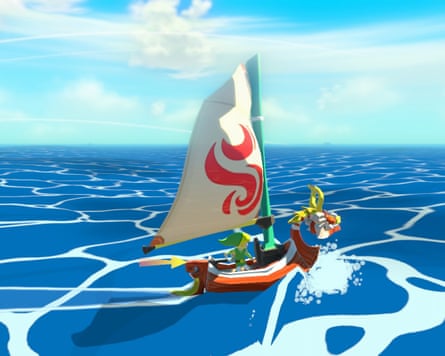
Luigi’s Mansion was a strange choice of launch game – really, no Mario? – but it was delightful. The vivacious animation of the ghosts, the diorama-like detail of the haunted mansion and Luigi’s adorable cowardly voice and body language showed how extra power could infuse games with extra personality. Super Smash Bros Melee, with its cast of newly higher-definition Nintendo legends, was inordinately exciting. The GameCube was home to two excellent Zelda games, the whimsical Wind Waker and emo-tinged Twilight Princess. Metroid Prime remains an unimprovable atmospheric classic. It had plenty of more experimental games, too: Eternal Darkness kept track of your character’s sanity and started to show you weird visions or glitch out on you if you let your character spiral into madness. The lavishly animated brawler Viewtiful Joe looked like nothing I’d ever seen. And then there was that Donkey Kong game that you played with a controller shaped like bongo drums.
Because I was a teenager in the 00s, I was deeply sensitive to the perception of video games as childish. Shortly after buying a GameCube I started writing game reviews online for money, and got my hands on an Xbox and a PlayStation 2. I became much more interested in the new kinds of games I was playing on those systems: Ico and Metal Gear Solid on PlayStation, Halo and Knights of the Old Republic on Xbox. Super Mario Sunshine and The Legend of Zelda felt like relics of childhood, a mindset that I wouldn’t get out of for some years. The GameCube felt like the end of something, and it was – just not in the way that anybody expected.
Behind the scenes, its designers – and Nintendo’s late president, Satoru Iwata – had come to realise that competing on graphics and tech specs was futile and uninteresting. “Games have come to a dead end,” Iwata told the Japanese outlet Mainichi in 2004. “Creating complicated games with advanced graphics used to be the golden principle that led to success, but it is no longer working … even if the developers work a hundred times harder, they can forget about selling a hundred times more units, since it’s difficult for them to even reach the status quo. It’s obvious that there’s no future to gaming if we continue to run on this principle that wastes time and energy.” Nintendo’s next consoles would be the touchscreen DS and motion-controlled Wii – consoles that would not only separate Nintendo from its competitors but change the market for video games and redefine who games were for.
Nintendo has walked a different path ever since: the GameCube was arguably the last console that it designed with “core gamers” foremost in mind (although I think the Switch 2 has veered back in this direction). When I bought it all those years ago, I expected it to be the beginning of a new era for Nintendo, but it turned out to be the end of an old one.
What to play
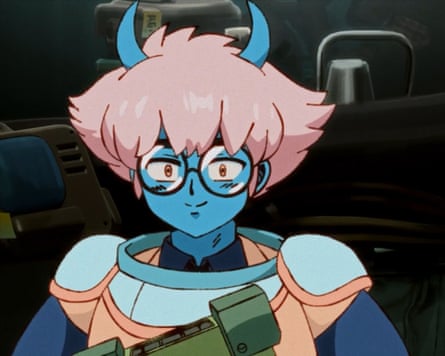
Playing games with your children can be somewhat fraught. There can be wild variation in tastes and skill levels: plus, kids are often monomaniacs, and there is only so much Minecraft that an adult can play without starting to get a headache. But I am having an amazing time playing games with my seven-year-old, who has become impressively competent all of a sudden.
We are working our way through Orbitals, a cooperative game that looks like a living sci-fi anime series from the 90s. As two space-faring teenagers, we are cutting about in a little ship, docking to salvage tech from ruined ships and solving quite complicated puzzles with tools that shoot lasers, tethers and jets of water.
It is fiddly and demanding, and I think if I were playing this with an adult I might want to cry with frustration, but instead I’m amazed and impressed every time my son and I conquer a tricky puzzle involving floating platforms or mirror-reflected lasers. The animation is fantastic, too, bursting with nostalgic personality.
Available on: Switch 2
Estimated playtime: six hours
What to read
-
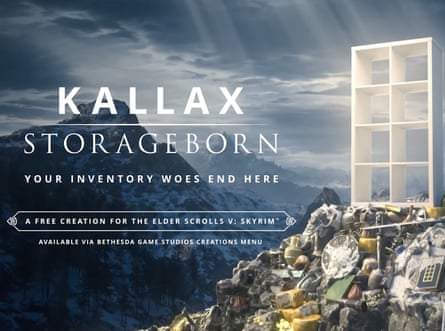
Ikea has released a mod for the 15-year-old fantasy RPG The Elder Scrolls V: Skyrim, in which you are followed around by a talking Kallax shelving unit voiced by Matt Berry. Truly, this game will never die.
-
The case brought by the IWGB game workers’ union against Rockstar Gamers kicked off at Glasgow’s tribunals court this week. More than 30 former Rockstar employees are fighting to be reinstated after being dismissed last year. In opening arguments, the company has outlined its case that the workers’ participation in a union-organising Discord represented a major threat of leaks and reputational damage. The tribunal runs until 14 October.
-
Hideo Kojima’s forthcoming game Physint has been dropped by Sony, reportedly over budget concerns. Unexpectedly, Xbox swooped in to save the game and pick up the bill, resulting in some rare positive press for Microsoft’s console division in a year of cancellations, layoffs and studio shutdowns.
-
Blizzard has announced new Diablo and Starcraft games, alongside a(nother) revamp of classic World of Warcraft called World of Warcraft: Forever.
-
For its 20th anniversary in 2021, Video Games Chronicle published deep-dive into the GameCube, speaking to several marketers and developers who were involved with its launch and life. Five years on, it’s still well worth a read.
after newsletter promotion
What to click
-
Raiding the past: Lara Croft relives her first adventure in Legacy of Atlantis
-
Marvel’s Wolverine – a gloriously conflicted lead is let down by crude, boring battling | ★★★☆☆
Question Block
This week’s question comes from reader Duncan:
“Off the recent spotlight on Silent Hill: Townfall, are there more games that take place in current-day Scotland? Dear Esther comes to mind. I remember a Kickstarter for a horror game set among tower blocks of Neilston Road, Paisley. Then Beeswing by Jack King-Spooner goes in the opposite direction.”
Unfortunately, you have unlocked an unskippable cutscene by asking me about one of my obsessions, Duncan.
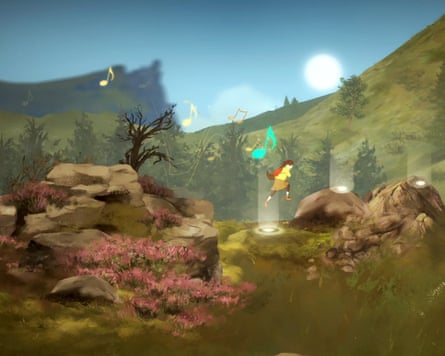
A Highland Song is set in the timeless Scottish Highlands but has the feel of a folk fable; Still Wakes the Deep is a 1970s period piece set on a Scottish oil rig; the forthcoming Gaelic-language horror game Grease Trap ’99 is set in a chippy on the coast. All of those are sort of modern. Forza Horizon 4 lets you drive around a gorgeous modern Scotland, including a very cute mini Edinburgh.
But, yes, most games that feature Scotland go with a historical-fantasy vibe based on all of our castles and romantic scenery. I’m still waiting on someone to make the equivalent of Grand Theft Auto: Glasgow, or a coming-of-age narrative game set in Edinburgh.
If you have a question for Question Block – or anything else to say about the newsletter – hit reply or email us at [email protected].