1 hour ago
7
1 hour ago
7
Who are the key players?
Since 2022, Sweden has been governed by a three-party minority government led by the Moderates party (often referred to simply as M) leader Ulf Kristersson, with Ebba Busch’s Christian Democrats (KD) and Simona Mohamsson’s the Liberals (L).
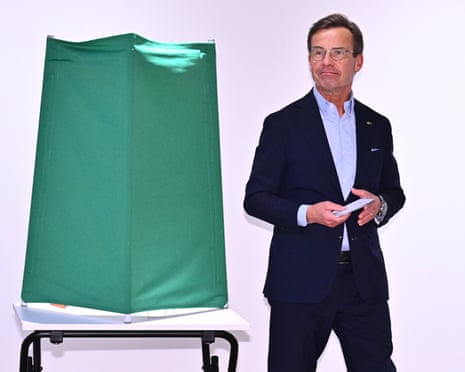
They are currently supported by – but not formally joined in the government – by the far-right populist and anti-immigration Sweden Democrats (SD) party, led by Jimmie Åkesson. They are one of, if not the, key talking points of the night.
A win for the centre-right bloc of parties would most likely see them formally join the government, breaking another taboo in Swedish politics.
The opposition is led by former prime minister Magdalena Andersson’s Social Democrats (S – not SD), which is the largest party in the parliament. Other parties of the opposition bloc are: the Centre party (C) of Elisabeth Thand Ringqvist, the Left party (V) of Nooshi Dadgostar, and the Green Party (MP) of Daniel Helldén and Amanda Lind.
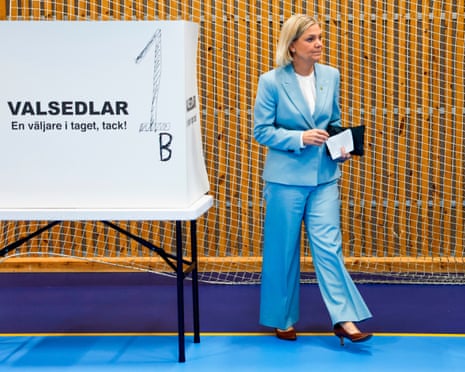
The left-wing bloc has been leading in the polls for the majority of the current parliamentary term, with Andersson’s party alone polling at times in mid 30s, leaving many experts thinking that a change of government was all but certain.
But in recent months the polls have substantially narrowed, giving the combined opposition only a very slim lead going into the election day. They are the favourites to win, but it’s still all to play for.
“The opposition parties have had a lead in the polls, often a very comfortable lead … so if there were to be any other outcome than an opposition victory, it would be sort of sensational because the lead has been so consistent and so long established – but it’s not impossible,” Aylott tells me.
“The big challenge the Social Democrats would face in the quite likely event that they will be forming a government is that their constellation of allied parties, which would comprise the majority, is very diverse,” he adds.
“One of the aspects of this diversity is that some of them take a much more permissive view on things like law and order and migration, so keeping this diverse constellation of currently opposition parties could be difficult.”
Key events
How the far-right changed Sweden's conversation on migration
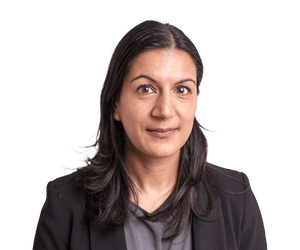
Ashifa Kassam
European community affairs correspondent
The Swedish polls have narrowed in recent weeks making many nervous, particularly as the right-leaning ruling coalition has for the first time said it would offer ministerial posts to the far right if it wins.
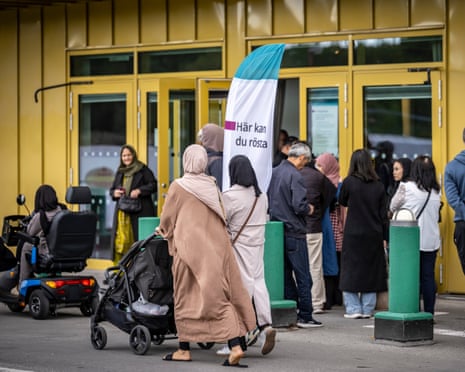
Those who have borne the brunt of the far right’s time propping up the government worry that Sweden, long held up as a leading light when it comes to equality and freedom, may have been irrevocably changed, regardless of what happens on Sunday.
“It’s a kind of Pandora’s box that has been opened,” said Munir Niazi.
During the government of the centre-right prime minister Ulf Kristersson, the far-right Sweden Democrats have used their leverage to steer policies on migration and crime, seizing on the spotlight to spread rhetoric linking the two and scapegoating migrants, Muslims and other minorities for all that ails the country.
The result had shifted Sweden’s national conversation to the right, said Niazi.
“In the past four years, the biggest opposition party, the Social Democrats, have slowly adopted and even voted with the right wing on migration, on crime. In the near future, at least, we don’t see the country going back to the policies of the 80s and 90s.”
The changes to immigration policy, including recently introduced rules barring most asylum seekers from accessing permanent residency, were an example of how the political conversation in Sweden had been transformed by the far right’s time as power-brokers, said journalist Bilan Osman.
Among those caught up in the crackdown on asylum seekers was an undocumented 14-year-old who, despite being born in Sweden, was facing deportation to Armenia, along with his single-parent mother and his younger brother. “It’s like hell. I’ve been here my whole life,” he told the Guardian. “I feel Swedish.”
30 minutes until polls close
Sweden needs 'new direction,' opposition leader Andersson says
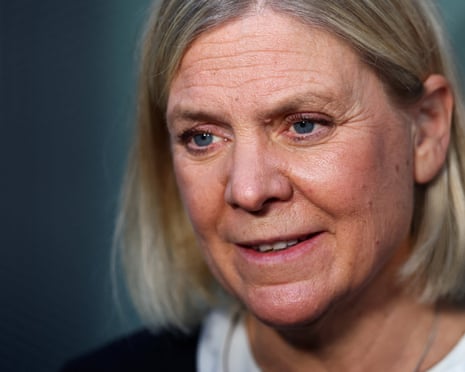
Opposition leader Magdalena Andersson, voted on Sunday morning in the Stockholm suburb of Nacka, and said the campaign had been “a tale of two sides”.
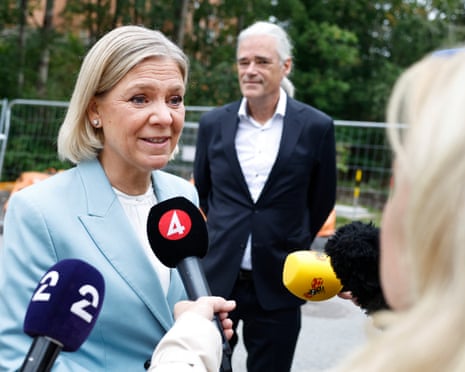
“There have been a lot of lies and bickering, but at the same time there are so many sensible people out there across the country,” she told SVT. “The focus is on winning and setting a new direction for Sweden.”
“We’ve become a harder society, a quieter society, but also a poorer society as we’ve had growth far below our potential and where households see their paychecks buy less and less,” she told Reuters.
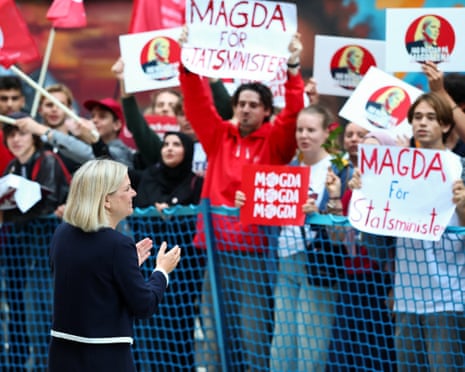
Separately, Abba’s Benny Andersson showed his support for the Social Democrats’ leader by performing a reworked version of Mamma Mia to supporters at the party’s headquarters, replacing the words “Mamma Mia” with “Magdalena”.
PM Kristersson believes 'momentum is on our side'
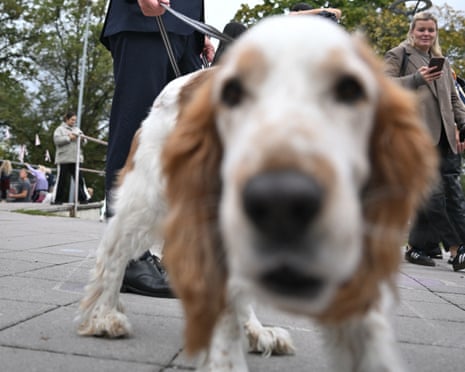
Prime minister Ulf Kristersson cast his ballot today, rocking up to vote with his family members and welsh springer, Winston.
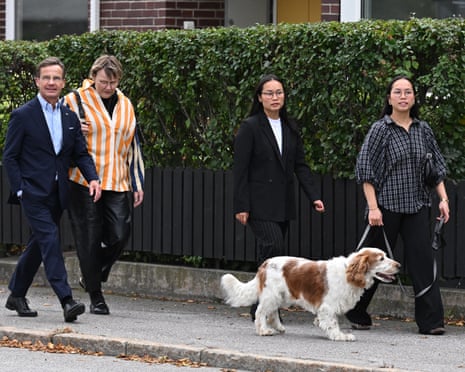
He told journalists he expected “a very, very exciting” evening, and insisted “the momentum” was on his side – even as his party appeared to be losing support in recent polls.
But Kristersson’s focus appeared to be on winning as a bloc to continue the work of his government. “We are team leaders, that is our role in Swedish politics,” he said.
“The precondition for getting things done is actually the ability to compromise, to have a clear vision but be pragmatic,” he said. “If we get people’s votes we will continue to do that for the coming four years.”
Opposition bloc leads in polls by somewhere between 5 and 0.3%
As mentioned earlier, polls have long pointed to an opposition victory tonight – but the gap has narrowed significantly in recent weeks and leaving the question of the result tonight quite open.
Over the last few weeks, Andersson’s Social Democrats fell below 30%, from near 35% at the beginning of the year, and were expected to secure around 28% of the vote.
The far-right Sweden Democrats are expected to come second at 19%, narrowly ahead of Kristersson’s Moderates at 17%.
The remaining parties are all around 7-8%, with the Liberals noting a surprising surge in recent weeks amid concerns if they would make it above the 4% threshold. After polling at just 2% in August, they were at 6-7% in the latest round of polls.
The latest round of polls showed the opposition bloc lead by between 5.6% and 0.3%, giving it a slight edge in today’s race.
While the two main contenders were busy debating on TV, deputy prime minister and Christian Democrat leader Ebba Busch and Liberal leader Simona Mohamsson went behind the bar in central Stockholm to serve some drinks and so mark the end of the campaign.
There are some great pictures from their big pre-election night out in the Swedish press.
“On a Saturday night you want to be where Sweden is, and many people are at the bar,” Busch told reporters.
Other ministers also joined the party leaders, including Sweden’s top diplomat Maria Malmer Stenergard.
But as the polls narrowed in recent days, the unusually polarised and tense campaign took a further nasty turn this week as a canvasser for the Social Demorats was physically assaulted on Thursday evening when knocking on doors in Bromölla.
An 18-year old man was later arrested in connection with the incident.
And during last night’s TV debate Andersson also disclosed that Social Democratic Gothenburg mayor Jonas Attenius was aggressively confronted when out campaigning on Saturday afternoon.
Opening last night’s TV debate, she insisted that “words matter” as she urged politicians to be more considerate of the language they use when describing their rivals in an apparent swipe at the far-right Sweden Democrats party.
PM Kristersson said he had no knowledge of the incident, and condemned it as “appalling.”
A Sweden Democrats spokesperson rejected any implied link with their party, while also saying “no one should ever be threatened.”
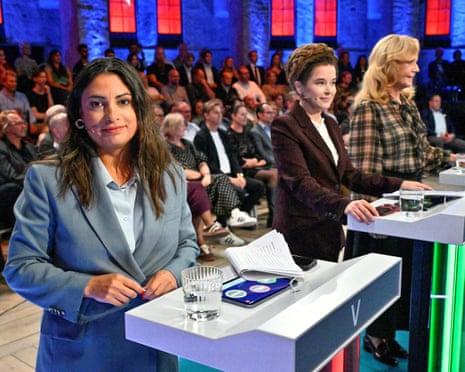
Two frontrunners clash over visions of Sweden in key televised debate
The two leading candidates for the post of Sweden’s next prime minister – the incumbent Ulf Kristersson and the challenger Magdalena Anderssen – faced each other on live TV last night in the last debate of the campaign.
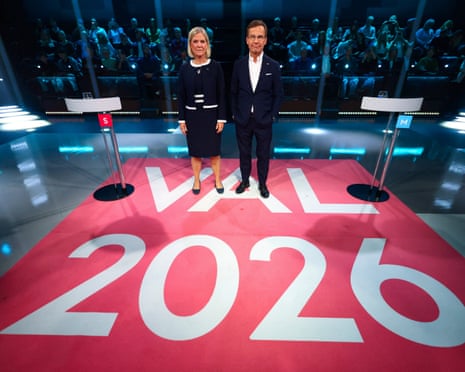
During the 90 minute duel, they set out their competing visions for the economy, crime, education, and other long-term challenges. A separate bloc of questions also looked ahead to Sweden in 2040, tackling an ageing population, low birth rates, climate ambitions, and energy policy.
Ultimately, though, this was the final chance for both Andersson and Kristersson to pitch their vision of government directly to voters.
Andersson repeatedly called for a different style of politics – one that would never be “governed by extreme forces” in the far-right Sweden Democrats.
Yet she repeatedly evaded questions on the exact composition of a future administration. While criticising the growing polarisation in Swedish politics, she maintained she would be open to cooperating with every party except the SD.
Her diplomatically vague stance reflects the complex internal dynamics of the centre-left bloc, where policy disputes and party rivalries make the shape of a potential coalition hard to pin down.
In sharp contrast, Kristersson presented his bloc – the three coalition parties plus the Sweden Democrats – as ready to step straight back into office.
He argued they “have proven that we are up to the task,” and insisted they would be prepared to start coalition talks the day after the vote.
Pressed by Andersson, he refused to speculate on which ministries the SD might get in the next government, but claimed he offered a “stable, safe alternative” to Andersson’s “left-wing experiment.”
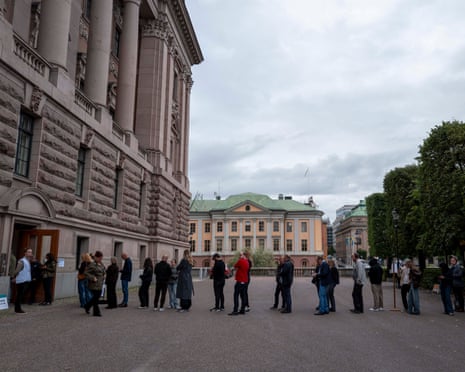
Long queues reported at some polling stations
Despite record-high number of people casting their votes early, long queues were reported in parts of Sweden on Sunday, with voters waiting up to three hours to vote.
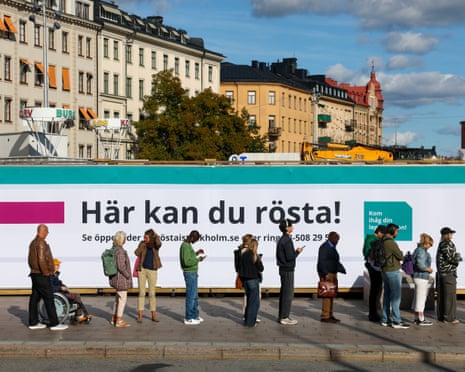
Swedish public broadcaster SVT spoke to voters in Umeå, who complained about the queues and waiting times at the polling station, while Expressen reached out to two elderly voters who go home because the queueing was too exhausting (but were planning to come back later).
Lots of people also take to social media to express their frustration with the wait.
The Swedish Election Authority said it was “unusual” for voters to have to wait for so long, and – perhaps not surprisingly (18:03) – suggested simplifying the voting system a bit.
Over 3.5m voters cast their ballots early, including far-right leader Åkesson
Over 3.5 million voters are believed to have cast their votes early to avoid the election day rush.
It’s a somewhat unusual system, with voters given an extended window - which started on 26 August – to take part in the election.
Among them, the Sweden Democrats leader Jimmie Åkesson who chose to cast his ballot in Rinkeby, a heavily immigrant-populated area of Stockholm, which critics said was another polarising PR stunt before the polling day.
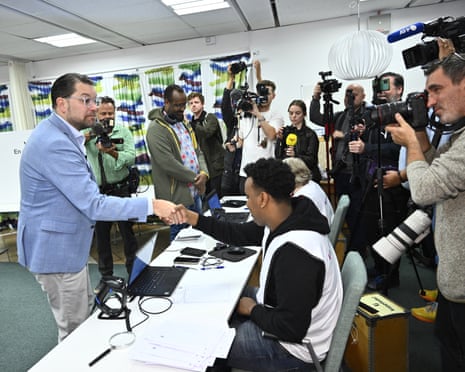
Using it to hammer home his central anti-immigration message of the campaign, he said the area “did not look like Sweden” and “Sweden should not look like this,” in what Swedish media said was a reference to Muslim head coverings worn by some women in the area.
The Sweden Democrats have pledged to ban both the niqab and the burqa if they get into government.
Voters uneasy about difficult campaign as they cast ballots in Stockholm
Jakub Krupa
in Stockholm
Outside a polling station at Adolf Fredriks Musikklasser in central Stockholm, as many as three competing groups of pupils and students set up stalls offering coffee and pastries, hoping to raise funds on the back of election day.
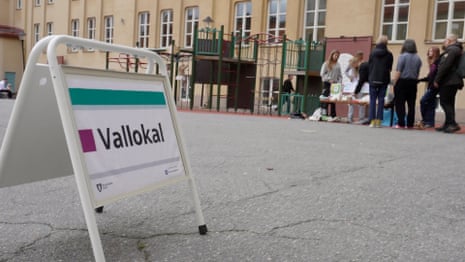
A mid-morning rush saw some voters pause for a kanelbulle and a chat, while others hurried straight inside to cast their ballots.
Mikael, 51, felt voters in the middle were particularly squeezed by a polarised campaign.
“I’m slightly nervous as someone who is in the middle. We are either going to have a centre-right government, dependent or with a far-right party in the government, or a centre-left government, dependent on a leftist party that I see as problematic. There is no perfect ending for me,” he said.
“I would like the parties to focus on policy more – on your own policy, and not on what is bad with the others’ [proposals],” he said.
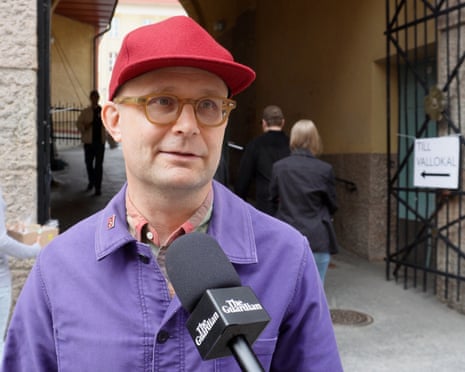
A man in his thirties agreed it had been “a very intense” election campaign as he declared his support for the right-wing governing coalition.
“I feel that in the past four years they have been [growing] the Swedish economy, and making Sweden a better place again, much safer than it used to be,” he said.
Rebecca, 46, said she was holding “mixed feelings” about the vote and admitted she could not decide who to support until the very last minute.
“I am hoping for the red side to win,” she eventually declared. “I think it’s important for everyone to be valued equally. I do not think we are going in the right direction now. Sweden was a lot better and more open minded before,” she said.
Less than an hour until polls close
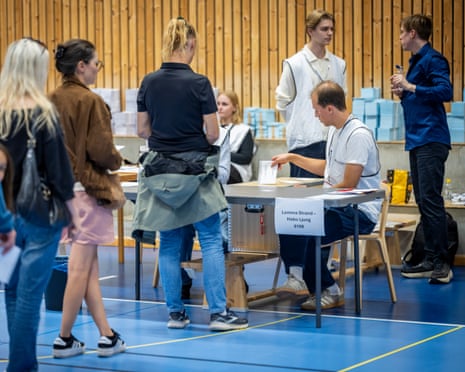
Voting about to close in Sweden with far right eyeing first role in government
Miranda Bryant
Nordic correspondent
Voting is under way in Sweden in a high-stakes election that could lead to the far-right Sweden Democrats (SD) entering government for the first time.
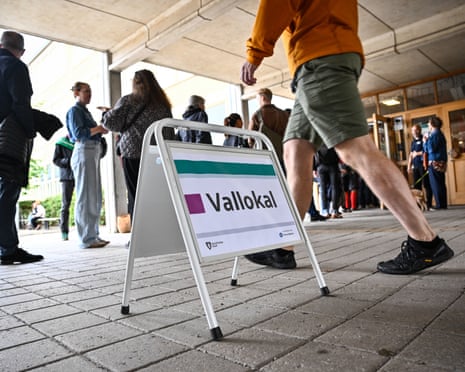
It comes after an unusually heated and polarised campaign punctuated by personal attacks between leaders, accusations of misinformation and Maga-inspired ads.
Polls suggest an extremely tight race, with one showing just 0.3 percentage points between the left and right blocs.
The right-leaning bloc, made up of what are known as the Tidö parties, has been in power for four years. It is formed of the Moderates, the Christian Democrats and the Liberals with a supporting role for SD, Sweden’s second biggest party.
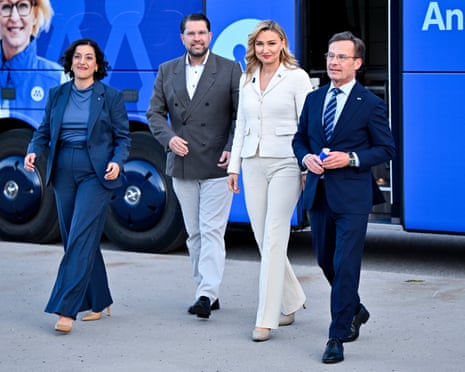
The opposition left-leaning bloc is formed of Sweden’s biggest party, the Social Democrats, the Centre party, the Green party and the Left party.
The rightwing coalition broke a longstanding taboo in 2022 by going into partnership with SD, which has neo-Nazi roots.
SD has attempted to make itself more palatable to the mainstream by toning down its overtly racist rhetoric, while arguing that immigration is responsible for Sweden’s crime problems.
After four years in a supporting role for the Moderates-run coalition government, however, during which it has shifted much of the Swedish establishment to the right, SD’s approach to the election has been more brazen. If the right-leaning coalition wins, the party has been promised a prominent role in the government, including key ministerial positions.
The prime minister and leader of the Moderates, Ulf Kristersson, has put considerable focus in the final days of campaigning on the penalty discount applied to criminals convicted of various offences. He accused opposition leader Magdalena Andersson of not standing up for female rape victims. In response, she accused him of weaponising men’s violence against women.
Voters say the most important election issues are healthcare, law and order, immigration and the economy. But much of the election debate has been focused on personal finance, said Radio Sweden’s senior political correspondent, Fredrik Furtenbach.
“The parties have tried to outdo each other with promises of more money. It has been a sort of auction.”