11 hours ago
18
11 hours ago
18
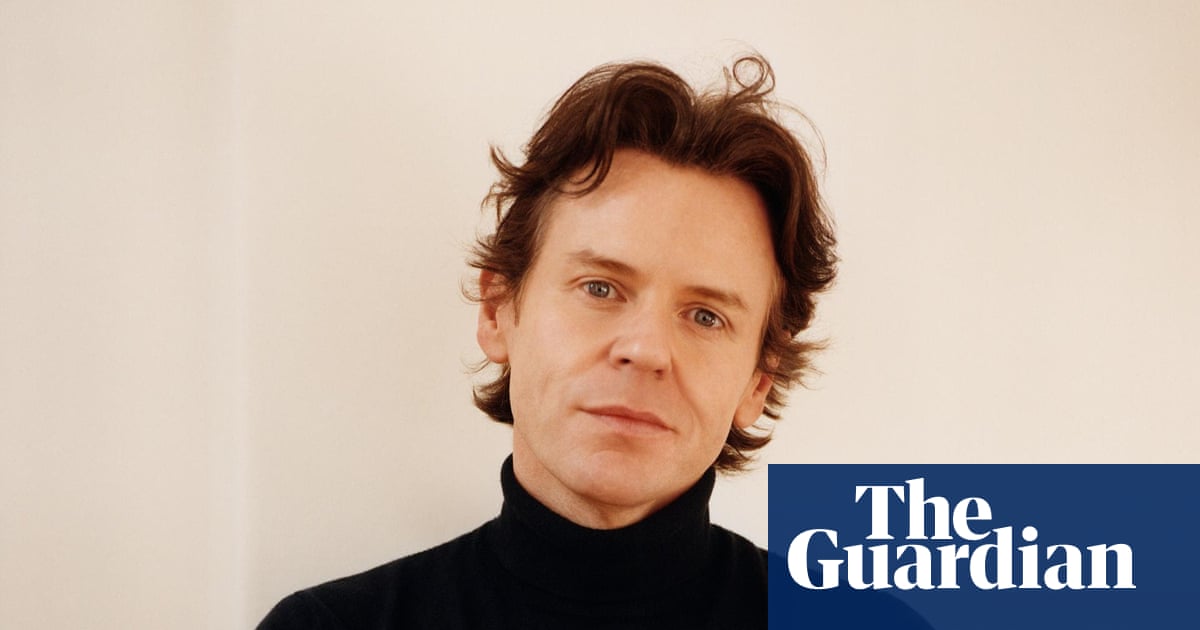
Taryn Simon is seated in a conference room at the Guggenheim, looking dazed. Her new show, Father Country I Do Love You, opens in under three weeks. It’s a big deal, the first monographic exhibition by a photography-based artist in the iconic spiral rotunda, and the largest debut of new work ever staged at the museum. There’s still a lot of work to be done.
Downstairs, the lobby is being transformed into the Bangkok living room of Jim Thompson, a silk businessman-slash-spy who disappeared in 1967. Simon’s father, a US government worker, was living in Thailand at the time and figured that the Chinese got him, if not a tiger. When Simon was nine, the father and daughter recreated Thompson’s famous wood-panelled den back in Long Island. “And then I built it here with fake teak,” she says, voice wilting. “It’s driving me nuts. I’ve spent so much time trying to make non-teak look like teak.”
Attention to detail is a defining quality of Simon’s practice, which spans photo, video, performance, sculpture and bookmaking. An academic’s artist, she applies journalistic rigor and archival methodology to art photography, turning research, preparation and curiosity into artistic mediums of their own. Developed over 10 years, Father Country is based on Simon’s extended correspondence with a retired federal agent. She follows the ripples of this middleman figure, identifying witnesses – tangential or immediate, innocent or otherwise – to acts of espionage, conspiracy and violence. “I thought his life was unbelievable,” she says, “but anybody’s is when you dig into it, right?”
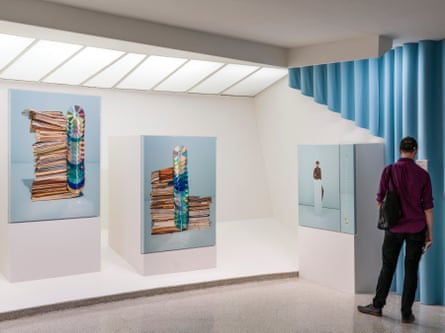
Father Country may be Simon’s most ambitious work yet, which is saying something. She has spent 25 years using a symbiosis of image and text to examine systems of information, organization and power from borders to botany to genealogy. Her breakthrough, The Innocents from the early 2000s, depicted exonerees at the site of their alleged crimes, exploring photography’s role in wrongful convictions. Simon has spent five days cataloguing seized contraband at John F Kennedy international airport (“It was an exercise in sleeplessness”); imported more than 4,000 specimens to recreate floral centerpieces from the signings of international treaties; and traced and documented the bloodlines, including those of the first female airplane hijacker, the body double of Saddam Hussein’s son, and a lab rabbit. She spent years writing letters and making phone calls to gain access to sites and objects typically unseen by American eyes, from a federal biothreat research facility to a braille edition of Playboy.
What kind of person would have the idea, let alone the patience, to go to such lengths?
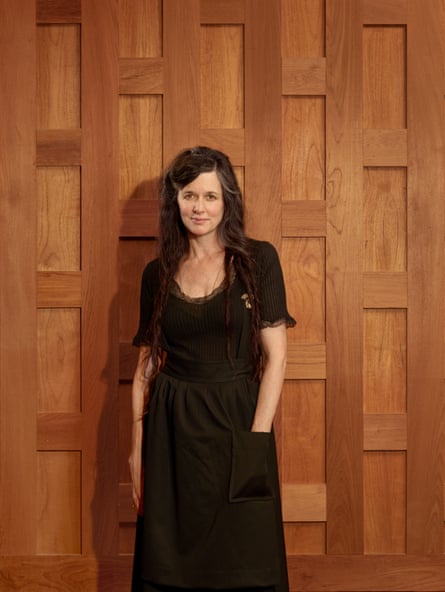
Simon, 51, has requested that our interview not be recorded. When asked, the New York City-based artist explains that she prefers to talk “normally” and gestures at an invisible recorder between us, an unsavory intruder. She was eager, if not anxious, to introduce her latest work and narrated long chunks of text while sipping an iced tea. She was quick to giggle or performatively groan over her tendency to make things harder on herself. (“I wish,” she says, at the idea of slapping a print on the wall with Scotch tape à la Wolfgang Tillmans.)
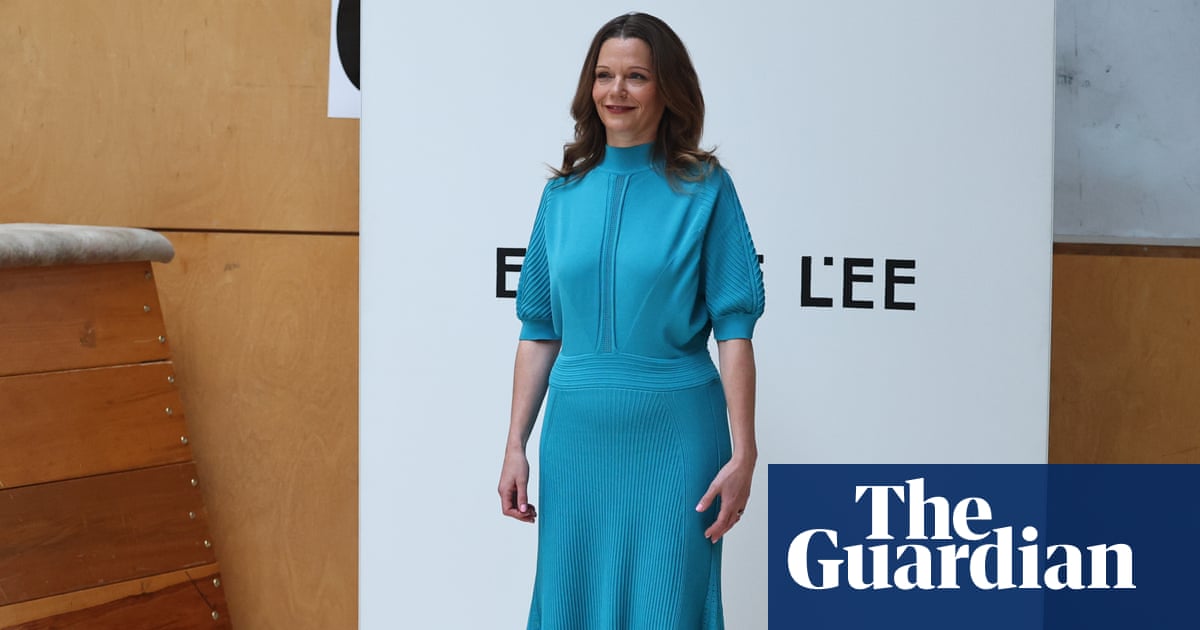
Simon has worn a uniform style of dress since her 20s, favoring a knee-length suspender skirt for functionality. Amish by way of Comme des Garçons, an apron pocket is perfect for holding film, cameras and what have yous during a shoot. Pants are not a part of her wardrobe, unless, “I have to go someplace with ticks,” she says. “If I want to take a picture in the woods somewhere, I’m gonna put on some pants.” She designed these garments herself and once made them, too, but has since employed a seamstress. She’s wearing a lacy camisole instead of her typical billowy blouse, but her long, dark hair, now streaked with silver, is parted to the side per usual. She reveals a recent alteration to today’s black outfit, multicolor godets inspired by a stewardess uniform: “I just thought: ‘That’s so good I need to have it.’”
During the decade spent making Father Country, Simon experimented with interactive installations, among them a performance piece involving professional mourners, an in-gallery cold plunge and a voting machine. Concurrently, she was going down rabbit holes from the agent’s stories. “I would find this marginal thing on the periphery, and follow it,” Simon says. “I spend a lot of time trying to get to that special spot, and really picking it apart.”
“The project is built almost like a novel,” Simon explains, “each chapter is color-coded and begins with a first-person narrative text in the voice of the agent, written by me, based on text messages and visits.” Some connective tissue between image and text is linear: the agent and his colleagues were tasked with finding the bullet that killed deputy White House counsel Vince Foster in 1993. Instead, Simon says:“They ended up with tons of civil war objects,” which she catalogues like an encyclopedia of evidence.
Other translations are more sinuous, as if Simon is entering a story through a side door. For instance, the agent was once tasked with babysitting two kids at a hotel and took them to the pool. Turns out, their mother was part of a sting operation that led to the arrest of a DC mayor. Thirtysomething years later, Simon tracked down the woman, Rasheeda Moore, and photographed a lookbook for her sister’s fashion brand at the hotel pool.
If Simon once consciously erased herself from the work, she now pulls the curtain back a bit. An occasional snippet of text will reference her in the third-person like an intelligence dossier. This Taryn Simon figure develops confiscated film, collaborates via post with the DC sniper and is threatened “during a photoshoot at a warehouse in Fort Meade where excess Department of Defense property is stored”.
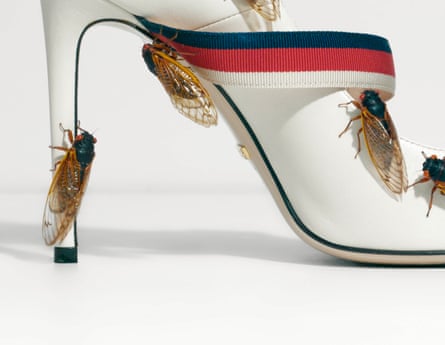
Several moments in Father Country are weird by Simon’s standards, especially one in which she takes portraits of various individuals and collages them together into patterns and shapes. “I challenged myself to be a little more all over the place, let go a little bit, and let the voice be fractured and faulty and fun and wrong,” she says. “That was scary, but it was very important to me to try.” As for why, Simon suggests that the reality of life is messy, that incredible grief must coexist alongside the mundanities of daily life. “I let the things that don’t feel like they should be together.”
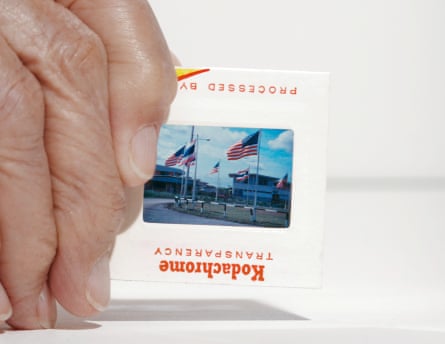
Father Country concludes with a chapter about memory loss. On election day 2020, the agent experienced transient global amnesia, a temporary episode in which new memories cannot be formed. That same year, Simon’s father was diagnosed with Alzheimer’s, and this project is dedicated to him. “I never got his full story,” Simon writes. “He left out as much as he told.” In a final video, recordings of her father’s distressed babbling play atop images of Kodachrome slides from his travels. “He would give me these slideshows of all these countries and talk about them,” she says. “That was really how I traveled and understood the world.” Father Country ended up far from where it began, she says: “The world kept unfolding alongside me.” The final image in the catalogue is of Simon as a child at Jim Thompson’s house, hands perched on a staircase made of real teak.
-
Taryn Simon: Father Country I Do Love You is in show at the Guggenheim in New York until 14 March 2027