3 months ago
130
3 months ago
130
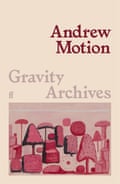
Gravity Archives by Andrew Motion (Faber, £12.99)
From his 1978 debut through his laureate elegies for Princess Diana and the Queen Mother, death remains a major preoccupation for Motion. And for good reason: his mother’s accidental fall from a horse and subsequent premature death catalysed an unshakeable elegiac pattern, the poet as chronicler of loss – and, by extension, love. But something has subtly shifted in this latest gravitational turn. No longer the bewildered and ambivalent Englishman, who in his previous book, Randomly Moving Particles, emigrates to the US, here we see a more rooted and resolute eye surveying the mortality of others as well as his own. An opening sequence of eight roughly sonnet-like poems mourning the Baltimore poet Joseph Harrison contrasts the American’s dying courage with the poet’s English reticence. “You talk. I will – but warn you, Joe, / talk is not first nature. I blame Dad, / his silence fathomless. I tried.” An awkwardness relegates grief back to its private place, giving way to alternatives sometimes hopeful or outright hilarious. In Autumn Light a sequence for familial dead begins “Andrew Motion has also died … He was a fool in his own opinion”, mixing pathos and bathos. In English Elegies John Berryman appears as a “staggeringly drunk” spirit guide, advising against the melancholic pull of home. “That place was done for, England, and so on, / John said.” Wisely, Motion resolves, “High time / it is that I, like everyone, set out to die alone.”
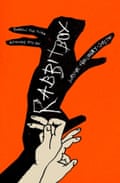
Rabbitbox by Wayne Holloway-Smith (Scribner, £12.99)
The “toxic grammar” of home mediates a different form of filial elegy in Rabbitbox, where male violence terrorises the boy, or “boy-rabbit”. Here we mourn not the dead but those prevented from living: a young mother and her child besieged by a shadowy husband and father. “The mother one time locked herself unable / behind the door of the downstairs toilet / to elude the rage that thumped against it / and the mind recalls the dinner cold upon the table”. In nine unnumbered sections, we understand that for Holloway-Smith the mind recalling is a dismembered remembering by “a narrator who doesn’t want to look / his story too directly in the eye”. Inspired partly by Joseph Pintauro’s 1970s mystical children’s book, The Rabbit Box, the boy-as-rabbit is a kind of trickster looking for safety and love. He is also a shadow puppet projected on to a wall, a two-dimensional illusion of hands. Hiding in a wardrobe, the boy’s only escape is via a broken fairytale, his mother’s painful song “that had known him all its life”. Devastating, sharp with skilfully wrought language, this book is an ambitious leap into a lyricism that dissembles.
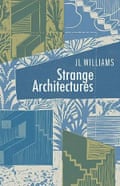
Strange Architectures by JL Williams (Shearsman, £10.95)
Adrienne Rich famously wrote “poems are like dreams: in them you put what you don’t know you know”. This dream knowledge gives shape to numerous architectural spaces in Williams’s collection. We are told in her notes that each is in fact a separate dream: many were dreamed and compiled during lockdown and the early days of motherhood, both carceral experiences in different but not entirely unrewarding ways. Hence the efflorescence of poems. If in psychoanalysis dream houses stand in for the self, then Williams throws open many different doors to find the complex furniture of shame, grief, lost love or friendship. Via the unconscious we enter hotels, houses, single rooms, bars, shopping malls, walled gardens; some uncannily familiar, others entirely foreign. We find ultimately what “feels like a real place / but is not a real place – joy, pure joy”. The self turns out to be the only reliable home, and our obsessive need for it is an estrangement from happiness: “A house / made entirely / of very charred / slabs of wood”. Rooms cannot hold us safely for ever. We must carry joy within us, against adversity and threat.
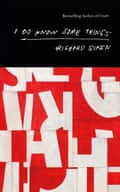
I Do Know Some Things by Richard Siken (Chatto, £12.99)
Siken’s 2005 debut, Crush, has a devoted following in the US and, increasingly, in the UK. His newest collection of prose poems makes reference to Crush, with its illustrations of queer love, the sudden death of a boyfriend and the consumption of his trauma by its readers. In Cover Story Siken writes playfully but harrowingly about how confession can cover up rather than divulge the truth. “My boyfriend did not die in 1991. I told a lie and it turned into a fact, forever repeated in my official biography.” To borrow Anne Sexton’s phrase, Siken suggests he was “faking it up with the truth”. In Hearsay he writes “They say that I was born in February, in a hospital in Midtown, while it snowed. It is legend. There are no photographs.” What do facts have to do with a body, living or dead, and those who love it? Precious little, it seems. The contrast of major and minor details, a talkiness we might associate with Frank O’Hara, alongside meditations on lineation and poetics make for sometimes disorienting reading. In 2019, Siken suffered a serious stroke, an event he uses as a way of thinking about memory, loss and language itself: “I was having trouble with my tenses – is, was, will be – and things were getting lost in the overlap.” The slipperiness of the subject, loquacious, implacable and revelatory, asks us to delight in the lie as an honest riposte to a private life lived in public view.