6 hours ago
10
6 hours ago
10
At one mosque in north London, a woman shouted at worshippers that more of their children should be killed, as children had been in Gaza. On another occasion, gas pipes were ripped from the building and reconfigured so leaking gas built up inside it.
These are among a series of incidents the London Islamic Cultural Society has faced in the past three years. But rather than retreat behind closed doors, the mosque has opened them wider. It is one of more than 100 across the UK, including in London, Birmingham, Sheffield, Manchester, Glasgow, Southend and Cardiff, that have invited in members of the public this weekend to learn more about Islam and British Muslims.
As part of Visit My Mosque, they have offered tea, cultural food, talks, multi-faith activities and art exhibitions as well as workshop discussions with members. The event, hosted by the Muslim Council of Britain, is now in its 11th year and organisers say it has taken on added importance amid rising anti-Muslim hatred.
Dr Wajid Akhter, the secretary general of the Muslim Council of Britain, said: “In the current climate, far too many people are getting their information about British Muslims and their neighbours from an algorithm and foreign-funded billionaires fuelling toxic hate towards faith communities, both online and on our streets in Britain.”
Sufia Alam, the head of the Maryam Centre at the East London mosque and the London Muslim Centre, said their mosque was taking part to show that friendship and solidarity were stronger than hate. “We cannot allow hatred to define the relationship between Muslims and their neighbours,” Alam said.
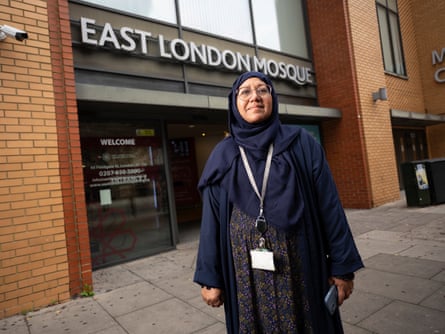
“At a time when Islamophobia is becoming more visible and more normalised in parts of our public discourse, initiatives like this matter deeply. When people walk through the doors of a mosque, meet Muslim families, volunteers and worshippers, and simply have a conversation, many of the stereotypes and fears begin to fall away.”
The event comes amid heightened concerns about the safety of Muslim places of worship. One mosque is attacked in Britain every five days, according to the British Muslim Trust, the government’s partner for monitoring anti-Muslim hatred. Attacks included acts of intimidation, violence, property damage, harassment, anti-Muslim hate speech, online abuse and vandalism.
At Cheadle mosque in Greater Manchester, Farooq Rafiq described the Visit My Mosque day as an “invitation to experience a space and faith that are often misunderstood”, adding: “We have seen over the past year this manifest in the rise of Islamophobia.”
Mohammed Kozbar, the chair of Finsbury Park mosque, said the best way to respond to rising anti-Muslim hatred was with “openness, dialogue and solidarity”.
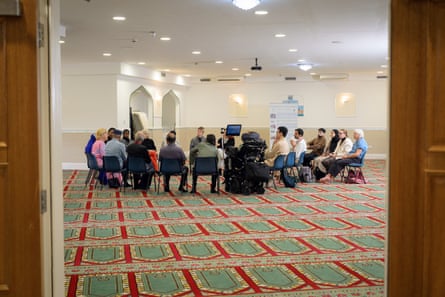
At the London Islamic Cultural Society on Saturday afternoon, people of all faiths walked in as it opened its doors. The north London mosque is run by Bibi Khan, the first woman to become president of a mosque in the UK.
“In this day and age, we see things in the media that don’t reflect what’s going on in our community. It’s so important for us to reach out and to be able to communicate exactly what’s happening with us in terms of our faith, the people we serve, what do we do and what we believe in,” said Khan.
There was a heavy police presence, with officers greeting people attending the open day. About two dozen people sat down for a roundtable discussion, speaking about their association with the mosque or, for those who didn not practise Islam, why they wanted to learn more.
Among those in attendance was Judith Prinsley, the deputy for Muswell Hill United synagogue who also serves as the vice-chair of the security, resilience, and cohesion division for the Deputies of British Jews. Khan and Prinsley, who are both part of the Haringey Multi-Faith Forum, have a close bond.
Anti-Muslim and antisemitic incidents have risen sharply in the UK since the Hamas-led attacks on Israel and Israel’s war in Gaza. Haringey, where the London Islamic Cultural Society is located, has large Muslim and Jewish communities.
Khan said: “In Haringey, especially with brothers and sisters from the Jewish community, it’s really important that we understand each other and stick together, even where there are times when we don’t agree with each other.”
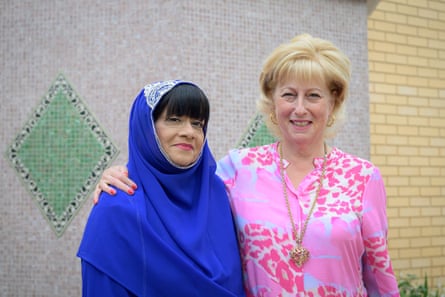
Prinsley said there had been antisemitic graffiti near her synagogue and that some worshippers were scared to attend. She said she was “shocked” by the gas pipe incident and how little attention it had received outside the Muslim community: “I thought, how come we hadn’t been made aware of it? Why wasn’t it on the television?”
For Khan, social media is a big concern in terms of escalating incidents. She mentioned a false conspiracy theory, spread online, that “Albanians” were supplying mosques in the UK with guns. “Think about it. Somebody comes outside demonstrating and they’re going to automatically carry a weapon because they think we’ve got one,” she said.