5 hours ago
9
5 hours ago
9
There is no “associate membership” of the European Union, nor any blueprint for what such a thing might involve. It is a political hypothesis, describing a relationship of intimate strategic alignment with the EU, stopping short of actual membership, in ways that are significant but undefined.
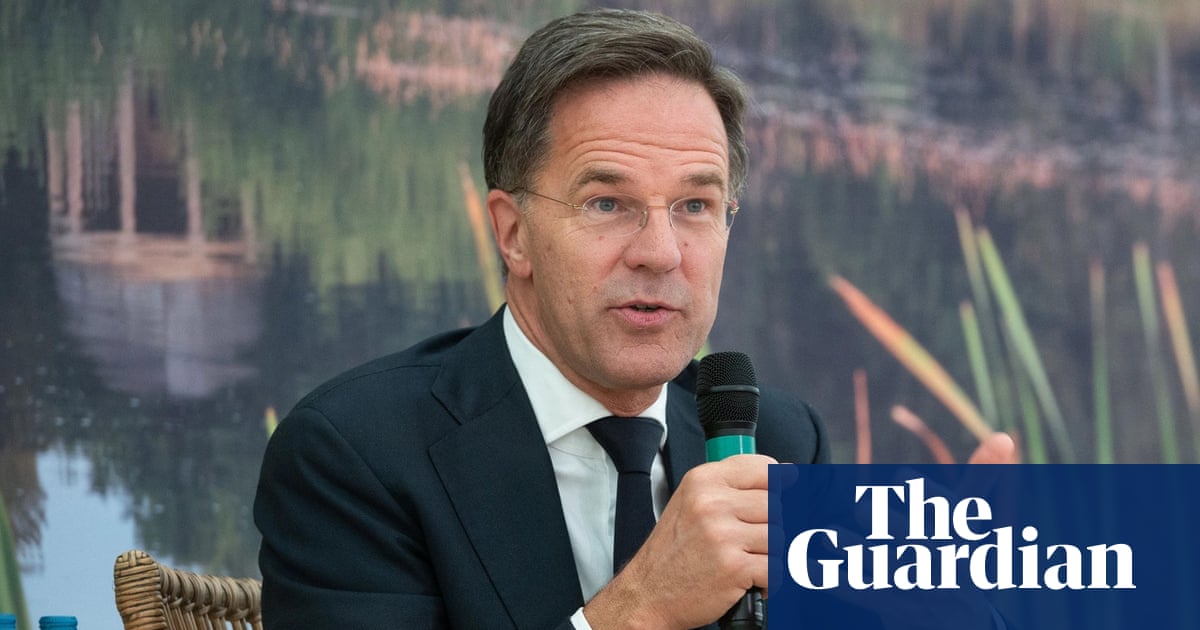
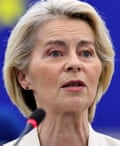
This week, Ursula von der Leyen, the European Commission president, invited Canada to be the first country to enjoy this putative status. In her state of the union speech, she spoke of a future relationship elevated “to the highest level possible”, reflecting an affinity of interests and values. Mark Carney, the Canadian prime minister, reciprocated the sentiment in a speech on Wednesday. Addressing the European parliament, he said the two sides should secure “strategic autonomy through deep cooperation” across a broad spectrum of interests: trade, defence, industrial capacity, science, space and AI. He proposed Canadian participation in the EU’s Erasmus student exchange programme and Horizon research scheme.
There is a vast gap between the declaration of those ambitions and their formalisation in any kind of treaty. Negotiating even a relatively straightforward trade agreement with the EU can be heavy going, given the need to accommodate the rival priorities of 27 member states. Creating a more multifaceted partnership is arduous work, bedevilled by technical detail, as Britain has found when trying to settle the terms of its post-Brexit relationship with mainland Europe.
That process has been complicated and slowed down by a deficit of trust. The Labour government has repudiated the venomous anti-Brussels ideology that drove the decision to leave the EU, but the Brexit deal inherited from the Conservatives was designed to work as an automatic ratchet, pulling the two sides apart. Reversing that mechanism takes a greater input of political energy and imagination than Sir Keir Starmer could muster. Andy Burnham has yet to rise to the challenge.
The UK prime minister could learn from his Canadian counterpart. Both find their global positions weakened by Donald Trump’s contempt for traditional US allies. Their circumstances are not exactly alike. Canada and the US share the longest land border on Earth. Mr Trump denigrates his northern neighbour’s sovereignty, suggesting it become the 51st US state. He has provoked a pointless, costly trade war. The UK has not been spared tariffs and other diplomatic indignities, but it has not suffered quite the same degree of sustained rhetorical and economic aggression.
Mr Carney has responded with a clear-eyed plan for geopolitical reorientation. He talks about a “rupture” in the international order and the challenge facing “middle powers” in a destabilised world shaped by rivalry between the US and China. He urges maximal cooperation between democracies that still value a system of multilateral alliances underpinned by international law and an understanding that reciprocal obligations can yield mutual benefits.
That is the animating idea behind the new acceleration in Canada-EU relations. It is alien to Mr Trump, and he doesn’t like it. He has warned of yet more tariffs should the Ottawa-Brussels axis evolve into anything he deems economically unfavourable to the US. For the time being, this is all happening in the realm of rhetoric. But Ms von der Leyen’s speech and Mr Carney’s response are important as expressions of serious geopolitical ambition. The time is overdue for a British prime minister to show the same clarity of purpose.
-
Do you have an opinion on the issues raised in this article? If you would like to submit a response of up to 300 words by email to be considered for publication in our letters section, please click here.