1 month ago
34
1 month ago
34
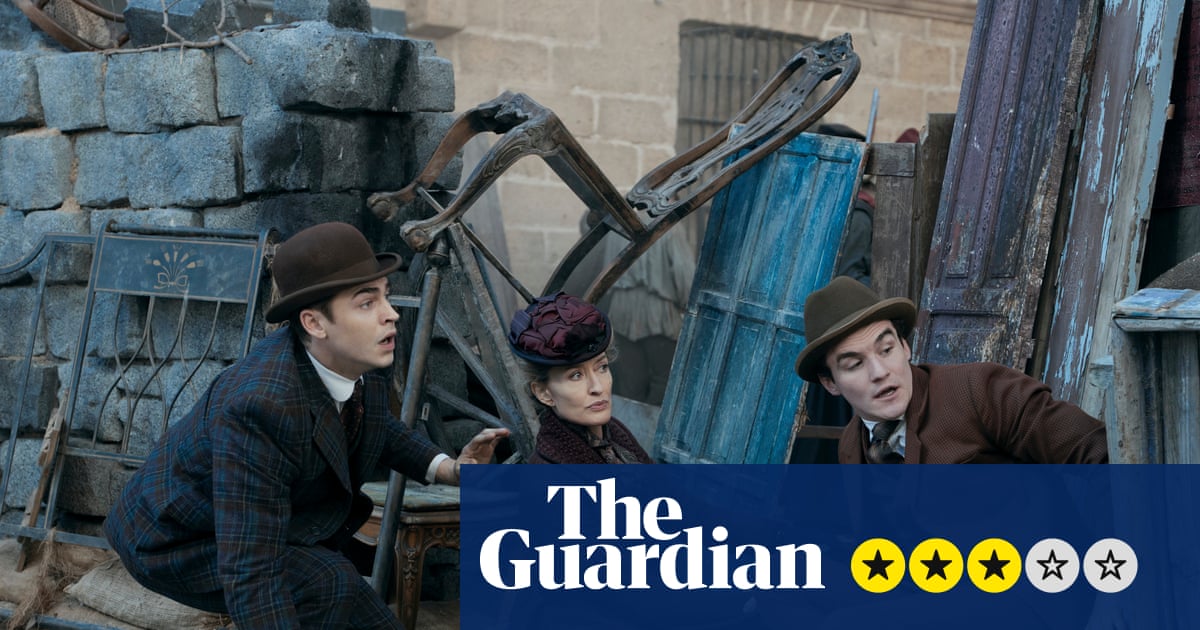
Clara del Valle is a delightful little girl, all smiles and plaits and cheeky interruptions during boring sermons at Mass. Her large family, enjoying life in their sprawling house in 1920s Chile, dote on her. But her psychic powers can be a buzzkill: when she gets a premonition that death is coming, come it will. Half a century later, her granddaughter Alba discovers Clara’s diaries, and realises that the horrors she’s seen were always going to happen.
Along with Alba’s mother Blanca, these women are the three generations at the heart of Chilean novelist Isabel Allende’s 1982 debut The House of the Spirits, previously the basis of a weirdly whitened movie starring Meryl Streep. Amazon’s expansive eight-parter, filmed in Spanish and indeed in Chile and executive produced by Eva Longoria, is a more faithful version of a book that begins as a sprawling family saga before pitching the reader into a stream of violence that concludes with a fictionalised account of the coup that removed the socialist Chilean leader Salvador Allende – a cousin of the author – and replaced him with one of the 20th century’s most vicious dictatorships.
It’s become a tiresome cliche for northern-hemisphere readers to compare Allende to Gabriel García Márquez, an author from another country whose use of “magical realism” differs significantly from hers. But we are a year and a half on from Netflix’s lush take on One Hundred Years of Solitude, and viewers will want to compare the two epic dramatisations of acclaimed South American novels that mix political strife with ethereal flourishes, so here goes. Thisdrama is less fantastical and more acute in its depictions of tyranny. It has a flair for beauty and colour and imaginative tall stories that is often delightful, but not always helpful here.
For all three of Clara (Nicole Wallace, then Dolores Fonzi), Blanca (Sara Becker, then Fernanda Urrejola) and Alba (Rochi Hernández), the man who dominates their story is Esteban Trueba (Alfonso Herrera). Esteban is possessed of a certain rakish charm, but by the time he marries Clara, we’ve seen that he is a nightmare, the personification of a strain of rightwing Latin American politics that affords ordinary folk about the same amount of respect as colonial occupiers did. A child born from his rape of a powerless worker in his employ has consequences that will rebound, devastatingly, on his own family in decades to come.
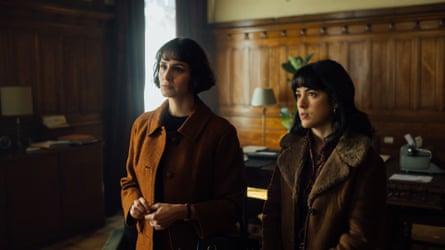
Particularly with a big change to the narrative near the end, the TV series improves greatly on the book in terms of how much redemption it offers to Esteban – a man who is a serial rapist and seriously violent domestic abuser, as well as an avatar of a rigged, deeply exploitative class system. The two things are one and the same: The House of the Spirits is strong on the maleness of fascism and state violence.
It still feels, though, like an old-fashioned and naive confection, mainly because of the fantasy elements that could, in a properly bold dramatisation with a determination to be relevant in 2026, have been junked. The yarn is flecked with coincidence, prophesy and destiny. Major events aren’t permitted to happen organically, as the result of humans using their agency to make decisions that affect complex struggles between competing interests. Instead, what happens has to have been predetermined by the actions of previous generations, or by the immutable traits they pass down. Everything has been predicted by a wise woman, usually Clara with her funny feelings and her tarot cards.
When the terror arrives, it is unsparingly drawn, and the lethal idiocy of Esteban – who is fine with violent coercion if it means rich people maintain their place at the top of the heap, but is horrified when the military coup he supports brings a new level of savagery – is neatly captured. But the way a specific person from Esteban’s past is involved in the punishment meted out to Alba is too neat: her awful fate has already been sealed. It almost lets the perpetrators of the atrocities off the hook. Alba, meanwhile, is involved in leftist politics, having instantly and irrevocably fallen in love, just as her mother and grandmother did, with a man who will forever cause her trouble, in her case a revolutionary leader. As Alba discovers Clara’s old notebooks and the narrative ends by cycling back to the beginning, the TV show stiffens the book’s parting thoughts but is still close to a books-are-magic tweeness: the idea that Alba might make things better by writing about them is, in the aftermath of a slaughter based on real events, tough to accept.
Terrible things befall the women in this story; their consolation is that they told you they would, and they lived to tell the tale. It’s not enough.
-
The House of the Spirits is on Prime Video.