2 months ago
107
2 months ago
107
When Hugh Bonneville was first asked to reprise the role of Ian Fletcher – protagonist of John Morton’s Bafta-winning workplace satires Twenty Twelve and W1A – his feelings were mixed. “I was on the one hand absolutely delighted,” says the actor, now most famous for playing dignified patriarchs in Downton Abbey and Paddington. “On the other hand, I was terrified because it’s the most painful and horrible experience I’ve ever had on television.”
In Twenty Twelve, Fletcher flexed his managerial muscles as “Head of Deliverance of the Olympic Deliverance Commission,” guiding his team through the chaotic run-up to the 2012 London Games. In W1A, he landed a job as “Head of Values” at the BBC, where he waded through a series of absurd disasters. Nine years on, a weary Fletcher is back in back-to-back meetings as the “Director of Integrity” of a nameless international football organisation hosting a nameless international football tournament (its blindingly obvious real-world basis is never identified due to “an overabundance of caution on the production’s part,” says Morton).
Fletcher may be in a high-pressure position, but sitting at a boardroom table gazing at PowerPoints doesn’t sound like a particularly agonising acting experience. What made Twenty Twelve and W1A stand out in a sea of post-Office mockumentaries, however, was its meticulously constructed naturalism; an intricate tapestry of stammered half-sentences. For the viewer, it was a satisfying send-up of British awkwardness. For the cast, it was a nightmare to memorise; the scripts are twice as long as your average 30-minute sitcom. “It’s the most impossible thing to learn because sometimes the sentences don’t make sense, [yet] the difference between ‘yes well but’ and ‘but well yes’ is profound,” says Bonneville. “I am constantly the one who runs into the buffers when everybody else is brilliant.”

On the set of Twenty Twenty Six last summer, I didn’t see much evidence of that. It’s mid-August, and filming is taking place in a school in Wembley, which has been draped in purple fabric and trussed up with tacky gold palm tree lamps and huge bunches of fake flowers in a bid to pass as a Miami arts centre. That’s right: Fletcher, bastion of British politeness and prevarication, has been parachuted into the heart of American corporate culture. And he’s not alone. By some twist of fate, he has been reunited with Will Humphries (Hugh Skinner), his hapless intern from the BBC days, whose excruciating social uncertainty remains unrivalled.
When the partner of Twenty Twenty Six’s producer suggested that Will – a W1A fan favourite – should return, Morton thought it was a “funny joke. About a week later I found myself thinking, yeah, I could just about believe that he’s washed up somehow in Miami.” Bonneville was delighted to reprise the double act. “I’m now describing Will as the Paddington of the office world – he means well, but he’s going to bump into everything and set the photocopier on fire. You want to look after him.”
I’m equally delighted to discover that Skinner – whose conversation is a stop-start blizzard of self-effacement (“I sound like a knob, sorry!”, he exclaims, after comparing delivering Morton’s dialogue to “a sport”) – isn’t a million miles from his character. “The line’s blurring, isn’t it?” he says after starting to talk about his own experience on set in response to a question about Will’s struggle to adjust to Miami life (when I mention Will’s inability to complete a sentence, Skinner cuts in: “who are we talking about now?!”). To be fair, the actor is used to the general public mistaking him for his character: when W1A was on the air, he found people tended to “look at me and laugh in a sympathetic way”.
Alongside his spectacularly incompetent assistant, Fletcher has a couple of other European colleagues: Warrington’s Phil Plank, an ex-footballer who speaks like he’s in a perpetual post-match press conference, and mysterious Belgian Eric Van Dupuytrens, the nameless international football organisation’s chief coordinating attaché, who communicates in Eric Cantona-style koans. Then there are the host nation representatives: two Americans – earnestly idealistic head of sustainability and climate strategy Sarah Campbell and no-bullshit New York lawyer Nick Castellano – plus feisty Mexican “VP Optics and Narrative” Gabriela De La Rosa and gentle Canadian logistics guy Owen Mitchell.
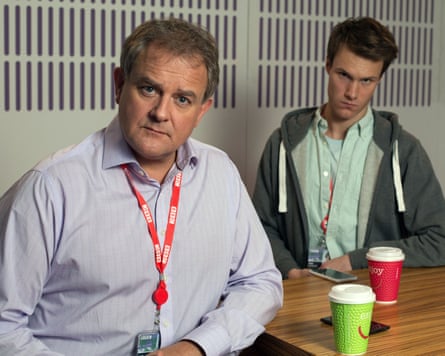
If Twenty Twelve and W1A were studies in unspoken British social etiquette, Twenty Twenty Six is more of a culture clash comedy. Fletcher has “always been a captain of a ship of fools but in this case he’s a captain of a ship of very forthright, direct and energetic fools,” says Morton. “We’re used to seeing him in meetings where nobody’s saying what they actually mean and he’s good at navigating that. He’s suddenly dropped into a world where people say exactly what they mean … again and again.” According to Bonneville, Fletcher maintains “his very British approach of trying to be a mediator, trying to keep calm, trying to be cooperative.” Eventually, though, he does end up borrowing “a bit of that American boosterism,” says Morton.
Morton had been keen to resurrect Fletcher for a while, and the upcoming World C** (as per David Tennant’s very amusing and heavily censored narration) felt like a “potentially fertile” backdrop due to its unwieldy scale; held across 16 cities, it’s the biggest to date. “As a writer, you think: hmm, that smells like things could go wrong.” That said, Morton maintains Twenty Twenty Six is not about football at all. Like W1A and Twenty Twelve, “it’s about trying to organise something – it could be the village fete, it could be an EU summit.” For Bonneville, the joy of Fletcher-based shows is in the workplace theme: “the big ideas probably won’t be executed properly – certainly not by Thursday – and the maneuvering of office furniture and who’s allowed access to which biscuit tin. All these background details make it delicious.”
Still, there’s no getting away from the fact that even as a backdrop for comedy, the World Cup carries a lot of baggage. 2022’s Qatar tournament was steeped in controversy due to concerns over humans rights abuses, while on the morning I speak to Morton and the cast, Iran’s participation is in doubt after Trump warned “the life and safety” of their players could be at risk on US soil. Morton says there is “a show to be written about” these issues, but “this is not it. I can’t write it.”
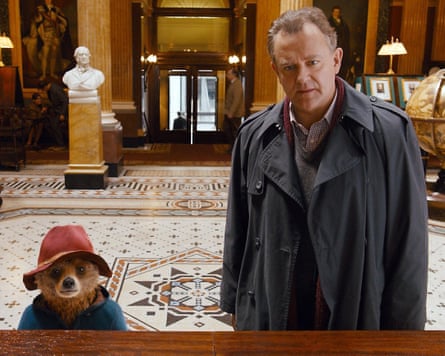
Photograph: Studiocanal/Allstar
Which is not to say the show shies away from uncomfortable topics. Bonneville thinks “dark is probably a bit of a strong word” for Twenty Twenty Six. “I’d say shaded.” There are references to Trump, plus much discussion about the environment, including carbon-offsetting and safe temperatures in stadiums. Chelsey Crisp, who plays Campbell, even interviewed her real-life equivalent from the 2023 women’s World Cup to get a grip on the agenda. Then there is the small matter of what happened to Fletcher’s predecessor, who fell off a roof terrace with inordinately high safety barriers, presumably to his death.
There are also far more light-hearted angles. Whereas W1A and Twenty Twelve had Jessica Hynes’s delusional PR maven Siobhan Sharpe, now the baton for massaging public perception has been passed to the social media team, a group of puppyish Gen Zs headed up by Madison, whose mindset is “any press is good press,” says Erin Kellyman who plays her (good press in episode one includes Mr Beast liking a post about faeces).
Back on set, I watch a scene in which Bonneville’s Fletcher is surprised to see Will sporting pink hair for reasons tangentially connected to Megan Rapinoe. The action is taking place on a stairwell in front of a large window with a view of Wembley Stadium, which will later be replaced by a picture of Miami (something the producers I’m sitting with quickly realise will be a lot more difficult with all the extras walking past; they are swiftly dispensed with).
With such a famous landmark in the eyeline, it’s a struggle to buy into the Florida setting – yet the cast agree they didn’t have to suspend their disbelief too much during the London-based shoot. “It was excruciatingly hot,” says Kellyman. “It really felt like we were in Miami.” There was one typically miserable difference about filming in the UK, though. Bonneville describes the heat as “unbearable. The irony being had we filmed it in Miami, it would have been air-conditioned,” he sighs. “But that’s the British way.”
Twenty Twenty Six is on BBC Two on 8 April at 10pm