3 months ago
132
3 months ago
132
The first time I saw a Flemish giant rabbit was at TruckFest in Peterborough in 2002. Among a sprawling maze of stalls at the East of England showground, I was led into a tent filled with the biggest rabbits I’d ever laid eyes on. I’d never heard of Flemish giants before, but I knew then that I needed one. I couldn’t have predicted in that moment that one of these beautiful creatures might save my life.
Dory was a baby when I met her, but even as a bunny she was already bigger than most normal-sized rabbits. We brought her home in a cat carrier, but she soon outgrew it. By the time she was fully grown, she weighed nearly 10kg, and I was walking her on a leash like a dog.
She had the appetite to match, too. We gave her heaps of carrots, obviously, but that was never going to be enough. White cabbage, savoy cabbage, hay, dandelions, milk thistle, pellets – she ate the lot. And Dory didn’t stop there. When she wasn’t chomping on vegetables, she was sure to find something else to satisfy her hunger. Since she was a house rabbit, that usually meant chewing through computer cables, bits of furniture, and, on one occasion, the hose of my pressure washer.
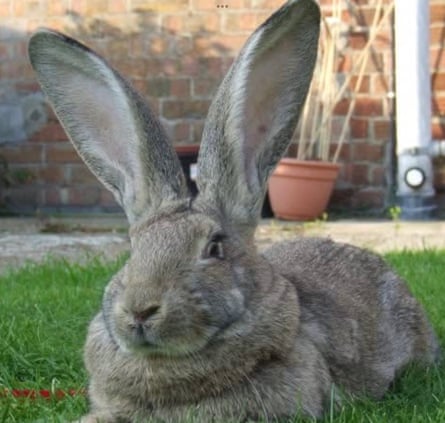
The most extraordinary thing about Dory wasn’t her size, or her appetite. It was her brain. One evening in 2004, I was watching TV with my then wife when I began to lose consciousness and slip into a diabetic coma – which can lead to serious brain damage or death if left untreated. My ex-wife simply thought I’d nodded off after a long day’s work and hadn’t noticed anything was wrong, but it was dear old Dory who sensed danger.
Normally a docile creature, Dory leapt into action: she climbed up on to my body and went nuts, jumping up and down, thumping furiously on my chest, and licking all over my face. It was only when she started acting so strangely that my ex-wife realised something was seriously wrong and phoned 999.
I still can’t be sure how Dory knew. Some people say that pets can sense when their owners are sick, and when they are dying. Perhaps she could smell that my blood sugar was low, or could hear my heartbeat quicken. Either way, without her actions, I know I wouldn’t be here to tell the tale.
In the days after my coma, Dory became something of a celebrity. Our local paper, the Hunts Post, featured her on their front page, and various nationals soon followed. There was even the chance to go on morning TV, but when I was told by producers that they couldn’t provide accommodation for a giant house rabbit in London, I politely declined.
Dory was rewarded for her efforts by being made the first ever honorary animal member of the Rabbit Welfare Association, and spent the rest of her years enjoying as many carrots – and computer cables – as she could wish for. In her retirement from being a life-saving paramedic, she would often climb up on to my lap and wet herself – but I didn’t mind. I owed her my life, after all.
Dory passed suddenly and prematurely, at just two years old. The chunks she’d chewed out of the carpet and the skirting boards served as little reminders of her after she died, but the biggest mark she left was on me. No one can say that Dory didn’t make the most of her short life, and I’ve tried to live the rest of mine in her memory.