3 months ago
173
3 months ago
173
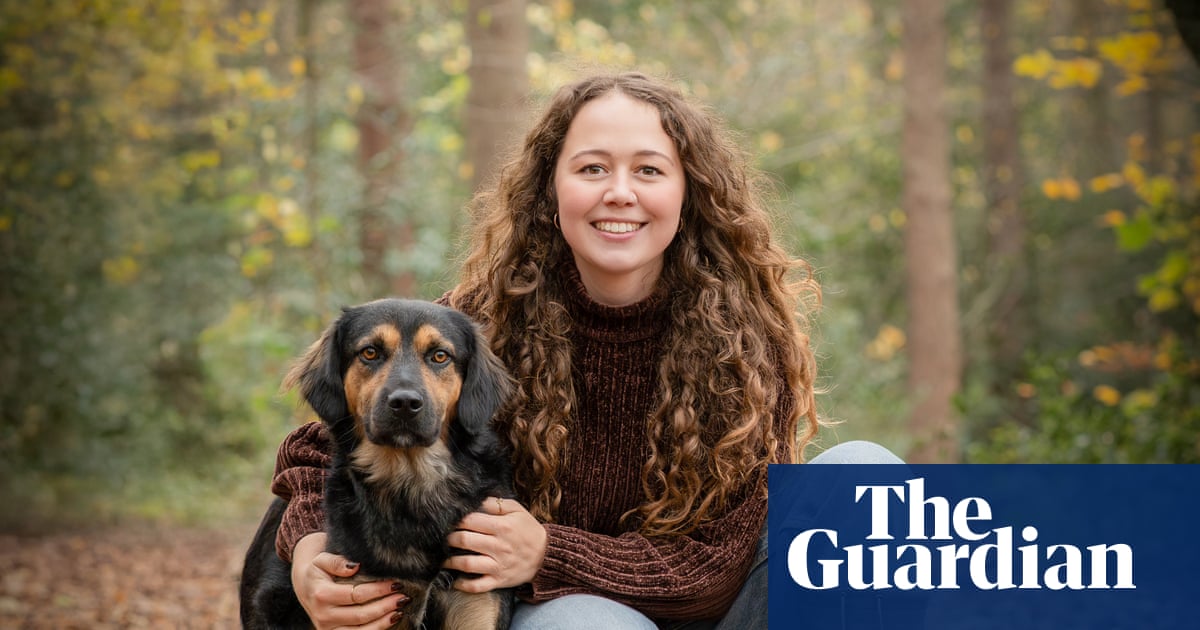
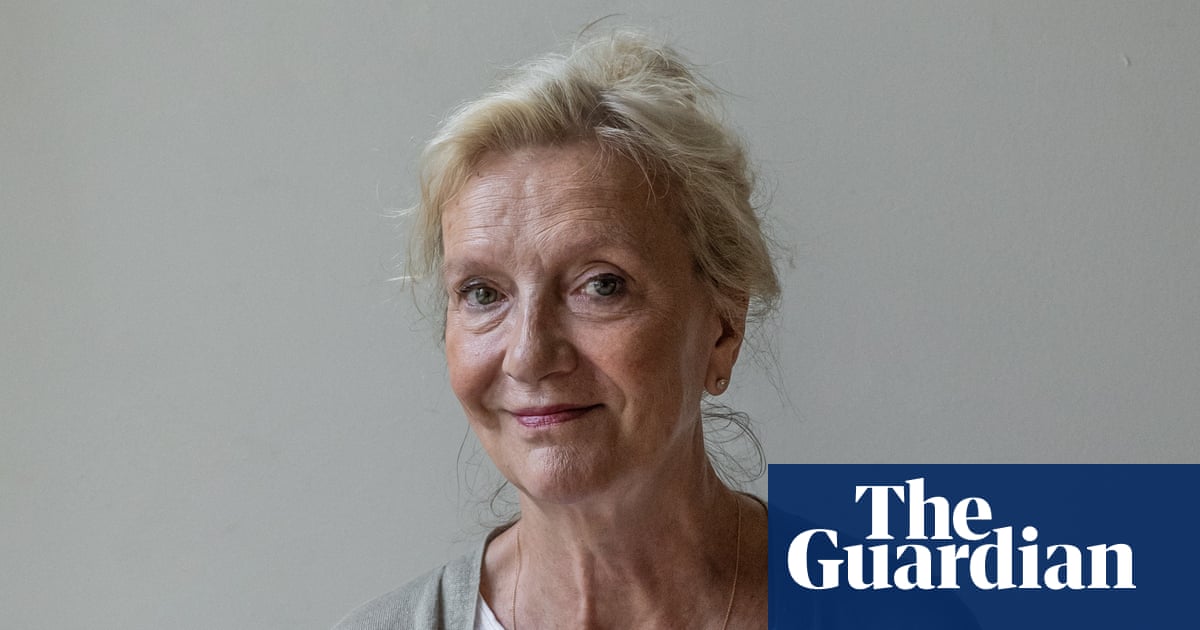
Selina Hales has a thing about pineapples. She is talking in a quiet office, set aside from the bustle of Refuweegee, the charity she founded 10 years ago, and the walls are festooned with tissue paper cutouts of the fruit, which is an international symbol of hospitality.
Refuweegee – its name a combination of the words “refugee” and “Weegee”, local slang for Glaswegian – has expanded exponentially over the decade into an operation that supports hundreds of asylum seekers and refugees in the city every day. Back then, she had a simple idea about making welcome packs, each one including a handwritten letter from a Glasgow resident. “One of our very favourite early letters said: “Welcome to Glasgow. I like pineapples. What do you like?”
Refuweegee has sent out more than 10,000 welcome packs and those letters reflect a quintessential aspect of the city: opening its arms to strangers in need. Threaded through the city’s collective memory are acts of generosity and resistance – the Glasgow Girls who fought the detention of their Kosovan classmate, the public outpouring after the Park Inn tragedy, the southside residents who surrounded an immigration enforcement van in Kenmure Street.
But the past year has been marked by a significant shift in Scottish public sentiment. Nigel Farage’s Reform UK party secured 26% of the vote in its first Scottish parliament byelection, and there were protests outside asylum hotels and flag raising across its cities, including Glasgow.
“Over the past 10 years I’ve always felt we were moving towards something positive,” says Hales. “But this is a frightening moment.”

Visitors to Refuweegee’s hub in the city centre are feeling markedly less safe. Hales gestures to the hangout space that offers free hot meals and welcomes 200-300 people a day: “There won’t be a person in there that will not have received racial abuse, or felt unsafe because of looks or because of the flags.
“It’s definitely becoming more common. People are being emboldened, because of the likes of Farage.”
It is clear the Reform leader has Glasgow in his sights ahead of the Scottish parliament elections in May, with polling suggesting his party will win a number of seats in the high teens through Holyrood’s proportional system.
On successive visits to Scotland, Farage has attacked Glasgow. At a recent Falkirk rally, he claimed the Scottish National party, which runs Glasgow city council as well as the Scottish government, cared “more about Gaza than Glasgow” and put illegal migrants “to the top of the housing list” over other families.
And he prompted widespread disgust in December with his cynical deployment of a contested statistic that one in three Glasgow schoolchildren do not speak English as a first language, which he claimed amounted to the “cultural smashing” of the city. Something similar is anticipated when he visits Edinburgh to announce the party’s Scottish leader this week.
So how do Glaswegians on the frontline respond to these attacks?
“At the beginning of Refuwegee, I’d have been the person in George Square with the placard saying: ‘We have room,’ Hales says. “Now my perspective is completely different. I know how much it takes to successfully resettle one person. Underestimating that is what gets us to where we’re at – a crisis situation where people are being failed and you’ve got a community organisation picking up the pieces for statutory care provision.”
Glasgow’s housing crisis has been building for years, with Shelter saying Scotland’s more progressive homeless rights exist only on paper and housebuilding across the country is at a record low.
This has tipped over into a housing emergency because of an unhappy alignment of UK and Scottish government policies, with Holyrood putting a new duty on councils to house anyone who is unintentionally homeless and the Home Office rushing people out of hotels.

The head of Glasgow city council, Susan Aitken, says “huge numbers” of newly accepted refugees are “piling unsustainable pressure” on city finances.
As of last month, an estimated half of homeless applications in the city were from refugees and in this financial year the overspend is expected to be more than £40m. Aitken says both Labour and Tory UK governments have refused to meet the council. She is less willing to criticise SNP colleagues at Holyrood, who slashed the affordable housing budget and blame the UK government for failing to fund its policy.
Glasgow’s Labour MPs throw the accusation right back, accusing the SNP of “virtue signalling’. Joani Reid, the Labour MP for East Kilbride and Strathaven said: “They chose to turn Glasgow into a sanctuary for asylum seekers … and now they want the Home Office to bail them out.”
Refugee agencies argue the picture is more complex, and that migrants are drawn to Glasgow by established communities and support networks decades in the making. “Glasgow has a reputation as being welcoming,” says Hales. “We hear it all the time: ‘I was told it’s safe here.’”

In the last year, she adds, it has been especially difficult to watch people receive their status then go back into hotel accommodation. The Scottish Refugee Council supports many such cases.
It is like this for Omar, who had spent five years in Glasgow awaiting his asylum decision with his wife and teenage daughter. When he was finally granted refugee status in November, a council flat fell through, and the family are living in one hotel room. “As soon as I got my decision I’ve been trying to get a job, trying hard to build a better future for my family,” Omar says. But he missed a crucial English language exam because he had to move hotels, employment applications are difficult without a fixed address, and his daughter is struggling to travel the long distance to school.

In Milton, a close-knit housing scheme on the northern edge of the city centre, saltire flags appeared on lamp-posts in summer.
Alex O’Kane is a community activist who has given evidence on poverty to the Scottish parliament. He also runs a Facebook service that alerts local residents to traffic incidents, petty crimes, lost property and, most recently, an escaped budgie.
“When I put a saltire flag up it’s to send a signal to the SNP to change before it’s too late, before people get so frustrated that they end up voting in anger for Reform,” says O’Kane.
“I’m terrified of Reform getting in,” he adds. “I don’t know what their policies are on poverty.”
But there is “genuine tension” in the area over housing, he adds. When locals see migrant families moving into the area when their own children are moving away for social housing, it is inevitable they have questions, he says. “It’s not racism. It’s genuine frustration over a lack of housing stock.”
The St Andrew’s secondary school catchment takes in most of the East End and its pupils’ heritage encompasses more than 50 countries and 20 languages.
The teacher Lee Ahmed is chatting about the benefits of multilingual learning with a group of 15- and 16-year-olds who speak English as their second language.
Maria, who speaks Portuguese and English, expresses her bilingualism as “having two homes, two minds”. She is baffled by Farage’s criticism: “Speaking another language definitely improved my cognitive skills and my memory. And it opens doors for jobs.”
“It’s a way of connecting with other people,” says Jiyan, who also speaks Sorani Kurdish. “The best way to learn a language is to speak it, so at school you’re hearing people use different phrases all the time.”

It is worth digging into those numbers Farage referenced. According to Glasgow city council, 27.8% of pupils are bilingual learners who have an English Language Level, a data score which allows teachers to track their progress through to fluency. Of these, only 16.4% are at the level of “new to English”, meaning the vast majority range from good conversational fluency to a very advanced level of English.
Ahmed says Farage’s claims of a “cultural smashing” of Glasgow are “outrageous”. Bilingualism “brings a lovely atmosphere to the classroom when we can interact with each other in different languages”.
The young people agree the city is changing. “Glasgow is a welcoming city,” says Aisha, originally from Iraq, “but in the past few years I feel some people have become more against immigrants.” A friend of hers was beaten up in nearby woods recently and told to “go back to his own country”.
While it’s undeniable that community frustrations are sharpening – and being amplified for political gain – in areas across Glasgow, nobody the Guardian spoke to reflected the rhetoric of Thomas Kerr, Reform UK’s most prominent city councillor, who claimed last week that the city was “at boiling point”.
And back at Refuweegee, Hales insists the power of the Glasgow welcome has not diminished.
“If there’s an increase in tensions, Glasgow rallies. We’re very privileged in that we get to see the larger community response, which is: what can I do? How can I share? What do you need at the moment? That’s a beautiful thing.”