2 months ago
83
2 months ago
83
April 2026 will mark 114 years since the night that the RMS Titanic collided with an iceberg, but our grim fascination with the disaster shows no sign of abating. There was, of course, a surge of interest in the Titanic in the late 90s – thanks to James Cameron’s Oscar-bothering blockbuster – and there has been a steady stream of documentaries, dramas and podcasts about its demise ever since, some more sensitive than others (among the less tactful offerings: the 2010 film Titanic II – directed by Dick Van Dyke’s grandson Shane – a cash-in about a replica ship ravaged by a tsunami). Occasionally, the subject matter lurches starkly from the past back into the present. In June 2023, five people died on board an experimental submersible made by the company OceanGate; its passengers had hoped to see the liner’s rusting wreckage up close.
Titanic Sinks Tonight is a part-documentary, part-drama series playing across four nights, its episodes constructed from letters and diaries written by those on board, as well as interviews the survivors would give in the decades after. On the strength of the two episodes released for review, there’s no denying that it sates our appetite for Titanic-themed content. However, in centring the words and memories of those who lived through the terror of that night, it restores much-needed agency to those people. It also does well to bring a sense of reality to events that can sometimes feel unreal on account of their ubiquity, and that uncanny valley of Titanic-themed media. Central to its success is the presence of experts such as historian Suzannah Lipscomb and former Royal Navy admiral Lord West, to sharpen the corners of the story that Hollywood has sanded down.
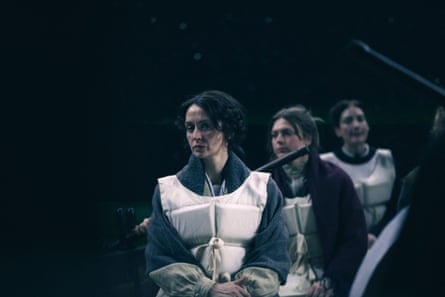
For the upper-class passengers, their quarters for the journey from Southampton to New York would have been – says Lipscomb – “like a cross between the Ritz and an English grand country house”. We meet one such traveller, a fashion designer named Lucy, Lady Duff-Gordon, as the actor playing her – the excellently named Candida Gubbins – smothers her face in a thick cold cream (it is, she says, “a pleasure to go to bed” in her lavish cabin). Duff-Gordon would have been eating roast duckling and foie gras just hours before the ship began to sink, revelling in what Lipscomb describes as a “joyful” day; we even see a photograph of the real Lucy, Gubbins proving a strong likeness. Her comfort is contrasted with the likes of Charlotte Collyer (Lisa Dwyer Hogg), a seasick émigré to the US, whose lodgings were in the more spartan surroundings of second class. Even as strange, “queer” noises rang out, Collyer had no reason to think anything was wrong, putting her trust in those above her in the social hierarchy: “If these people weren’t worried, why should I be?”
In fact, as Lipscomb shows, how much information you had very much depended on who you were. As opposed to a Jack and Rose, flip-of-a-coin situation where anybody could feasibly find themselves on a lifeboat, the “chumocracy” between the first-class passengers and those in charge put them at a major advantage when it came to surviving. Episode two, which airs tomorrow, also asks why the evacuation happened in the maddening way that it did, with Nadifa Mohamed explaining the “Sliding Doors” moments that saw families separated or kept together depending on where they were on the ship.
The Somali-British novelist proves to be one of the programme’s biggest assets. She draws parallels between that period and today, when immigrants can put their trust in a new system and way of life, sometimes to their detriment: “Something I hear … is this belief that you’ve entered a world of order and protection and security, so you don’t have to worry about anything.” It was, says Mohamed, “so wrong” in this context. She and fellow author Jeanette Winterson may not seem the most obvious talking heads, but they’re great at it – their authorial skills adding to the many layers of world-building on show here. Maybe more writers should be invited to take part in programmes like this.
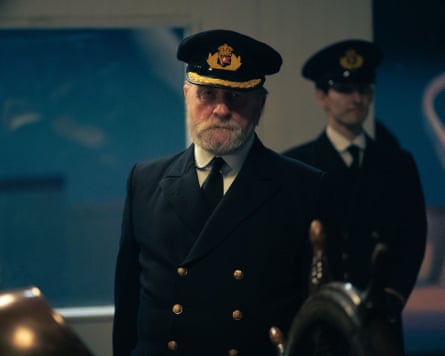
While the reconstructions are well-realised, there are perhaps a surplus of testimonies, and a failure to draw out the most powerful ones (among them, a truly intense performance from Tyger Drew-Honey as wireless operator Harold Bride). Really, though, Titanic Sinks Tonight is a rich history lesson that makes the familiar new once more; it also acknowledges that the truth is often far more frightening than any work of fiction.