2 months ago
76
2 months ago
76
The huge concrete vats that have held countless litres of verdejo white wine in the 90 years since the Cuatro Rayas cooperative winery was founded are dwarfed by the stainless steels tanks that sit opposite and serve as reminders that, even in an enterprise as ancient as winemaking, times change.
Outside, a chilly but welcome rain falls on the surrounding vines, autumn-brown after another furnace-hot summer in the northern Spanish province of Valladolid. But changing technologies and the vagaries of the climate emergency are not the only challenges facing Spain’s €22.4bn (£20bn) wine industry.
According to a recent report, the sector is in dire need of an infusion of new blood and must recruit 22,600 younger workers over the coming years as the current generations of growers reach – and exceed – retirement age. The report, commissioned by the Spanish Wine Interprofessional Organisation (OIVE), found that 38.9% of wine-growers are aged 51-65 and 35% are over 65. Those aged 41-50 make up 16.9% of the sector, while the under-40s comprise only 9.3%.
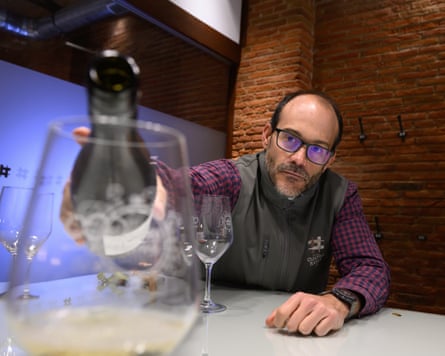
The organisation’s president, Fernando Ezquerro, is blunt in his assessment of the situation. “If we don’t get that generational replacement, then the sector will obviously wilt,” he says. “If you don’t have grapes, you don’t have wine.”
Winemakers over the border in France have also sounded the alarm for different reasons, warning that an unpalatable blend of Donald Trump’s tariffs, falling sales and some of the worst harvests in 70 years are pushing producers to breaking point.
Much of the problem in Spain lies in the continuing phenomenon of la España vaciada – the hollowing-out of rural areas as young people leave the countryside and head to cities to study, work and live. The figures speak for themselves: although rural areas make up 84% of Spain’s territory, they are home to just 15.9% of the country’s population. What’s more, the number of young people in rural municipalities is a third lower than in urban ones.
“There’s a problem of generational replacement across the primary sector and that’s down to the fact that people want to live in cities and the rural world is less attractive for a thousand reasons,” says Ezquerro.
“We all need to work together to make this sector more attractive so that young people make a decision that’s often difficult.”
Ezquerro and his colleagues believe the keys to safeguarding the future of the sector – which accounts for 2% of jobs in Spain and 1.6% of its GDP – lies in attracting young people to the industry, but also in modernising vineyards and ensuring that those who run them are well-versed in sustainability and the digital world.

Óscar de Íscar, a partner in the Cuatro Rayas co-operative who is also a member of its board, is part of the sought-after cohort of younger winemakers. Aged 36 and with a degree in chemical engineering – plus a master’s in winery management – he is not your typical grower. But his family has been making wine for at least four generations and he never doubted that he and his brother would take over its 60 hectares when his father retired. As he puts it: “To be honest, there’s as much wine in me as there is blood.”
Although De Íscar describes wine as his passion, he also acknowledges that he is fortunate enough to be able to make enough from it for it to be a job, rather than a hobby. Part of the problem with recruiting new generations, he says, is that many do not see its entrepreneurial potential. De Íscar, who also serves as the head of the youth working group in Spain’s association of Agro-Alimentary Co-operatives, recalls coming across a newspaper article that said four in 10 young people aged between 18 and 25 wanted to be civil servants.
“So we’re starting from a place where maybe there isn’t a strong culture of being a business owner,” he says. “But at the end of the day, winemakers are business people and the profession needs to be seen and valued for what it is.”
While he doesn’t deny that the wine business, like any business, has its challenges – not least the weather – De Íscar adds: “Right now, we’re the best-prepared generation in history and we have the best technical resources in history. That’s where we should be starting when we set out this entrepreneurial vision and try to get people to carry on the sector.”
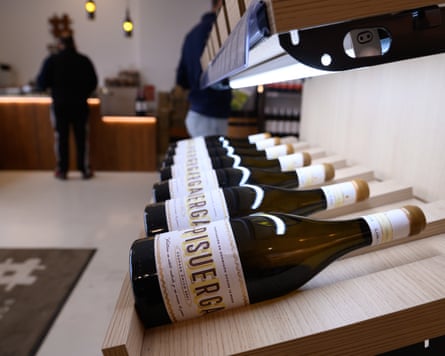
A quick look around the Cuatro Rayas bodega is sufficient to prove that the days of dusty cellar-door sales and barrels filled by the sons and daughters of toil are long gone. The shelves of its sleek shop are stacked with panettoni as well as wine and it, like many wineries, has a PR team and is an established destination for tourists on the wine trail.
All that, however, may merely be the latest iteration of a centuries-old tradition.
“My father always says, ‘When you go to a town with a winemaking tradition, look at the houses and the churches,’” says De Íscar. “The wine sector has probably been one of the economic engines of many regions.”
Ezquerro agrees. “There are so many small towns and villages that live from wine that would disappear, along with a lot of countryside,” he says.
He also points out that vineyards and wineries help to store carbon and retain local populations. “This is too important not to fight for,” he says. “One of the challenges we have as a sector is explaining the whole story that’s behind each bottle, each vineyard and each winery. We need to get better at telling that story because I think society – and young people – would understand it.”