3 months ago
113
3 months ago
113
Generally speaking, when you bomb another country, and that country retaliates, you call it a “war”. Very simple word. Three letters. Even Donald Trump knows how to spell it.
But be careful about calling the US-Israeli attacks on Iran, which have expanded into an Israeli ground invasion of Lebanon, a “war”. The geniuses in the White House can’t seem to figure out what the hell they’re doing. House speaker Mike Johnson announced on 5 March that “we are not at war” and that the US has “no intention of being at war”. Some lawmakers, such as senator Cynthia Lummis, meanwhile, are arguing that the US has been in “forever war” with Iran for decades.
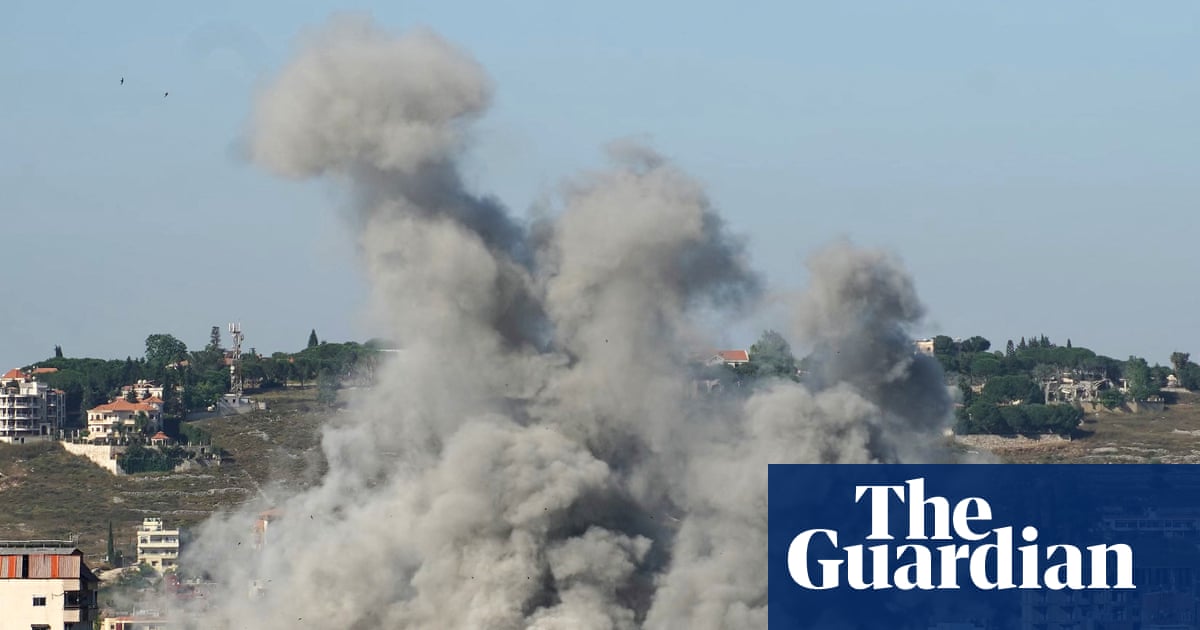
But whatever you call this – a war, a limited operation, a bloodthirsty act of imperial hubris – the costs of “Operation Epic Fury” are exorbitant. Civilians in Iran and the wider Middle East are paying with their lives: more than 1,300 people have reportedly been killed in Iran, including more than 200 children. Meanwhile, more than 800 people have been killed in Lebanon, including more than 100 children, and more than 815,000 people displaced.
While missiles may not be raining down on Washington DC the way they are in Tehran, ordinary Americans are paying a heavy price too. Nobody knows how or when this war will end, but I can tell you one thing for sure: Americans will find themselves far poorer because of it.
First, let’s look at the sticker price of the war itself, not including all the knock-on effects on the economy. Exactly how much taxpayer money has been spent on killing schoolchildren and causing a humanitarian and environmental disaster is hard to pin down. Last week Pentagon officials told lawmakers in a closed-door briefing that the cost of the war against Iran had exceeded $11.3bn in just the first six days.
That $11.3bn doesn’t include any estimate of repairing facilities or replacing losses. Nor it does include the cost of building up troops and warships in the region before the first strikes. Other sources, meanwhile, have told the Guardian the true cost is likely far greater.
On Sunday Kevin Hassett, director of the White House National Economic Council, gave an update on the war’s price tag, telling CBS that the US has spent about $12bn since it launched strikes on Iran with Israel on 28 February. Again, that’s probably an underestimate.
Imagine for a second if we lived in a country where the government actually cared about its citizens. That $12bn – the cost of just over two weeks of war – could benefit the lives of so many people. I live in Philadelphia, for example, where the underfunded school district is currently facing a $300m structural deficit and is being forced to make budget cuts because of it. That deficit could be covered with only about half a day’s worth of war. But, as we all know, it’s more important to bomb schoolkids in Iran than fix schools in America. After all, a Tomahawk cruise missile, like the one that footage shows struck the school in Iran, costs about $2.5m. Killing kids isn’t cheap!
Philadelphia is hardly the only underfunded school district: roughly 90% of teachers across the US spend, on average, between $500-$900 a year of their money on school supplies for their classrooms. Their expenses for these supplies have soared in the past year, partly because of Trump’s tariffs. That $12bn could cover the out-of-pocket cost of supplies for America’s 3.7-3.8 million public school teachers for more than four years. Wouldn’t it be nice if, in the richest country in the world, teachers didn’t have to dip into their own pockets to help kids learn?
The average federal student loan debt balance is $39,547. That $12bn could pay off the loans of approximately 300,000 people. And that would mean 300,000 people who could suddenly put all the money they’re currently paying into student loans towards rent, food, and having families. They could put that money into the local economy rather than the pockets of defence contractors.
That $12bn could also have funded 1.62m full Pell grants for a year. That’s a form of need-based federal financial aid for undergraduate students that doesn’t need to be repaid; the maximum award is just over $7,000 a year. That’s 1.62 million Americans who could have their lives drastically improved with the money spent destroying another country.
There are roughly 770,000 homeless people in the US. According to one analysis by the National Alliance to End Homelessness, you’d need to add an extra $9.6bn to existing funding to provide housing to every household staying in a homeless shelter throughout the US. You could make an enormous dent in homelessness for less than two weeks of war. And that would be money well-spent: studies show that housing people ends up saving the taxpayer money in the long-run.
That $12bn could also fund the Low Income Home Energy Assistance Program, which helps low-income families pay their heating bills, for two to three years. It could fund The Emergency Food Assistance Program, a federal program that helps supplement the diets of people with low-income, for multiple years. It could subsidize broadband and school lunches and help reduce medical debt. It could fund healthcare and education. It could make the whole of America better off.
But we can’t have radical socialist ideas like that now, can we? Imagine just how devastating it would be to weapons manufacturers, and the politicians who cozy up to them, if we reduced our spending on pointless wars?
Again, when it comes to spending, that $12bn price tag is just the start. Nobody knows how long this war is going to go on. And the impacts on the economy are just getting started: higher grocery prices, higher gas, higher electricity costs are all coming. Don’t worry though, while you’re struggling to pay the bills, I’m sure the Trumps will find a way to get even richer from all this.
“Don’t tell me what you value,” Joe Biden was fond of saying. “Show me your budget, and I’ll tell you what you value.” The ever-expanding budget for bombing Iran makes one thing clear: the US government doesn’t value its own citizens a bit. Watching money that should go towards schools and infrastructure and healthcare being spent on death and destruction should make every US taxpayer apoplectic. Operation Epic Fury indeed.
-
Arwa Mahdawi is a Guardian US columnist