2 months ago
86
2 months ago
86
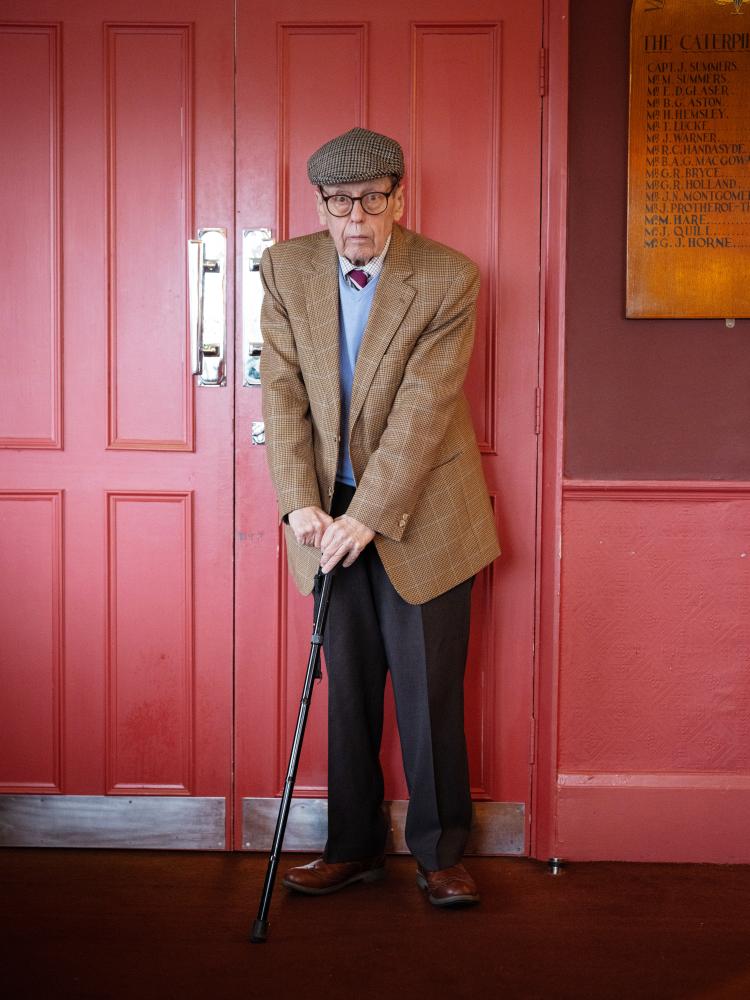
At the age of 84, David Trefgarne is not the oldest active peer in the House of Lords. But now well into his 64th year in the upper house, he is very much the longest serving. And in the next few months, it will all end.
The 2nd Baron Trefgarne, to use his formal title, is one of the few hereditary peers still helping to make UK law, the tail end of a legislative chain dating back to the 13th century and Magna Carta. When one of these laws, the House of Lords (hereditary peers) bill, receives royal assent some time in the spring, that will be that.
“I’m very sorry, obviously,” said Trefgarne. “I was coming to the end of my time in the house, anyway. I have been there a long time. I go as often as I can. But I think it was inevitable eventually, and therefore I’m fairly relaxed about it.”
When Trefgarne entered the Lords in June 1962, life peerages had been in existence for only five years, meaning the bulk of the upper house was still based around fellow hereditary lawmakers.
Reforms under Tony Blair’s government slashed the number of hereditary peers to 92, a remaining rump selected by votes within the Lords. Trefgarne was among those selected by his fellow Conservatives, and thus remained.
“As I understand it, the bill will become an act some time in April, and that will be when we have to go,” said Trefgarne. “I’m getting on a bit, so I was probably going to retire before too long anyway. So there we are.”
The departure of the hereditary peers will, nonetheless, be a constitutionally significant moment, he says: “It’s the end of more than an era. It was King John we started with. His late majesty.”
Unlike some of the ancient peerages, Trefgarne’s title dates back only to 1947 when his father, the Liberal and subsequently Labour MP George Garro-Jones, was made a baron, in a time when creating hereditary titles was still common.
Trefgarne was only 19 and a student at Princeton University in the US when his father died, taking up his place in the Lords as soon as he turned 21. He admits to a slow start as a lawmaker, “as I was busy earning a living”.
This living involved a series of jobs, including a five-month period in 1963 when Trefgarne and a friend flew a single-engined light plane from England to Australia to deliver it to a flying club, making the return trip in a 1930s biplane. He later worked as a commercial pilot.
But by his late 30s, Trefgarne was a whip for Margaret Thatcher, and spent a decade holding a series of ministerial jobs in her governments. As a junior Foreign Office minister in 1982, it was Trefgarne’s job to set out the government’s position in a crucial debate shortly before the Falklands war.
“We were debating what to do, as was the House of Commons,” Trefgarne recalls. “Lord Peter Carington was the foreign secretary, and he would have wound up the debate but he wanted to speak to the 1922 Committee [of Conservative backbench MPs], and so I was left to wind up the debate in the House of Lords.”
Trefgarne speaks warmly of Carington, who resigned soon after, saying he had to take responsibility for his department’s failure to predict the Argentinian invasion.
“We all attempted to persuade him otherwise, including Margaret Thatcher,” Trefgarne said. “But I’m afraid we failed. He kept saying: ‘My honour demands nothing less.’ He wouldn’t even discuss it. He was, I think, the best foreign secretary since the war.”
Trefgarne is similarly complimentary about Thatcher, and also has praise for some subsequent Conservative prime ministers, including David Cameron: “I talk a lot to David Cameron. He comes to the house quite a bit, and I find myself sitting next to him half the time – and Theresa May.”
He is less keen on others, in an understated way: “I’m not a great Boris fan. What do I think of Liz Truss? Not a lot, to be honest.”
While he has not been a minister for 35 years, Trefgarne remained highly active in the Lords, serving on committees until 2022. He still regularly votes and speaks, although he is slightly less active after what he calls, quietly, “a difficult year” following the death of his wife.
And now full retirement approaches. Trefgarne has not always accepted his fate quietly. In 2016 he helped talk out a bill which would have abolished the system of internal Lords byelections to replace hereditary peers who retire or die, which would have seen them gradually disappear.
He is not, however, among those trying to block change now. “That was right at the time – it was a number of years ago,” he says of his tactics in 2016. “But we are now in a position where the Labour party put their thoughts on the House of Lords in their manifesto, and they were elected with a large majority. So a change of some kind was inevitable.”
Will he miss the chamber in which he has spent so much of his life? “Yes. But one’s got to live in the real world.”