1 month ago
83
1 month ago
83
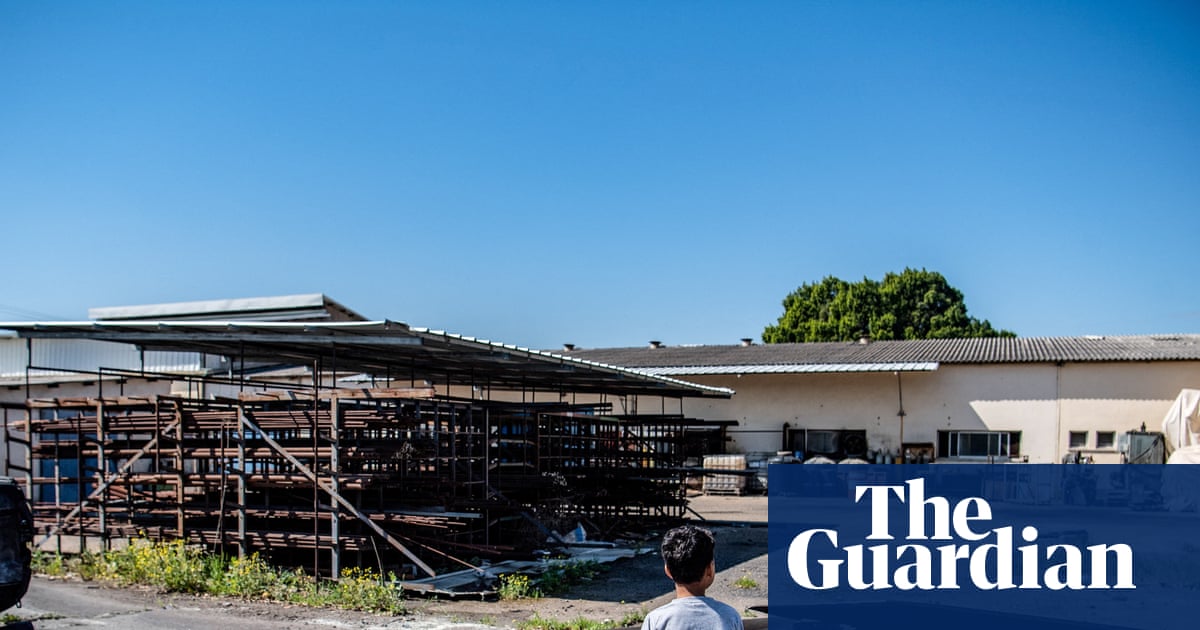
At the edge of Romania’s Danube delta on the border with Ukraine, in the village of Plauru, cows graze in flat, marshy fields. Houses with blue-painted roofs and window frames line a dirt track, many shuttered or abandoned.
Residents can see the cranes and silos of Izmail, a Ukrainian port city separated from Plauru by the 300 metre-width of the Danube River. By day the scene is deceptively calm. But sometimes, after dark, that calm dissolves.
The hum of drones cuts through the night, followed by explosions that rattle windows and shake people out of their beds.
For the 500 or so people in Ceatalchioi commune, which includes Plauru and three other villages, the war in Ukraine is not something they watch from a distance, but a daily reality.
As Russia targets Ukrainian port infrastructure along the Danube, Romanian villages squeezed against the border have found themselves on the frontline of a conflict in which they are not fighting.
Drone debris has repeatedly landed on Romanian territory, raising uncomfortable questions for Nato’s easternmost communities about security, escalation and how long civilians can be expected to live under constant threat.
Ceatalchioi and its villages are connected to the outside world by a single dirt road that winds to Tulcea, the nearest city. Beyond that, people must take a ferry to cross the Danube. The road is deeply rutted and pocked with potholes, barely passable in places.

“For more than three years we have lived with war over our heads. Some areas in Ukraine do not have the level of stress that we have here,” said Tudor Cerneaga, the mayor of Ceatalchioi commune. “We are on the hotline. Practically, we are part of the war too.”
For Cerneaga, the lack of a paved road is not just an inconvenience but a safety risk, slowing evacuations and deepening the commune’s isolation.
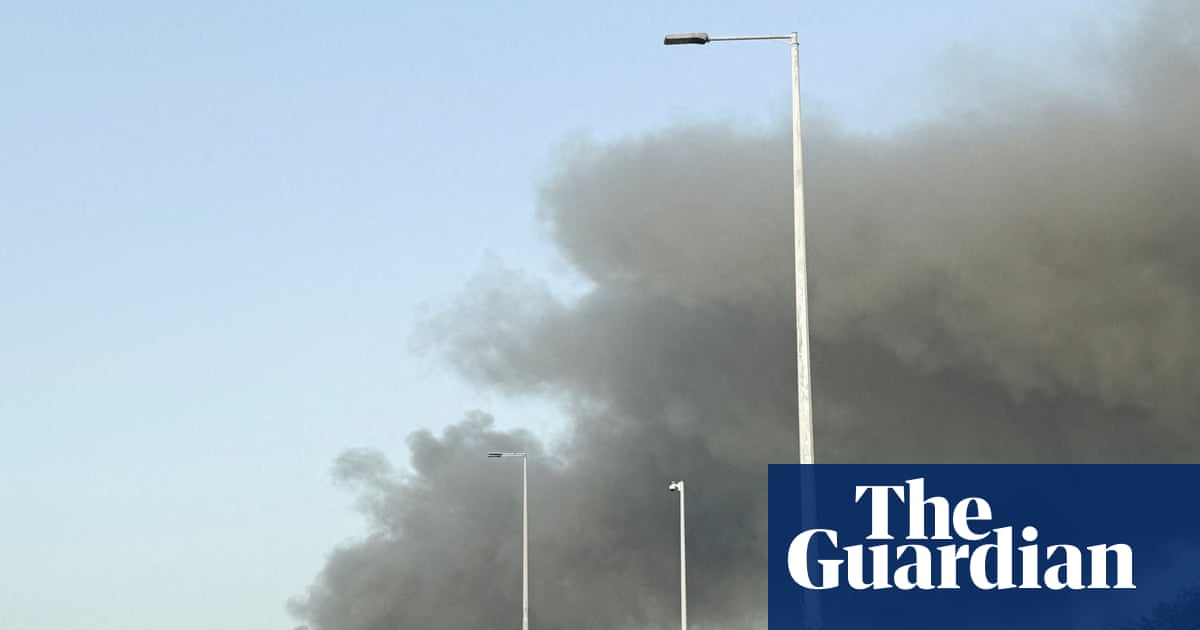
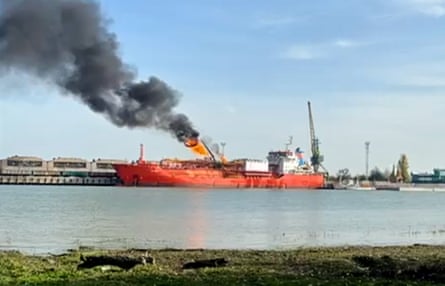
That risk became urgent in November, when a Russian drone struck a Ukrainian ship carrying liquefied gas in Izmail, setting it on fire. Fearing an explosion, Romanian authorities evacuated people from Plauru and Ceatalchioi, transporting them to Tulcea. Some left reluctantly, insisting on feeding their animals first.
“It was to be expected that this moment would come,” Cerneaga said. “We have been subjected to this terror for more than three years now. God forbid a drone falls on a house.”
Villagers say fragments of drones have repeatedly fallen in nearby fields and wetlands since the invasion began. While no one has been killed, the incidents have unsettled communities that already feel cut off and neglected.
Adriana Giuvanovici, 71, lives alone in Plauru. Her husband died two years ago of heart problems, and her children live in Tulcea. She was in the city’s hospital when the evacuation happened but has no plans to leave the only home she has known.
“We hear loud noises and bombs every now and again,” she said, standing in her yard. “We got used to it, but of course we are afraid.”
Across the commune, fear, but also habit, have become routine. Georghe Boftea and his neighbour Mititelu Petrea were evacuated last month.
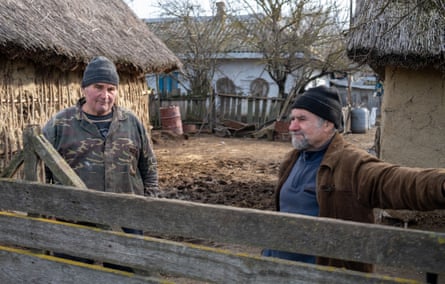
“You live in fear because you don’t know where the next drone will fall,” Boftea said. “We are just a few hundred metres from Ukraine. The sirens, the bombs, you hear everything.”
Boftea relies on subsistence farming, raising cows, pigs and chickens. For him, leaving is not only an emotional issue but a practical one. Animals still need feeding, even when the village has to be evacuated.
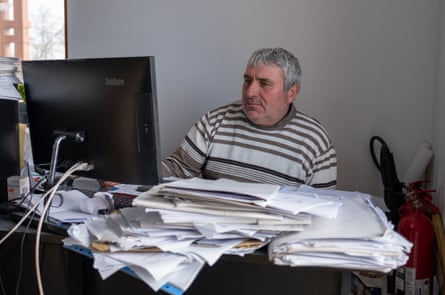
Marius Morozov, who works at Ceatalchioi town hall, said that when the war started in 2022 there were far fewer explosions. “There were maybe five to seven per evening,” he said. “Now sometimes it can be more than 50 in a night, they come more often.”
He tries to joke about it with friends, betting on how many drones will fall the following night, but the exhaustion shows. “Sometimes you don’t sleep all night because of the bomb noises, and then you still have to come to work the next day.”
The psychological toll is there, especially on children. In Ceatalchioi, Ecaterina Statache said her 11-year-old daughter had panic attacks prompted by the explosions. During the November evacuation, the girl was at school.
“She cried the whole time during the evacuation,” Statache said. “Life is not normal here. But what can we do? We go on and hope that no one will die.”
Her 19-year-old son wants to stay, even as many of his friends have left to work abroad or moved to Tulcea. Older residents say they have little real choice.
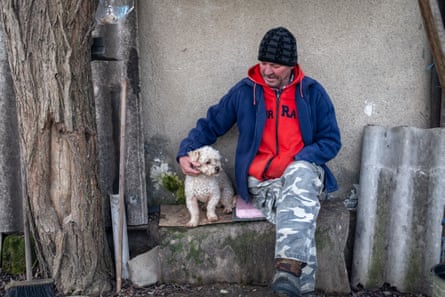
“At our age, where would we go?” said Alexandru Nedelcu, a 70-year-old man living in Plauru with his wife. “We are not used to the city, but we can get used to the drones and bombs.”
Following repeated incidents along its 400-mile border with Ukraine, Romania changed its legislation in 2025 to allow the military to shoot down unauthorised drones that enter its airspace. The army has so far refrained from doing so, wary of escalating tensions and being drawn directly into the war.
In a recent television interview, Romania’s president, Nicuşor Dan, said that reluctance to shoot down the drones was driven not by fear but by operational constraints.
“If a drone is 500 metres from the Ukrainian border, depending on its trajectory, you can risk engaging it over Ukrainian territory,” he said. “But if it is flying above a town, you cannot fire without risking civilians. If we can neutralise a drone without endangering residents or causing additional damage, you will see drones being shot down in Romania.”
For local officials, the problems are not only military ones. Cerneaga points to the lack of basic infrastructure in Plauru, including access to clean water, proper docking pontoons for boats and a road capable of supporting evacuations.
That neglect has created resentment, including some anti-Ukrainian sentiment, as local people contrast the support offered to refugees with their own sense of abandonment.
“We help the Ukrainians but we have been abandoned,” said Cerneaga. “It would not cost much to fix the road, considering its strategic position on the border. The port across the river has fertiliser, fuel, everything that could make this a similar situation to what happened in Beirut,” he said, referencing the explosion that shook the Lebanese capital in 2020.
As night falls over the delta, the Danube mirrors the lights of Izmail port. In Plauru, people close their shutters and wait. The war grinds on across the river, and for those living here, a single decision could make them the first Nato citizens drawn directly into it.