3 months ago
133
3 months ago
133
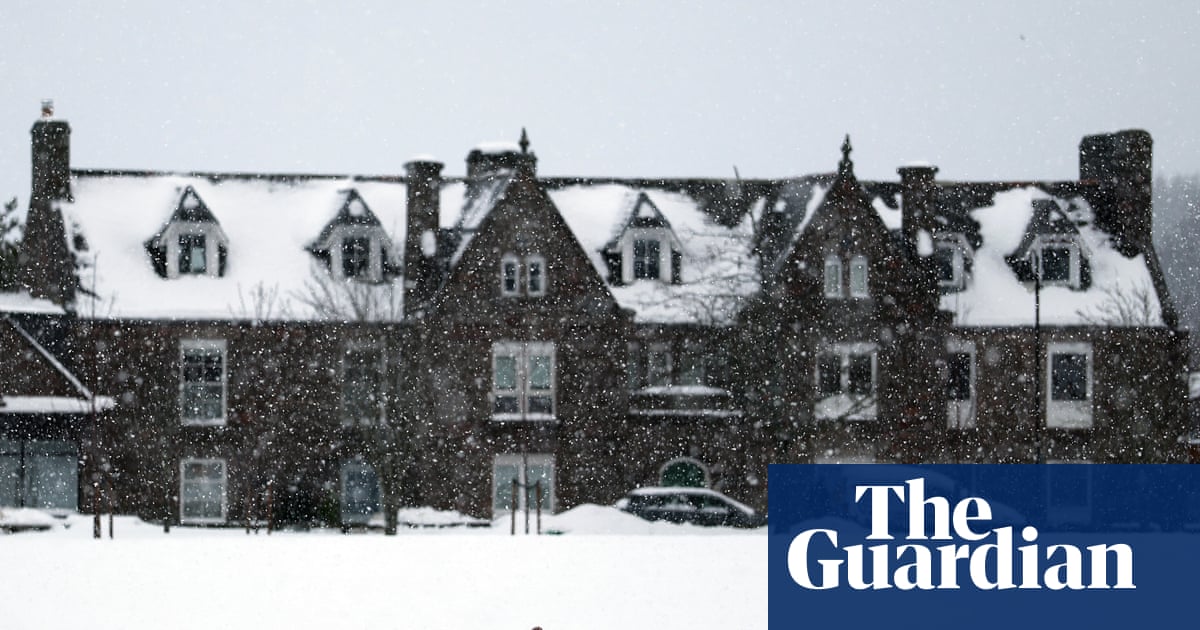
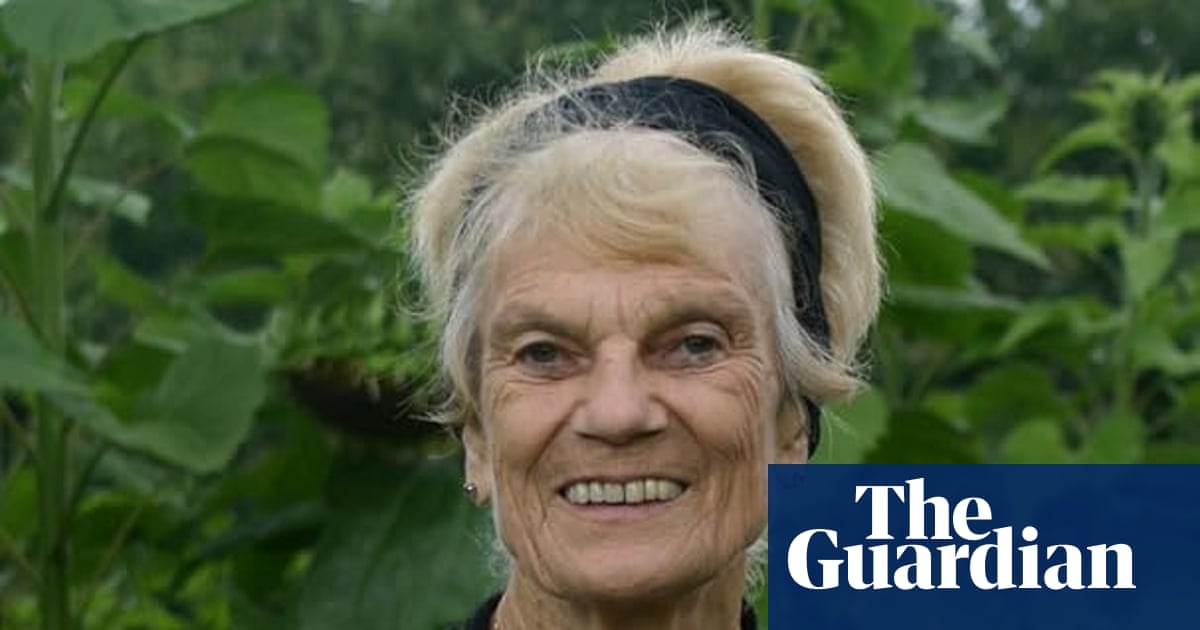
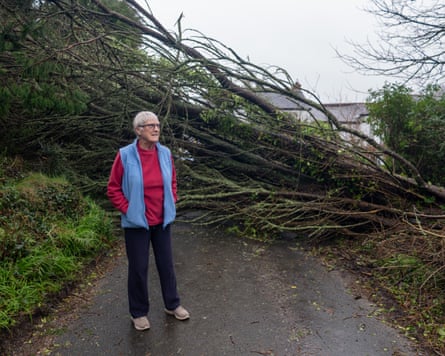
Linda Williams, 86, has been without heating, lighting and a working phone for the best part of five days. She is trying to keep warm by layering up and she picks her way around her home in the remote Cornish village of New Mill with old battery lamps from her days of caravanning.
“I think it’s safe to say that we’re in a bit of a state,” said Williams, a retired council accounts assistant. “But it can’t go on for ever … can it?”
Storm Goretti brought chaos to the far south-west of Britain last week with gusts as high as 99mph bringing down hundreds of trees and 61.8mm of rain adding to the danger and misery.
Almost a week on, trees still block roads and scores of people remain without power, water or phone connections. The feeling is growing that Cornwall has been left to cope on its own, leading an increasing number of people to call for the UK government to step in to help.
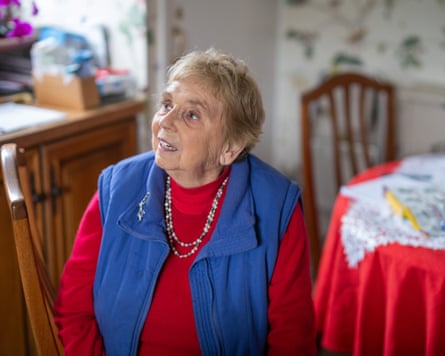
Williams said neighbours and friends had come to her aid, sending hot meals, delivering bags of Cornish pasties and arriving with flasks of hot water, some of which she uses to make drinks, some to fill her hot-water bottle. “I feel vulnerable,” she said. “But I feel I have to stay put so I’m here if the power companies come to sort it out.”
One of her neighbours, Roger Gillespie, 75, is cooking on a camping stove and warming his 15th-century mill house by keeping a log burner topped up. He lives with a red setter, Orlando, and two muscovy ducks (the ducks had to move into the cottage to protect them from a fox).
Gillespie wears a head torch permanently because his house is dark and the oil lamps do not light the corners. “I’m a bit of a survivalist, so I’ll be OK,” he said. “But I feel sorry for some of the people round here who aren’t as fit as me.”
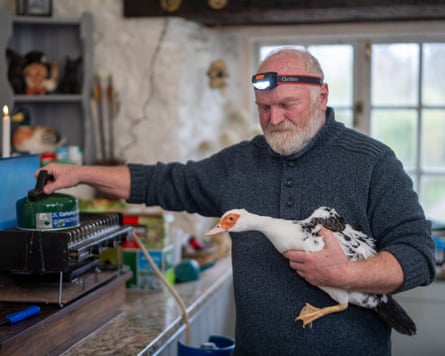
As well as losing power and a phone connection, Gillespie’s water went. “It turned all milky. I had to get to the supermarket for bottled water. We’re blessed here in good times. It’s a beautiful place – until something like this happens.”
The local Liberal Democrat councillor Juliet Line was spending hours on Tuesday visiting those cut off and trying to get utility companies and the highways department to reconnect people and move fallen trees.
“The lack of national attention has been frustrating,” she said. “Staff at the council and local people are working so hard but the scale of the problem is massive.”
Line believes the crisis highlights a lack of resilience. “The internet-based phone systems, for example, just don’t work when something like this happens. People don’t even know if help is coming.”
Andrew George, the MP for St Ives, said those trying to get Cornwall back on its feet were overwhelmed. “It doesn’t help if power and water suppliers feel obliged to present an ‘everything is under control, so don’t worry’ coping message, but that’s not the impression I get when out talking to those affected,” he said. He has called for a national emergency to be declared and for extra resources to be ploughed into Cornwall.
One man died in Cornwall when a tree fell on to his caravan, and George said he worried there could have been other, as yet undiscovered, deaths. “People are feeling traumatised,” he said.
Cornwall council said seven schools remained closed on Tuesday and its highways teams were responding to about 1,000 incidents across Cornwall, many involving fallen trees and branches.
The National Grid said that by Tuesday afternoon 168 properties remained without power in west Cornwall due to Storm Goretti. South West Water said “fewer than 100” were still experiencing loss of water or low pressure.
The village of Goldsithney, close to Penzance, was cut in two by a tree that fell across the main street and on to a cottage roof. The family who lived there had a narrow escape.

“The mother and three children were downstairs,” said a neighbour, Harry Glasson. “If it had been a few hours later they’d have been in bed and may not have survived.” He was not surprised the tree still lay across the village’s main street. “It’s the state of the country,” he said.
Fallen trees have made driving hazardous. Oona Burch, a school governor, told how she got stuck thanks to a combination of mud and a fallen tree as she drove her five- and seven-year-old children. “There was no phone signal and I was just thinking: what am I going to do?” She managed to extricate herself.
She said farmers cleared the way to her school with chainsaws. “There’s been no sort of national response. We’ve still got blocked roads five days after the storm.”
The cost is not just a human one. The storm felled almost 100 trees on St Michael’s Mount near Penzance – approximately 80% of the island’s trees – along with many much-loved camellias, hydrangeas and rhododendrons.
The National Trust said hundreds of thousands of pounds’ worth of damage had been done. The charity’s director for the south-west, Ian Marsh, said: “In terms of breadth and scale, this is the worst storm I’ve seen in my 16 years with the National Trust. Tenants and properties have lost power and water, roads are impassable and many thousands of trees have been damaged. It will take months of work to get some of our woodlands open and accessible again.”
In the House of Commons, the Cabinet Office minister Dan Jarvis said he could give a “categoric assurance” that the government cared as much about Cornwall as the rest of the country.
He said he realised that coastal and rural communities were vulnerable but said he believed the local resilience forum had worked well and it had not been deemed necessary to convene Cobra, the government’s crisis response committee.
Jarvis said lessons would be learned from what Cornwall had experienced and the government would look at the issue of people being cut off when phones that relied on the internet did not work.
Back at New Mill, Jan Shearn, 80, a retired headteacher, said local people had worked together to make sure everyone was safe, if not always very warm. “God knows when we’ll be back to normal,” she said.