2 months ago
90
2 months ago
90
Mass protests in Nepal and Madagascar toppled both governments this year, even when the young people at the forefront of the demonstrations were faced with heavily armed police and the threat of arrest.
Many called 2025 the year of the protest although the revolution in Bangladesh in 2024 that unseated the authoritarian leader Sheikh Hasina is often credited with inspiring young people to take to the streets across parts of Asia and Africa. Although not all achieved the change they wanted, from Sri Lanka to Timor-Leste they shared a common factor: gen Z was the driving force.
Defined as the demographic group born roughly between 1997 and 2012 into a world of climate uncertainty and social media, gen Z is often labelled “generation anxiety”; for many in the global south, the protests against corruption and autocratic governments were rooted in fears about their futures.
The Guardian spoke to activists from Togo, Nepal, Madagascar, Kenya and Morocco. They all talked of being driven by a collective energy and a desire to let their governments and the wider world know that they want change.
What happened?
On 6 June, about a week after the arrest of a rapper known for music denouncing corruption, Togo’s youth took to the streets demanding an end to corruption and repression under the rule of the president, Faure Gnassingbé. Bertin Bandiangou, a 25-year-old student, was among dozens arrested and tortured but continues to protest for change.
About the same time, protests erupted in Kenya, reigniting a similar gen Z uprising last year over tax rises. Hanifa Adan Safia, 29, was arrested during 2024’s protests and was on the frontline when young people again protested in June 2025 after the death in custody of a Kenyan blogger known for writing on social and political issues.
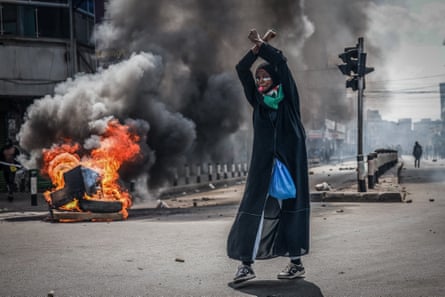
Political consultant Pradip Gyawali, 25, was among the protesters in Nepal who helped unseat the country’s government in September in anger at government corruption, nepotism and the banning of social media apps, which had been used to criticise the luxurious lives of the families of government elites.
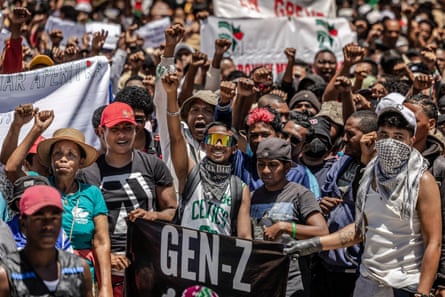
The following month, the government in Madagascar was also unseated by gen Z protests, which transparency campaigner Shely Andriamihaja, 26, says were similarly fuelled by anger over corruption among government elites.
Imad Zoukanni, 28, an artist, joined protests that started in the Moroccan city of Agadir in October after several pregnant women died in a matter of weeks during C-sections at the same hospital. Within days the protests had widened and spread to Marrakech, with young people angry at the state of healthcare and high unemployment while the government was spending money to host upcoming football tournaments.
‘It’s all about corruption’
Hanifa, Kenya: Corruption is the root wound that makes every other crisis worse. Corruption directly steals from hospitals, schools, roads and food security. Young people are angry because they see billions being looted while graduates sell sweets on the streets and patients die in public hospitals.
Shely, Madagascar: I think what drove the youth in Madagascar to protest was the bad governance and corruption in the country. The youth are the first victims of corruption, especially in universities where the infrastructure is so bad.
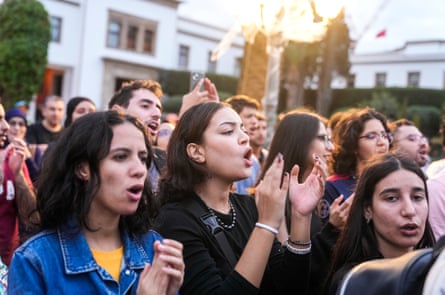
Imad, Morocco: It’s all about corruption. Instead of investing in people’s lives, in education, in healthcare, Morocco has tried to build a nice image for people outside [to build tourism]. The government makes promises but nothing is achieved in real life.
‘The first problem is unemployment’
Bertin, Togo: Nowadays, the first problem of youth is unemployment. It’s the consequence of corruption in the government. Young people can have degrees but not jobs and they cannot even take care of themselves. They have to do jobs that don’t even pay the rent at the end of the month.
Pradip, Nepal: Many of my friends have had to go abroad for higher education or employment opportunities. Many of the youth who joined the protests were struggling to get jobs. A lot of us are from other parts of Nepal, not from Kathmandu, where there are no opportunities for us.
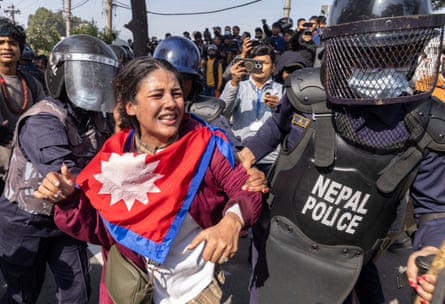
Imad, Morocco: A lot of young people have a good education but there are no doors open to work in the fields they spent years studying. Work is not just about money, it’s also about dignity, independence and hope.
Public services ‘collapsing’
Hanifa, Kenya: Public healthcare is collapsing, public universities are underfunded and public transport is brutal for the poor. When taxes go up but services keep getting worse, people feel cheated twice – once by the tax and again by the absence of results.
Shely, Madagascar: I think what ignited the protests was the fact that especially in the city, people struggled a lot with water and electricity shortages. The government had years to resolve the problem and instead of finding a sustainable solution it preferred to invest in less important things, like a failed cable car project to ease traffic.
Imad, Morocco: The main reason for protesting was about public health issues – in Agadir eight pregnant women died in a period of 20 days. People went outside to speak about this and it reached other big cities. They’re trying to present Morocco to the world during the Africa Cup of Nations next year – they’re investing a lot but leaving the priorities of the people aside.
Solidarity among countries
Bertin, Togo: When we hear gen Z in another country is protesting for better conditions, we are happy and we give them so much energy. We hope for them to succeed. When the gen Z protest started in Madagascar, I was talking to a journalist friend there and wished them all the best.
Hanifa, Kenya: Kenyan gen Z doesn’t feel isolated in this moment at all. In fact, what’s happening in Kenya feels like part of a wider global wave of youth awakening, especially across countries like Bangladesh, Nepal, Indonesia and Peru, where young people are also standing up against corruption, economic exclusion, political arrogance and state violence.
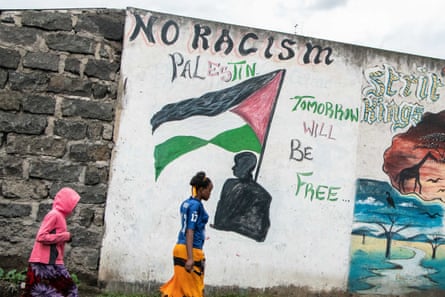
Shely, Madagascar: What happened in Nepal I think played a big role in what happened in Madagascar. Nepal [seems to us] less corrupt than Madagascar but they still had this courage to protest against the government. In people’s minds, it was like if they could do it, we can do it also.
Imad, Morocco: There is a global feeling that is shaping this generation. Morocco is very much part of it. It is a collective refusal to be silent.
What’s next?
Bertin, Togo: The immediate problem for us is the release of all the political prisoners. Second, Gnassingbé has to go, because he has shown too many times that he is not the one who can lead Togo’s development. We cannot live in a country where some people profit from the resources of the country and others will have only one meal in a day. We hope our turn will come very soon for the success of gen Z in Togo.
Pradip, Nepal: The [transitional] government after our protests is working towards elections and hopefully in the new parliament there will be youthful faces who can represent gen Z and set a new path for the country.
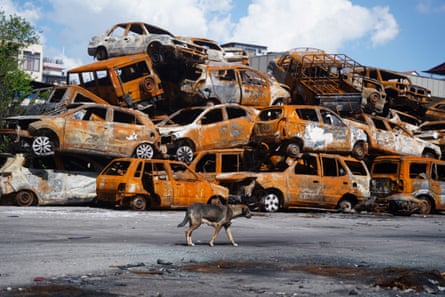
Shely, Madagascar: I hope for a future where each Malagasy citizen lives with dignity, where young people have access to quality education and opportunities. The path to the future that we wanted when we decided to protest is still far, but now at least we are working towards it.