1 month ago
74
1 month ago
74
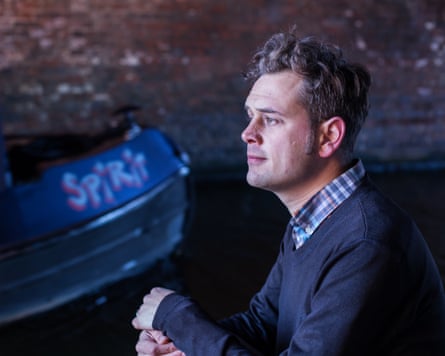
Luke Kennard, writer
This is a really good year for new fiction. I don’t think anyone writes about contemporary Englishness as astutely, mercilessly and affectionately as Claire Powell, and her latest novel, All In, puts her perfectly observed characters in the pressure cooker of an all-inclusive holiday. It’s a kind of meta-beach read, and I loved it.
A friend gave me a copy of the Argentine author César Aira’s short novel Ghosts (translated by Chris Andrews), which I devoured the other day. A family of builders are squatting in a half-built luxury apartment complex and start seeing beautiful ghosts. It’s scary and captivating and made me determined to get hold of all his books. He was one of Roberto Bolaño’s favourite writers so you can get into him now, then roll your eyes when everyone’s talking about him in two to three years.
I’m also very slowly reading Hilary Mantel’s French Revolution novel A Place of Greater Safety in parallel with my partner. I’m obsessed with Camille. Regardless of station, every man in the 18th century looked like a fat judge, but Camille looked like the lead singer of a Brooklyn indie band.
Black Bag by Luke Kennard is published by John Murray (£18.99). To support the Guardian, order your copy at guardianbookshop.com. Delivery charges may apply.
Rosie, Guardian reader
Jesus Christ Kinski by Benjamin Myers was an unusual read – a novel about a film about a performance about Jesus. Myers imagines Kinski’s thoughts during his ill-fated final theatre performance of Jesus Christ Saviour in November 1971 where he may have had a mental breakdown and got heckled before storming off stage after the first half. At the same time there is an autofictional account of a certain northern English author writing about viewing this performance on YouTube in 2021. I had no idea who Kinski was before reading this book, and enjoyed the writer’s musings on cancel culture and the dilemma of the creative genius who is a horrible human being. It was a trip inside the thoughts of a highly talented actor and egotist, while being also, dare I use the word, oddly relatable. The performance can be viewed in a documentary by Peter Heyer released in 2008 – it’s available on YouTube, and is compelling viewing.
Sophie Ratcliffe, writer
I’m writing an imaginary biography at the moment, and currently obsessed with Henry James’s tale of biographical intrigue, The Aspern Papers. I love its stalkerish narrator, its precision, its Venetian decay. James will be sharing space in my backpack this weekend with the wonderful Cynthia Ozick. Her Antiquities and Other Stories is a world of stuffed cabinets, lists and waspish narrators. I’ve also packed Calamities – Renee Gladman’s stunning poetic-prose work about the happenstance of drawing and words (or drawing with words?). Each of its 46 chapters starts “I began the day”, which makes it gorgeously, loopily hopeful.
Sophie Ratcliffe has been awarded this year’s EM Forster award. She is the author of books including The Lost Properties of Love
Kate, Guardian reader
I have been loving Flashlight by Susan Choi. It starts with a mystery disappearance of a father on a beach and then explores the disparate backstories and events leading up to it. It’s got a wide-ranging remit – Japanese culture, the occupation of Korea, growing up biracial and the mother’s deterioration through MS. It’s told through the eyes of the mother and daughter, who is one of the most complex child characters I’ve come across in literature. I love how the tension slowly builds towards the truth of what really happened.