3 months ago
135
3 months ago
135
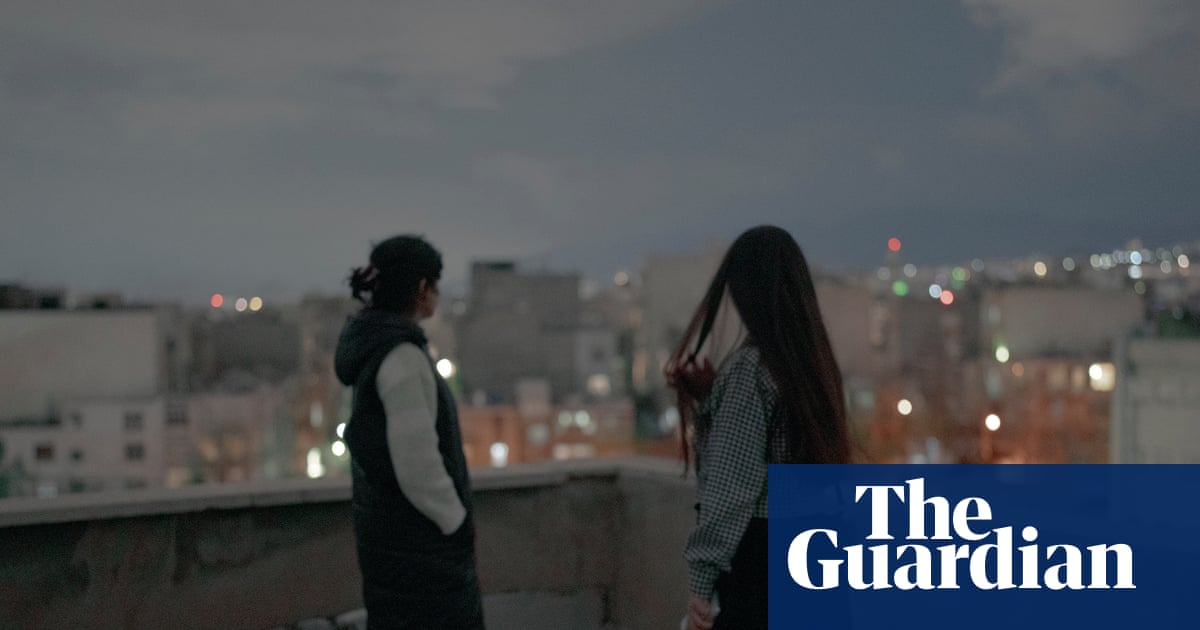
Iran is once again convulsed by protests that are threatening the Islamic Republic’s stability and future. What began as demonstrations over a collapsing currency and rising inflation has rapidly evolved into one of the most destabilising episodes of unrest the regime has faced in years. The protests have exposed both the resilience of Iranian society and the growing brittleness of a political system stubbornly unwilling to reform.
It’s the scale, spread and momentum of the demonstrations that have been most alarming to the authorities. Protests have erupted across all provinces in the country, reaching more than 180 towns and cities, cutting across class, ethnic and regional lines. This time, the turn to openly anti-regime slogans has been rapid and widespread. Protesters are no longer demanding relief from within the system. They are rejecting it outright, directly challenging the authority of the supreme leader, Ali Khamenei – and the wider establishment.
The state’s response underscores how seriously it views the threat. To disrupt coordination and prevent images of repression from circulating globally, the country has been placed under an unprecedented total communication and internet blackout. At the same time, the regime has deployed its full coercive apparatus. In the absence of full access to news and information, human rights organisations estimate that more than 6,000 people could have been killed, with thousands more arrested, injured – or disappeared into Iran’s opaque detention system.
Yet, despite continued violence, protesters have shown courage and determination, seeking to sustain momentum in the face of reported massacres, live ammunition, street clashes, mass arrests and intimidation. The movement remains largely leaderless, which is both a strength and a constraint. It makes the protests harder to dismantle, but it also limits the ability to organise, or chart a clear political pathway forward. This is not a matter of choice, though, but is a result of decades of repression that have weakened civil society, alongside the imprisonment and intimidation of activists, many of whom now languish in Evin prison.
What makes these protests particularly significant are their place in a longer trajectory of resistance. Since the mass protests of 2009, Iranians have repeatedly taken to the streets – in 2017, 2018, 2019, 2022 and now again. Each cycle has been met with repression rather than reform. Under Khamenei’s leadership, the system has shown a striking refusal to compromise, doubling down instead on coercion and ideological rigidity.
Figures outside the country have stepped into the vacuum. Reza Pahlavi, the son of Iran’s last shah, has publicly called on Iranians to take to the streets and maintain pressure on the regime. Protesters have responded by chanting his name in several cities. This should not be read as a call for monarchist restoration, but as evidence of the absence of credible, organised opposition inside Iran, and a search for symbols that represent a clean break with the Islamic Republic. For the authorities, such chants are deeply unsettling, reviving a historical memory they have long sought to erase.
As in every crisis, the regime has blamed foreign enemies. In a Friday sermon on 9 January, Khamenei dismissed the unrest as the work of external powers, casting dissent as treason and foreign conspiracy. This framing serves a familiar purpose, allowing the government to legitimise repression at home while reinforcing a siege mentality within the state. Yesterday, the government organised its own state-backed demonstrations to project an image of unity and control.
These claims ring increasingly hollow though, particularly after the June 2025 Israel-Iran conflict, which exposed the extent to which Israel had penetrated Iran’s security and intelligence systems. In that context, domestic unrest is no longer merely a political challenge. It is an existential one. The leadership fears that internal dissent, external pressure and covert infiltration could converge in ways that would unravel the regime’s grip on power.
International dynamics further complicate the crisis. Donald Trump has threatened potential military intervention on behalf of the protesters. Tehran has responded by warning that any US strike could trigger retaliation, not only against American assets in the region but also against Israel. A direct US entry into the crisis could have contradictory effects. It would give the regime cover to escalate its crackdown at home, but the strategic aim would be to weaken the Islamic Republic by deepening its economic isolation, degrading elements of its security capacity and loosening the bolts on the state’s already fragile functionality. Such pressure would not deliver immediate change, but it would sharpen the regime’s internal contradictions and make governing even more difficult.
What comes next is unlikely to be liberalisation. Faced with declining legitimacy, economic collapse and geopolitical isolation, the Islamic Republic will become a more inward-looking state, increasingly reliant on repression rather than representation. The trajectory bears an uncomfortable resemblance to Saddam Hussein’s Iraq, where survival depended on fear, surveillance and brute force, rather than consent.
Pitted against the repressive capacity of a brutal state, these protests may again fade from the headlines, but they are not an aberration. They are the clearest signal yet of a political order that has lost its capacity to adapt. Unless Iran’s leadership chooses a radically different path, involving reform, accountability, economic change and engagement with the outside world, future unrest is not a question of if, but when. One thing is certain, the Islamic Republic that emerges from this crisis will not look the same.
-
Sanam Vakil is the director of Chatham House’s Middle East and North Africa programme