3 months ago
107
3 months ago
107
The night after Plaid Cymru decisively beat Reform UK in the Caerphilly byelection last autumn, spraypaint reading “Now u can fuck off home” appeared on the shutters of the rightwing party’s offices on Cardiff Street.
It was quickly cleaned off, but stickers bearing Welsh nationalist and anti-fascist slogans have popped up in its place, either scratched off or covered with duct tape. Reform is still there: the lights are on, and a shop owner next door said people go in and out every day, although no one answered the door when the Guardian rang the bell.

The byelection was a golden opportunity for Nigel Farage’s party. Reform poured money and resources into its chance to break off a piece of the Labour heartland and boost its credibility by winning a first seat in the Senedd. Instead, Caerphilly became Plaid Cymru territory; a story that the latest polling suggests could be repeated across the country in May’s Senedd elections.
“I am a local candidate who has given 50 years of public service, so it’s not too surprising that the election swung to us,” said Lindsay Whittle, Caerphilly’s new Plaid Cymru Senedd member (MS), over coffee at a cafe overlooking the town’s castle.

“Everyone was shocked by the scale of it though. We spent 50% less than Labour and Reform did, and brought home more of the vote than the other two parties put together. I’ve been in politics long enough to see some stunning upsets and twists in my time, but this feels different.”
Caerphilly appeared to be a neck-and-neck race until the very last minute, but Whittle beat Reform’s Llŷr Powell by 47.4% to 36%. Labour came in a distant third with 11%.
“We were very worried about the things Reform say about refugees and immigrants, but the people in Caerphilly are so welcoming, we have never had any problems here,” said Ludmila Iamtsova, 46, a Ukrainian refugee who runs the railway station cafe with her sister, Hanna, 48. “It is early days but everyone is excited, you can tell the mood has changed.”

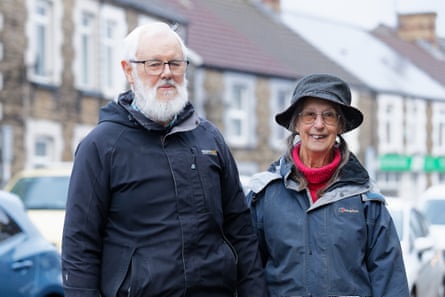
A couple shopping in the town centre who gave their names as Mike, 76, and Annie, 83, said they were lifelong Labour voters until they recently joined Jeremy Corbyn’s Your Party.
Mike said: “I have voted Plaid Cymru in the past, and I was delighted Reform lost, although I voted Labour myself. I’m not sure where my vote will go in May.”
The Welsh have been Labour’s most loyal voters for 100 years – returning the party to government in Cardiff since devolution began in 1999. But poll after poll now says Labour’s base has collapsed. The party could come third or even fourth in May, finishing after the Greens.
Welsh Labour partly has an incumbency issue - but it must also contend with the many measures suggesting its track record in office is poor.
Welsh children’s reading, maths and science skills fell to the lowest recorded levels in 2024. About 20% of Welsh NHS patients wait more than a year for hospital treatment, compared with about 4% in England, and Wales remains by far the poorest UK nation. The proportion of people considered to be in very deep poverty has risen from 33% in the 1990s to 47% in 2023, according to the Joseph Rowntree Foundation.
Keir Starmer’s 2024 Westminster victory is also widely viewed as a major Welsh Labour problem, removing a natural defence against criticism of the party in Cardiff.
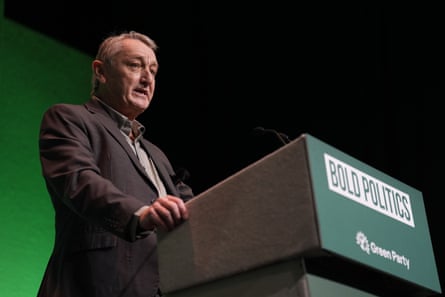
The Welsh Green party leader, Anthony Slaughter, said: “Labour support was ebbing for a while, but Starmer’s election is what really shifted Welsh politics. For 14 years, the line was: ‘Well, what can we do, the Tories are in charge.’ But now we get the same arrogance and contempt from the Labour government in Westminster.”
Even before the Caerphilly litmus test, Wales’s new proportional voting system and an increase in the size of the parliament added to the odds Plaid Cymru would be the only party able to form a government after the election, ending a century of Welsh Labour hegemony. Reform could win the most seats, but since both the Welsh nationalists and Labour have ruled out going into coalition with Farage’s party, they are unlikely to win power.
YouGov survey data released last month, however, is truly seismic.
Caerphilly now seems to represent a major turning point: support for Plaid Cymru has surged from a dead heat with Reform to a 14-point lead, putting the party within touching distance of a majority. Majority governments are supposed to be very rare under the new system, but a moment akin to the Scottish Nationalist party’s breakthrough Holyrood victory in 2011 could beckon.
The Green party, which was hoping for one to four seats, could go from zero MSs to an astonishing 11, delivering the Greens’ best election result, making a Plaid Cymru-Green coalition government a strong possibility, and putting the question of Welsh independence firmly on the Cardiff agenda.
Labour is on 10% of the vote and eight seats – none of which would belong to Eluned Morgan, the first minister. And Reform has dropped from 29% to a 23% vote share, which would still see the party grow from one MS to 23 but could suggest its support has peaked.

Reform, like Plaid Cymru, is keen to emphasise that May’s vote is a two-horse race. “It’s clear that all the polling is trending in one direction,” a spokesperson said. “Our ambition is to put forward a platform based on common sense, economic stability and real change here in Wales.”
But nationwide, it appears Reform is plateauing. The Caerphilly washout, Farage’s lacklustre responses to claims of antisemitism and racism, chaos in Kent’s Reform-run council, and tax rises across other English Reform councils seem to have stalled the party’s growth.
In Wales, where the party is yet to set out any policies or platforms for May or finish selecting candidates for its lists, it appears to already be in decline. Reform has not announced a Welsh leader – an official appointment is due next week – and its most familiar Welsh figure of recent years, Nathan Gill, was jailed for taking bribes to make pro-Russia speeches when he was member of the European parliament. It is hard to escape a sense that the party is struggling to find momentum.
Jac Larner, a politics lecturer at Cardiff University, said: “One of the most interesting questions in the poll was: ‘Which party would be the biggest nightmare in government?’, and 65.5% of respondents said Reform. So, that sets the ceiling.
“There aren’t many more Conservatives to win over, and if the Tories have a good few months, that could split the vote. Reform will have to rely on increasing voter turnout. We’ve seen that in some English local elections lately, but it’s very hard to do.”
Farage’s outfit is still the first rightwing party with a shot at winning in Wales since the 1850s, but the “rise of Reform” narrative prevalent in England did not fit the Welsh landscape, Larner added.
“Like everywhere, there are a lot of people with conservative values here, but there were always historic reasons not to vote for the Tories in Wales – [Keir] Hardie, the mines, [Margaret] Thatcher. Reform doesn’t have that baggage, so in effect, they are the conservative option Wales never had before.”
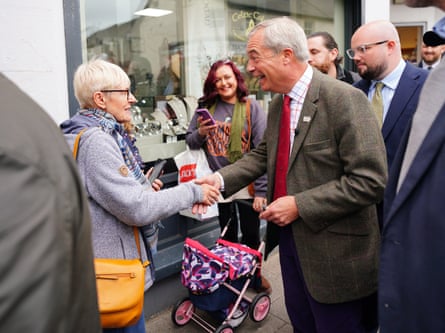
Despite strong courtship by Farage, a decade after narrowly voting in favour of Brexit, Wales is seemingly returning to the social-democratic ideals pioneered by Labour figures such as Hardie and Aneurin Bevan, now under new, nationalist stewardship.
Larner said the Celtic identities of Scotland and Wales were a bulwark against the far right that was difficult for England to replicate.
“There are now more people in Wales who say they feel Welsh rather than British, it’s accelerated madly since Brexit and Covid. As with many nationalist identities, it’s bundled up with foundation myths, and modern myths about being more progressive, more working class, even if those things aren’t actually true.
“In England, Britishness is seen as the more inclusive identity, when Englishness isn’t, necessarily. People in England have to find something else to coalesce around.”
Whittle said he believed grassroots work was the key to combating the far right across the UK: “With my background, family down the mines, I probably should have, or could have, been a Labour man. Being active in your community, taking part in civic life … anyone can do that.”
The January YouGov poll suggests Plaid Cymru is getting more than just an anti-Reform or protest vote. Together with the Greens, the progressive parties have moved on from picking up disaffected Labour voters, and are now attracting those who previously said they were undecided. Now first-past-the-post has been scrapped, progressive bloc votes will not be split.
Slaughter said: “I used to get people telling me: ‘We can’t vote for you because we have to keep the Tories out’, but that’s not the case any more. A vote for Plaid Cymru isn’t necessary – three more Green members means three fewer Reform members.”
Plaid Cymru is also enjoying the wave of momentum. Donations have soared and Whittle has become something of a celebrity; in the aftermath of his victory over Reform, he received standing ovations at the pub and a rugby international match.
“People ask me for selfies, I get stopped so people can shake my hand. How many politicians can say that? It’s overwhelming,” he said.
The surge in Welsh-first identity and buoyant support for two pro-independence parties means the question of Welsh independence is now on the Cardiff agenda. Both Labour and Reform have relied heavily on this attack line against Plaid Cymru, although polls imply it is not cutting through.
Even though independence is his party’s raison d’etre, Rhun ap Iorwerth, Plaid Cymru’s leader, is wary of spooking more-cautious voters who would traditionally vote Labour. He has stressed that, if elected, Plaid Cymru would not seek to hold an independence referendum within the next five-year Senedd term.
“We are still making the case [for independence]. I will freely admit that many people are not where I am on the issue,” he said. “We need to fix what needs to be fixed first, the cost of living, public services. Then we can have that conversation.”
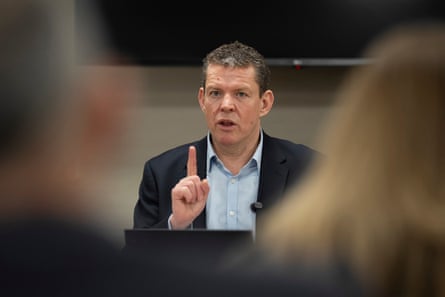
Whittle acknowledged that he and his party were in the right place at the right time to win October’s crucial byelection, but said Plaid Cymru earned it by putting in the hard yards.
“We’ve spent decades preparing for this moment, winning local races over the past 10 to 15 years,” he said. “The writing is on the wall. It’s literally on the wall: there are new Welsh dragon stencils all over town.”