3 months ago
96
3 months ago
96
Minister admits that young people 'haven't had the attention they deserve'
Pat McFadden admitted that “young people haven’t had the attention that they deserve” after Laura Kuenssberg said many of them are struggling to pay rent and get jobs while being saddled with debt from university. The Greens and Reform are doing well among under 30s, according to recent polling, and that is something that will be causing concern among Labour ministers, who have traditionally relied on young voters as a core voting constituency.
McFadden said:
Look, I think young people haven’t had the attention that they deserve. I think there is something in that.
That’s why I think this youth guarantee package is so important, because these numbers have been up for years and no one did anything about it.
I also think on the housing front, it’s become more difficult. That’s why we’ve got such an ambitious target to build more houses. A lot of young people are renting; we legislated to improve renters rights.
So I think across the piece, young people in this country need a better deal. I think they need a sense that the government that’s in office believes in them, backs them, and we want to do that, and that’s why we’re bringing forward this package.
Key events Show key events only Please turn on JavaScript to use this feature
You can read about Nigel Farage’s shifting answers on the racism allegations at Dulwich College in this timeline put together by my colleagues Henry Dyer and Daniel Boffey:
Farage needs to give the public a 'straight answer' to racism allegations, shadow minister says
Rounding up his interview, Trevor Phillips asked Helen Whately about the Guardian’s investigation into Nigel Farage’s alleged racist and antisemitic behaviour as a teenager towards fellow Dulwich college pupils. She suggested that the Reform leader appears not to be giving “straight answers” when asked about his past behaviour, and ruled out any pact with Farage’s party at the next general election.
“He needs to give people a straight answer,” Whately said.
Main reason young people are out of work is because they are 'moving on to sickness benefits', shadow minister says
Helen Whately said that the main reason why young people are out of work and training is because they are “moving on to sickness benefits”.
She told Sky News:
The number one reason why people, young people, are becoming Neet – not in employment, education or training – is because they’re moving on to sickness benefits.
Yet we just saw a few months ago where Labour was attempting to make some reforms to this problem (people going on to sickness benefits). They u-turned, they abandoned their reforms.
They have no plans for the foreseeable future to do anything about this fact that you can have a higher income on benefits than in work.
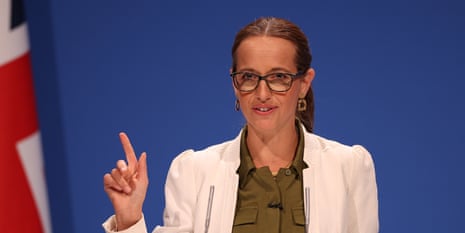
The shadow work and pensions secretary, Helen Whately, said Labour’s youth jobs and training plan is the “wrong answer” and said employers are put off from hiring young people because of the government’s taxes on their businesses.
Speaking to Sky News’ Sunday Morning with Trevor Phillips, Whately, who accused Labour of “destroying” the incentives to work, said:
What we’ve seen today announced by the government is funding the best part of £1bn on work placements and government created jobs for young people. That sounds all very well.
But the fact is … just two weeks ago, we had a budget from the chancellor, which is expected to destroy 200,000 jobs.
A year ago, we had a budget from Labour which was destroying 150,000 jobs, and we know that the jobs are being particularly hit by Labour’s policies – like the jobs tax, that national insurance rise – are jobs for young people. For instance, jobs in hospitality …
So the problem we have here is a government whose policies are destroying jobs, destroying opportunities for young people, now saying they’re going to spend taxpayers’ money on creating work placements. It’s just simply the wrong answer.
Minister admits that young people 'haven't had the attention they deserve'
Pat McFadden admitted that “young people haven’t had the attention that they deserve” after Laura Kuenssberg said many of them are struggling to pay rent and get jobs while being saddled with debt from university. The Greens and Reform are doing well among under 30s, according to recent polling, and that is something that will be causing concern among Labour ministers, who have traditionally relied on young voters as a core voting constituency.
McFadden said:
Look, I think young people haven’t had the attention that they deserve. I think there is something in that.
That’s why I think this youth guarantee package is so important, because these numbers have been up for years and no one did anything about it.
I also think on the housing front, it’s become more difficult. That’s why we’ve got such an ambitious target to build more houses. A lot of young people are renting; we legislated to improve renters rights.
So I think across the piece, young people in this country need a better deal. I think they need a sense that the government that’s in office believes in them, backs them, and we want to do that, and that’s why we’re bringing forward this package.
Speaking to the BBC’s Laura Kuenssberg about the new youth work plan, Pat McFadden said there is “no reason” why employers would not sign up to offer training to unemployed 16-24-year-olds because the government will pay for at least 25 hours’ work for the young person at minimum wage.
Pat McFadden has defended the chancellor’s decision to scrap the two-child benefit cap at last week’s budget, which is estimated to cost £3bn a year by 2029-30.
The scrapping of the cap, which came amid intense pressure from Labour backbenchers, was welcomed by campaigners and charities who argue it is the most cost-effective way to cut child poverty.
The two-child limit prevents parents from claiming child tax credit or universal credit for more than two children.
Asked about why the government changed its mind on scrapping the cap now (Labour suspended seven of its own MPs for voting to scrap the cap last year), McFadden told Sky News:
The manifesto that we fought the election on said that we would reduce child poverty. There are a number of ways to do that. We set up a taskforce immediately after the election that worked through all this.
The second thing I was about to say is we did have to identify how you pay for that. And we’ve done that in several ways.
We are making savings from cracking down on fraud and error in the benefits system that have been scored by the OBR, and the chancellor announced an extra taxation provision on online gambling, too.
I do believe that when you make a spending commitment, you’ve got to say ‘how are you going to pay for it?’
So I understand the motivations of people who said we should have done this earlier; they wanted it done. But it’s important if you’re going to run a responsible government to say how things are paid for.
Pat McFadden said youth unemployment should be a “Labour cause” as the figures are worse in more deprived areas. “It is an issue not just of unemployment but of inequality too,’ he told Sky News. He said the issue is an “international” one, adding that the rise in Neets is in part to “deep seated Labour market issues” and “post Covid effects”.
“What I want to see … is young people in the habit of getting up in the morning, doing the right thing, going to work. That experience of that obligation but also the sense of pride and purpose that comes with having a job.”
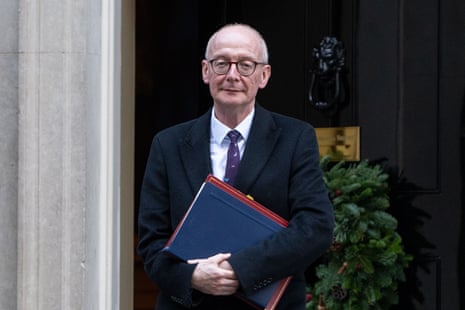
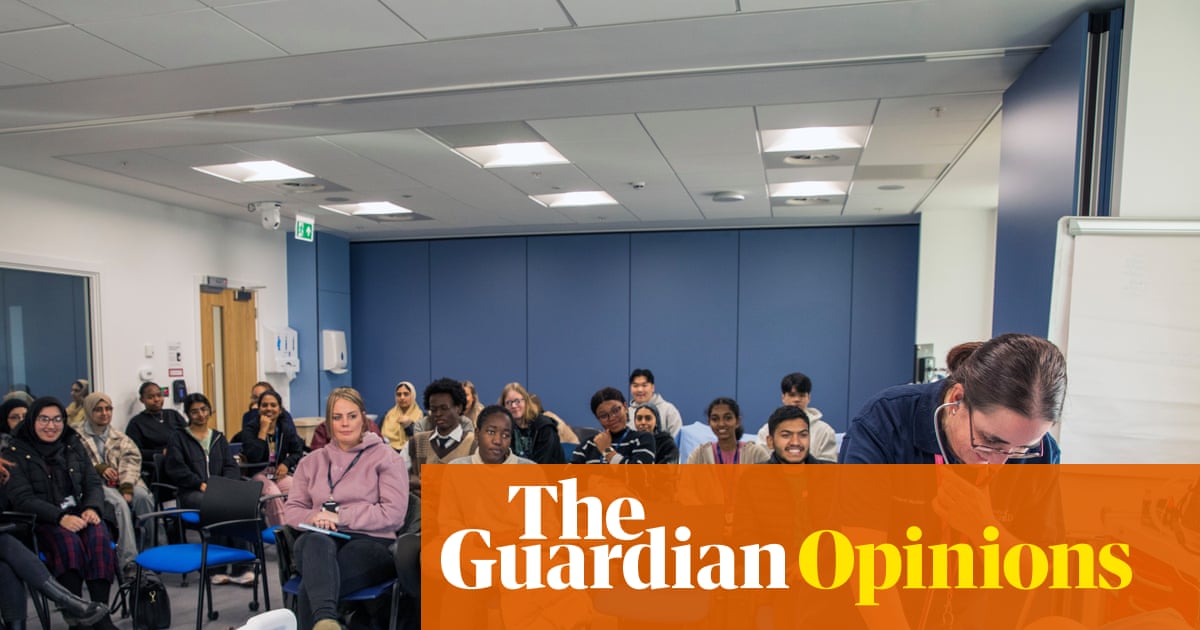
The Department for Work and Pensions said in a press release today that almost one million young people will benefit from training or work as a result of a major £820m funding package aimed to get 16-24-year-olds off universal credit and into work.
The government said it will fund 350,000 training and work experience placements, in sectors including construction, health and social care and hospitality, and will guarantee 55,000 jobs in areas it says are most in need in Britain.
These areas are:
-
Birmingham & Solihull
-
East Midlands
-
Greater Manchester
-
Hertfordshire & Essex
-
Central & East Scotland
-
Southwest & Southeast Wales
There have been warnings that the government’s plans to get young people into work are too blunt of an instrument and there is a lack of adult education funding to help train people in emerging technologies.
Benefits could be cut if youth job and training offer rejected, minister says
The work and pensions secretary, Pat McFadden, is being asked by Sky News’ Trevor Phillips about the government’s plans to offer young people an apprenticeship, training, education, or help to find a job.
Up to one million young people on universal credit are expected to benefit from learning or employment opportunities under the scheme. Youth unemployment is high, owing in part to the continued impact of Covid and the cost of living crisis.
Phillips asks McFadden if benefits under universal credit will be withdrawn if people don’t take up the offer under the scheme.
“Yeah, it could be. We see this as both an offer and an obligation,” he said.
He adds that he has been “struck” by slides within the DWP showing that the number of young people (about one million) not in education, employment or training (Neet) has been rising for the “last four years or so”. “That is when it really started to rise”.
Keir Starmer says former deputy PM Angela Rayner will return to cabinet
Good morning and welcome to our live coverage of UK politics. Keir Starmer has said the “hugely talented” former deputy prime minister, Angela Rayner, will return to his cabinet.
Rayner stood down from the government in September after the prime minister’s ethics adviser found she had breached the ministerial code over her underpayment of stamp duty on her £800,000 seaside flat.
Rayner had been seen as a frontrunner to succeed Starmer, who is hugely unpopular with the public, until the shock resignation.
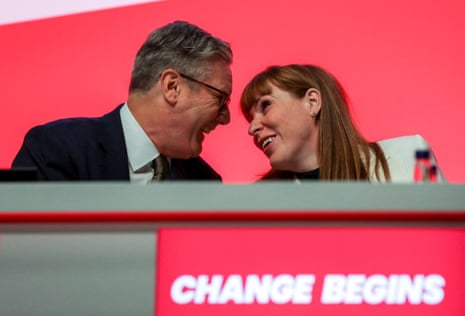
Starmer said in an interview with The Observer on Sunday that Rayner, who had her first baby at 16 and grew up on one of Stockport’s poorest council estates, is the best example of social mobility “this country has ever seen”.
Asked if he misses her, the prime minister told journalist Rachel Sylvester: “Yes, of course I do. I was really sad that we lost her. As I said to her at the time, she’s going to be a major voice in the Labour movement.”
Pressed as to whether she will be back in the cabinet, Starmer said: “Yes. She’s hugely talented.” Stick with us as we give you the latest on this story and the other major political developments in the UK.