3 months ago
95
3 months ago
95
As the Winter Olympics approaches, we get to watch sports many of us have never tried. How can we connect to these sports? What should we look out for? What can we enjoy and learn? Research by three-times Olympian Lesley McKenna into what makes snowboarding meaningful offers us some great ideas.
As a British athlete, coach and team manager, McKenna experienced first-hand the pressures of managing athlete performance, wellbeing and the pursuit of medals. She saw the push and pull between the inherent creativity in pipe and park snowsport events and the drive for standardisation to make it easier to compare athletes.
She felt the tension between the long-term joy of pursuing these sports and the external push for short-term results. Troubled by the direction of travel and keen to understand how to create better high-performance environments, McKenna set out to answer the critical question: how could athletes and coaches find a way to perform well without losing what makes their activity worth doing?
McKenna saw how most high-performance sport systems were built around simple measures – times, scores, rankings, medals. Instinctively, McKenna knew this wasn’t the only way sport could be understood. Her own experience of action sports had shown her other ways to find value. McKenna already knew that risk and aesthetics played a major role in snowboarding and wanted to analyse and explain these concepts better and understand how they interlink. Risk isn’t just danger for its own sake, it involves how the human mind processes uncertainty, consequences and commitment. Aesthetics relate to style, creativity, flow and how something is done – not just whether a move is landed or not.
In the pursuit of uncovering what snowboarders value beyond medals, McKenna interviewed athletes, coaches, judges and performance leaders across snowboarding, freeskiing, skateboarding and surfing and spoke to athletes and coaches from traditional sports, too. Through these conversations, McKenna uncovered how high risk, aesthetic sports like snowboarding create powerful experiences of motivation, community and excellence.
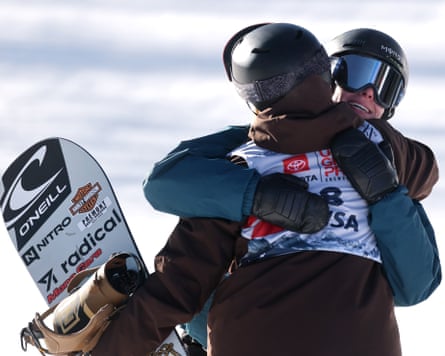
The word that resounds throughout McKenna’s findings is “stoke”. It’s a deeply human and joyous concept that encompasses fun, creativity, achievement and style while undertaking risk. As an experience, it rates higher than winning a medal. “Shared stoke” can spread between riders in a session, creating bonds and a feeling of community that turns competitive contexts into something fundamentally collaborative.
In Milano Cortina, watch for how athletes genuinely celebrate each other’s runs. This connects back to the original concept of competition meaning to strive together, not against another. Then there’s the “stoke train” which explains the collective wave of energy when one rider’s breakthrough sparks others to land new tricks as successive riders push limits together. At this point, the athletes move beyond any purely individual performance.
McKenna unearthed five distinct fascinations in how snowboarders practise, perform and thrive through their sport. The first is “inside-out performance”, which explains how athletes are able simultaneously to feel what they’re doing though their body and visualise how their movements look from the outside. This dual awareness enables the real-time calibration of risk, skill and style – all in a way that McKenna is keen to point out that AI and external coaches cannot replicate.
Second, “outside-in viewing” refers to the way in which the best judges and engaged observers “feel” the rider’s performance and literally imagine it for themselves. In this way, judges don’t just see tricks, they “mind-surf” with the riders, experiencing the ride through their own bodies. Third, “epic moments” refer to life-defining performances that last long in the collective memory. Told and retold as shared stories, they reinforce a sense of community and shared values. McKenna found that athletes often remember epic moments more vividly than podium finishes. One athlete said: “There are sessions you’ll remember your whole life. They become part of who you are, part of the community’s story.”
Fourth, “positive insignificance” explains the humility that athletes and coaches feel in relation to their natural surroundings, experiencing a “smallness” compared to nature’s power, yet in a way that liberates rather than diminishes. One interviewee said: “You realise you’re tiny against the mountain, and somehow that’s comforting. You’re just one small part of this massive thing.” There is a genuine ecological consciousness and deep-seated respect for the environment embedded in the act of playing their sport.
Finally, “creative story-based learning” explains how athletes learn “how someone approached a feature, what they were thinking, what went wrong or right. That’s how knowledge moves.” These stories don’t just transmit technique in the way that traditional sports use directive, technical coaching – they share the greater rationale of when, why, and how to take certain risks or try to create a particular style.
I was interviewed as part of McKenna’s research and enjoyed sharing how I connected to my own sport of rowing, the feeling of how a boat moves through water, the beautiful, ever-changing river environment, and that indescribable but unforgettable feeling when we found a way within a crew to lean into each other that took us and reach a new level we could never have reached on our own. Mostly, though, I had to admit this was my own private, almost secret experience, occasionally shared within a particularly well-bonded crew. The dominant daily language of the performance and competition environment focused on the constant push for more effort, aggression towards competitors and a general disregard for anything approaching “stoke”.
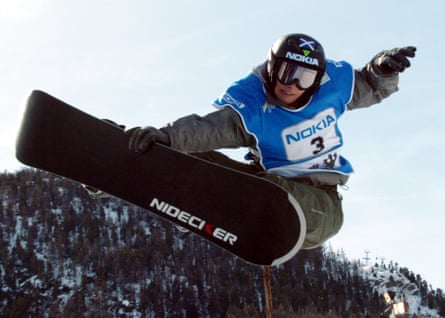
McKenna’s work may blow a few traditional sporting minds and offers us a much-needed refreshed vocabulary and set of ambitions around the potential experiences and lasting impact of sport. Imagine if school PE lessons and sports clubs had “stoke” as an objective or if alongside aims to improve fitness, technique and tactics, coaches and sports leaders regularly set goals to explore meaning, creativity and risk.
Meanwhile, when the Winter Olympics is on, pull up a chair, bring some McKenna-esque curiosity and watch a little more closely – we may just have the opportunity to see “the stoke train” in action.